Breached Earth Boundaries Raise Risk of ‘Irreversible Change’
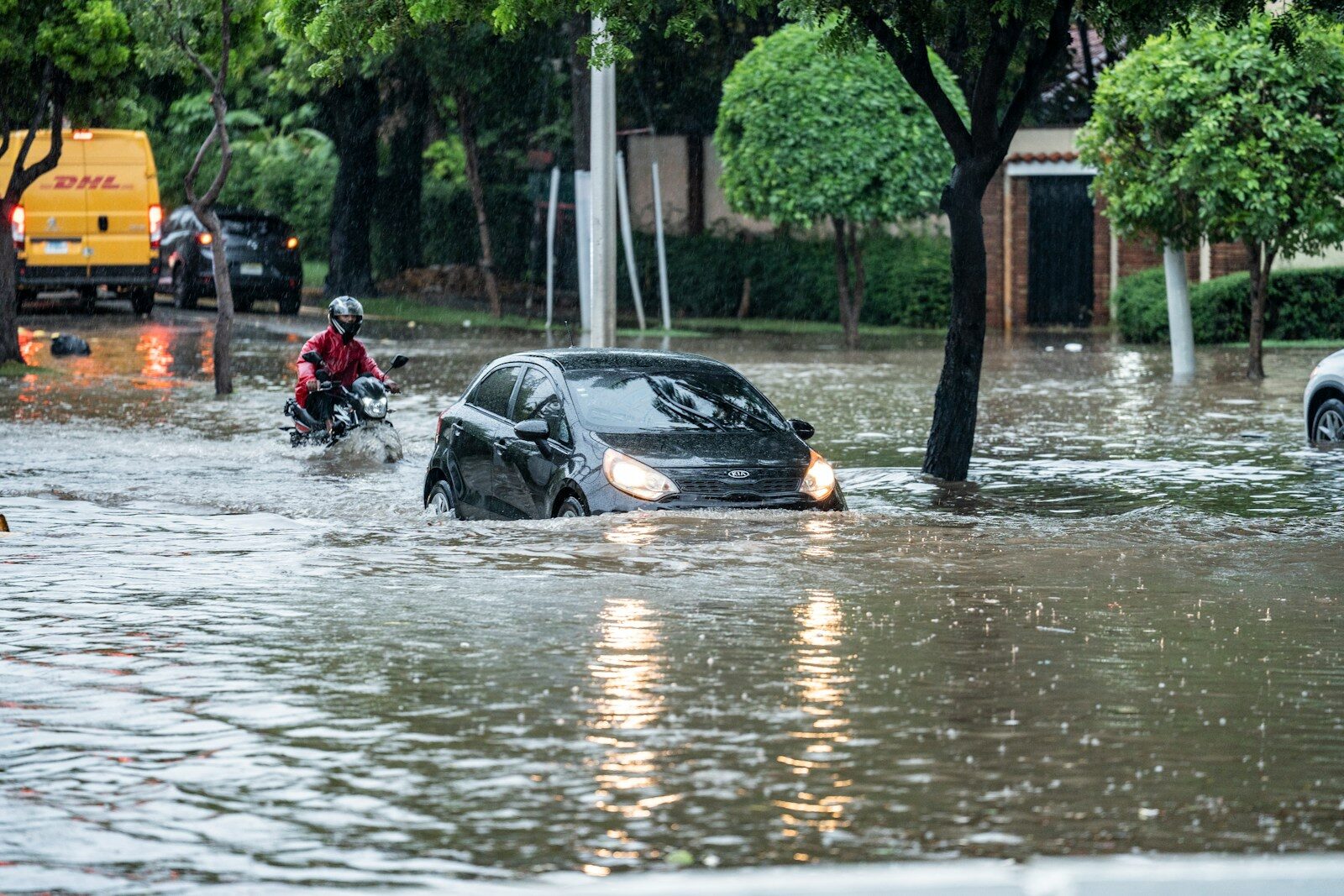
A year of climate extremes offers the latest evidence that the planet is “out of balance.”
By Bob Berwyn
September 21, 2026
This article originally appeared on Inside Climate News, a nonprofit, non-partisan news organization that covers climate, energy and the environment. Sign up for their newsletter here.
Scientists have developed an overwhelming array of methods to measure how burning fossil fuels, clearcutting forests and polluting oceans are harming the planet.
But which measurements are most critical? Is it the rising concentration of carbon dioxide in the atmosphere or the buildup of toxic chemicals in rivers and oceans? Is it the steady rise in global temperatures, potential ocean-current tipping points, vanishing glaciers or dwindling biodiversity?
All of those, and more, are vital strands in the fabric of life on Earth, and the latest edition of a planetary health check, released Monday, weaves a subset into a framework of interconnected Earth-system processes that, according to the authors, “must remain within safe limits to preserve the planet’s stability and resilience.”
The report, produced by the Planetary Boundaries Science Lab at the Potsdam Institute for Climate Impact Research and authored by an international team of 60 scientists, found that seven of the nine established boundaries have already been breached: climate change, change in biosphere integrity, land system change, freshwater change, modification of biogeochemical flows, introduction of novel entities—like manmade chemicals—and ocean acidification. Only the stratospheric ozone-depletion and atmospheric aerosol-loading boundaries have shown improvement over the last decade, the scientists wrote.
The risk of “large-scale, persistent and potentially irreversible change is increasing, while our margin for error in tackling these problems is shrinking,” said lead author Boris Sakschewski, a climate researcher at the Potsdam Institute.
The findings come after 12 months of climate extremes, from deadly hurricanes in the Caribbean to devastating mountain disintegrations and floods in the Himalayas. “The planet is telling us, in every region at once, that it is out of balance,” said Hindou Oumarou Ibrahim, chair of the Planetary Guardians.
The Planetary Guardians is an international group of former heads of government and international institutions, business leaders, scientists, Indigenous and youth advocates, environmentalists and civil-society leaders working to bring the planetary-boundaries framework into decision-making. In partnership with the Potsdam Institute’s planetary boundaries lab, the group has launched a network of planetary science offices that it hopes to open on three continents by the end of the year.
In June, Belgium became the first country to appoint a planetary science officer as a step toward better science-based governance, according to the Belgian Climate Risk Assessment Center.
It’s like giving Earth a seat at the table when essential decisions are being made, said Levke Caesar, co-leader of the Potsdam Institute’s planetary boundary research team. Caesar discussed the boundaries in an interview with Inside Climate News.
This interview has been edited for length and clarity.
BOB BERWYN: We already have many measurements of a changing planet. What does the planetary-boundaries framework add, and why is it useful?
LEVKE CAESAR: The idea was introduced in 2009 by a group of Earth-system scientists who wanted to know what the planet would say about how it’s doing as we discussed its future. We tried to create a systematic way of assessing whether the Earth system remains stable and resilient enough to support human societies.
The analogy I find useful is human health. Our pulse, blood pressure and other vital signs fluctuate, but they remain within ranges that allow us to function and recover from shocks. The planetary boundaries are an attempt to identify similar ranges for the fundamental processes that regulate the Earth system.
Crossing a boundary doesn’t mean it’s an immediate catastrophe. You can have high blood pressure or high cholesterol and still be walking around. But you should probably be paying close attention. That’s where we are with the planet. We’ve moved outside the ranges for seven of the nine boundaries, but we’re only just outside some of them. The boundaries are meant as an early warning system, not a declaration that the planet has suddenly become uninhabitable.
There is also much more uncertainty than there would be in assessing an individual person’s health. We have thousands of people to study when we establish a healthy range for humans. We have one planet. So these boundaries are necessarily a first approximation. It’s a way of simplifying an extraordinarily complex system enough that we can recognize when we’re putting its stability and resilience at risk.
BERWYN: One of the new subjects addressed in this year’s report is seafloor integrity. Deep-sea mining is opening areas that have been largely beyond human reach, but the report says we still don’t know enough to define a safe operating space for the seafloor. What do we know about the risks?
CAESAR: We know that life on the seafloor is much more diverse than we thought, and that these ecosystems are surprisingly fragile. They operate on a very different timescale from us and can take a long time to recover from disturbance. But we don’t yet fully understand the consequences of disturbing them at a large scale, particularly in the deep ocean, so we can’t define a clear safe operating space for the seafloor yet.
We already know that we’re disturbing it extensively through activities such as bottom trawling. I saw that myself when I was doing a postdoc in Ireland. We had trouble finding places to put our measurement instruments because bottom trawling would damage them. We would look at maps and see trawling activity everywhere and think, “OK, but where are we supposed to measure the ocean currents?”
“You can have high blood pressure or high cholesterol and still be walking around. But you should probably be paying close attention. That’s where we are with the planet.”
And then there is deep-sea mining. We have spent more than a decade learning how diverse and fragile these ecosystems are, and yet there is still pressure to start exploiting them. The seafloor is also an archive of what happened in the past. It’s like going into a well-organized library and mixing up all the books and tearing some of them up.
BERWYN: One of the most recent planetary boundaries to be breached is ocean acidification. What is happening in the ocean, and why does it matter?
CAESAR: The important thing is that this wasn’t a sudden change from one year to the next. We’ve seen a steady increase in ocean acidification over decades as the ocean absorbs a lot of the carbon dioxide we emit into the atmosphere. As seawater takes up more CO2, its chemistry changes and reduces one of the key building blocks that corals, oysters and some plankton need to build shells and skeletons.
Acidification makes it harder for them to build what they need and can reduce the resilience of marine ecosystems that are already under pressure from warming and marine heatwaves. We’ve already seen damaged sea snail shells, for example, and because these small animals are near the bottom of the marine food web, changes can cascade upward to fish and fisheries.
And that’s where this becomes a planetary-boundary issue rather than simply a problem for individual species. We’re changing the chemistry of an entire Earth-system component that helps regulate climate, support food webs and protect coastlines. The ocean is still doing us an enormous favor by absorbing carbon dioxide, but that buffering comes with consequences for ocean life. And as the ocean takes up more carbon, there are questions about how effectively it can continue buffering global warming in the future.
BERWYN: The “novel entities” boundary seems to be a particularly big question mark. What worries you most about the hundreds of thousands of chemicals and other substances we’re introducing into the environment?
CAESAR: Novel entities are different from the other boundaries because we’re continually introducing new substances into the Earth system without necessarily knowing what effects they will have. It’s essentially a “question mark bucket”—we’re adding new things faster than we can understand, test and monitor them.
There are close to 400,000 chemicals made by humans that are released into the environment, and often there’s only limited testing, much of it under laboratory conditions. We’re not really testing what happens when you add a new chemical to an environment that already contains pesticides, plastics and many other substances.
And for regulators, they often have to prove that something is harmful before action is taken, rather than the other way around. Of course, with 400,000 chemicals, many things work out fine. But CFCs and the damage they did to the ozone layer, and the PFAS problem we’re dealing with now, show that again and again it does not.
The difficulty is that we can’t measure the risk of every one of those substances individually. So we can say that the boundary has been transgressed, but we can’t say precisely how far beyond it we are. That’s the big question mark.
More from ClimateCrisis 247
- Despite Trump, These Are The States Moving Away from Coal This Year
- By 2100, How High Will Summer Heat Get in America’s Largest Cities?
- Countries with The Highest Gas Prices, Some over 2x the US
- America’s largest Data Center Uses More Electricity Than Houston