Places In The US With Record High Temperatures This Winter
The winter of 2005/2006 will be remembered as one of history’s strangest. In parts of the West, temperatures reached all-time highs, while in the East, some areas dropped below zero. Some people have pointed to these record lows as evidence that climate change is not real — after all, temperatures are supposed to be getting hotter. However, a warming Arctic has pushed the polar vortex, and with it bitterly cold air, southward.
The National Weather Service explains: “The polar vortex is a large area of low pressure and cold air surrounding both of the Earth’s poles. It always exists near the poles, but weakens in summer and strengthens in winter. The term ‘vortex’ refers to the counter-clockwise flow of air that helps keep the colder air near the poles.”
The unusually warm weather in the West, meanwhile, has a different culprit: man-made carbon emissions. Climate Central reports that the holiday warmth — running 20°F to 35°F above average — was at least two to three times more likely to occur due to human-caused carbon pollution.
Nine of eleven Western states experienced unusually warm conditions, particularly in December 2025, with some days setting all-time records per NOAA data extending into early 2026. Montana stands out for its widespread record warmth: five of its seven largest cities — Billings, Bozeman, Great Falls, Helena, and Missoula — recorded average daily highs from November through January that were warmer than any previous winter on record, with some days running more than 8°F above normal and daily records continuing into February.
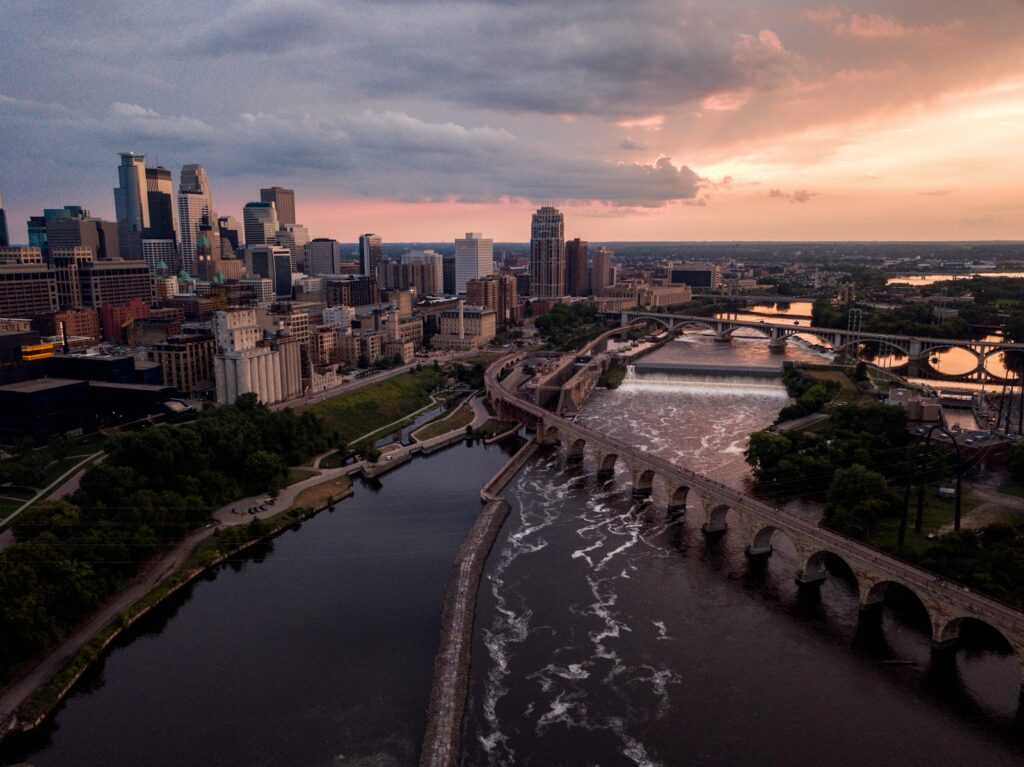
Other notable recent record highs include Denver reaching 71°F on February 9 and 68°F on February 15, capping one of its warmest winters overall with 29 days at or above 60°F. In early February, California cities surged as well, with Oakland and Redwood City hitting 74°F, Half Moon Bay 73°F, Los Angeles International Airport 88°F, Santa Barbara 82°F, and Santa Maria 84°F, among others. Sioux City, Iowa broke its previous February record with a high of 68°F, and the Twin Cities tied a record high of 51°F that had stood since 1890. Parts of the Plains and Midwest also saw brief record warmth in February, including Chicago, where locals have taken to calling these mid-winter thaws “fake spring.”
While warm winters can have some benefits, the risks in the West are significant — particularly for the water supply. NBC News points out that snow cover and snow depth are both at their lowest levels in decades, with at least 67 Western weather stations recording their warmest December-through-February stretch on record. Normal snow cover for this time of year spans roughly 460,000 square miles, but this year it has shrunk to just 155,000 square miles, according to the National Snow and Ice Data Center.
This reduced snowpack poses a serious wildfire risk. The Western Wildfire Chiefs Association notes that wildfire season, which once lasted about five months in the early 1950s, now stretches to around seven months due to climate change and worsening conditions. Farmers and residents face additional concerns as well. As the New York Times reports, mountain snowpack serves as natural water storage for the arid West, with runoff slowly released over the coming months to supply drinking water, irrigate farmland, fill reservoirs, and sustain trout streams.
In short, a warmer winter is not just a pleasant anomaly — for the West, it is a threat that will linger well into the year ahead.