These Are America’s Cleanest Cities
Air quality in U.S. cities is measured primarily by the Air Quality Index (AQI), which focuses on ground-level ozone, particle pollution (also known as particulate matter, including PM2.5 and PM10), carbon monoxide, sulfur dioxide, and nitrogen dioxide. The AQI grades range from Good to Moderate, Unhealthy for Sensitive Groups, Unhealthy, Very Unhealthy, and Hazardous. The AirNow project, a partnership of the U.S. Environmental Protection Agency, National Oceanic and Atmospheric Administration (NOAA), National Park Service, NASA, Centers for Disease Control, and tribal, state, and local air quality agencies, tracks air quality across 500 cities. The Forest Service and NOAA provide fire and smoke data, and the project also monitors air quality in Canada and Mexico.
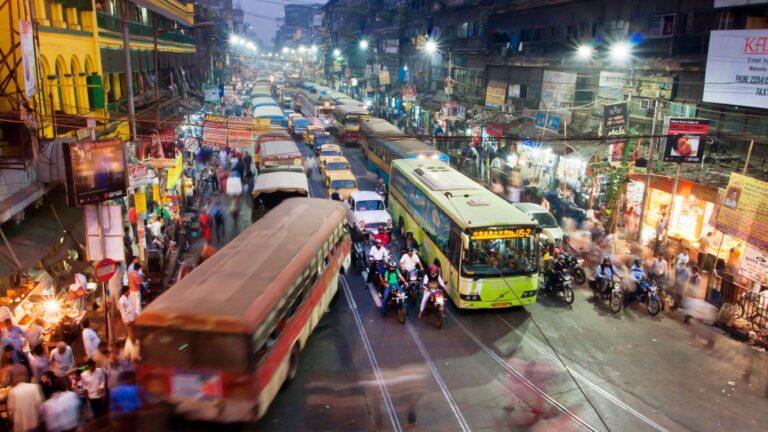
Another well-regarded source for air quality data is IQAir which measures air quality around the world. Its ratings are based on PM2.5 (floating particulate matter measuring 2.5 micrometers in diameter or less, small enough to be absorbed into the bloodstream upon inhalation), ozone (a gas formed by solar ultraviolet radiation and oxygen molecules), and PM10 (suspended particulate matter with a diameter of 10 micrometers or less, including smoke, soot, salts, acids, and metals). IQAir’s air quality ranking uses the same levels as the AQI. It ranks Delhi as having the worst air quality in the world, with rankings on most days listed as Hazardous. According to The New York Times, “the 30 million residents of India’s capital region trudge along with chronic headaches and itchy eyes, symptoms of this rising superpower’s failure to provide its people with a most basic need: breathable air.”
Climatecrisis247 also examined data from the American Lung Association’s “State of the Air” 2025 report, which is based on 2021-2023 EPA data evaluating ozone, year-round particle pollution, and short-term particle pollution. Published annually for 26 years, the report finds that “even after decades of successful efforts to reduce sources of air pollution, 46% of Americans—156.1 million people—are living in places that get failing grades for unhealthy levels of ozone or particle pollution.”
In 2025, partly due to wildfires that spread smoke across large parts of the U.S., only two metro areas ranked on all three cleanest lists (no unhealthy days for ozone or short-term particles, plus lowest year-round particles):
Bangor, Maine: Consistently tops cleanest lists due to minimal industrial activity, a rural setting, and favorable winds that keep ozone and particles extremely low.
San Juan-Bayamón, Puerto Rico: Excels across all metrics thanks to ocean breezes and lower vehicle and industrial emissions compared to mainland cities.
Other cities that rank highly in one or more categories (such as lowest year-round PM2.5 or fewest unhealthy days) include:
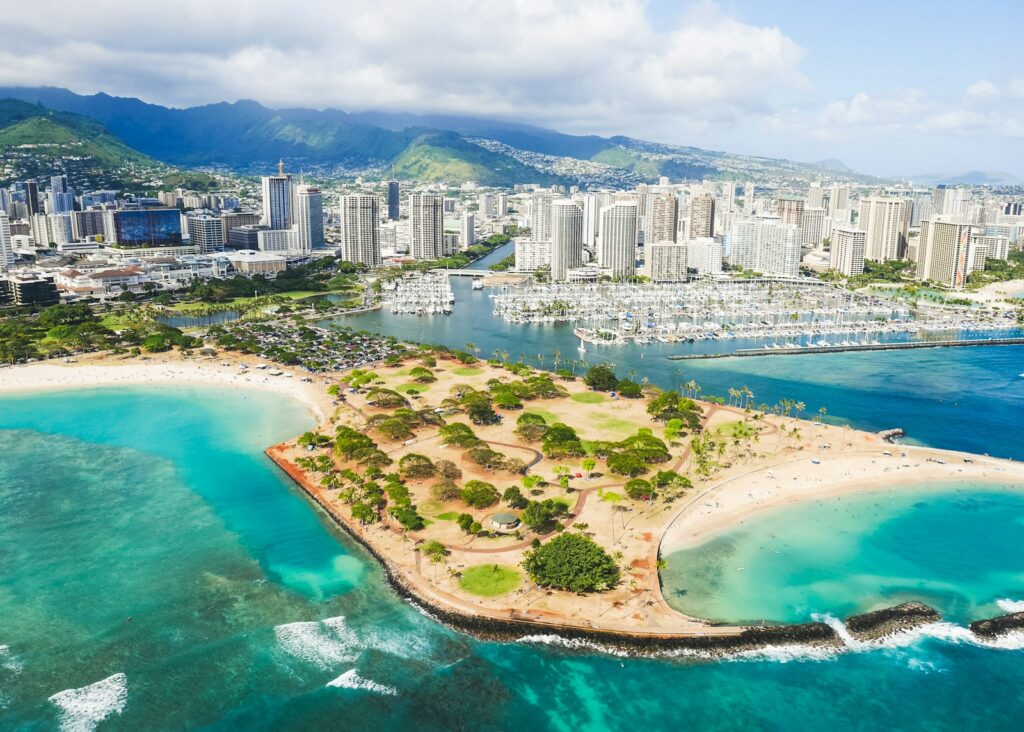
Urban Honolulu, Hawaii: Frequently among the cleanest for ozone and particles, as trade winds disperse pollutants effectively.
Cheyenne, Wyoming: Features low year-round particle pollution (ranking around 8 to 10 nationally), aided by its rural, high-altitude location and natural ventilation.
Wilmington, North Carolina: Posted strong performance in ozone and short-term particles.
Lincoln-Beatrice, Nebraska: Measurements show clean year-round particles.
Johnson City-Kingsport-Bristol, Tennessee-Virginia: Records a very high number of low-pollution days.
Seattle, Washington: Often the cleanest major mainland city according to IQAir’s annual averages, benefiting from rain and its coastal location, though this rating has started to be affected by wildfire smoke.
Air pollution from just a few major sources poses serious health risks. According to Earth.org‘s analysis of a recent research paper published in Science Advances, fine particles (PM2.5), nitrogen dioxide, ozone, and other hazardous air pollutants are responsible for 91,000 premature deaths, 10,350 preterm births, 216,000 cases of childhood-onset asthma, and 1,610 cancer cases every year in the United States.
While it’s easy to imagine air pollution deaths in a city like Delhi, it’s harder to recognize that the problem is also severe in the U.S. According to the American Lung Association, the problem is getting worse each year.
A close look at changes in U.S. air quality reveals the significant role wildfires play. In the last two years, New York City has been blanketed by smoke from northern Canada, and much of the Midwest has been affected by smoke from a massive wildfire near the Grand Canyon. The size of these fires continues to grow in most years.