Most Expensive Climate Disasters In US Cities Since 1990
Ask Americans about the most severe climate disaster to strike a U.S. city this century, and almost everyone will name Hurricane Katrina, which virtually destroyed New Orleans in August 2005. According to NOAA, it was one of the five deadliest hurricanes in American history, killing 1,833 people. In some areas, rainfall over a 24-hour period reached 12 inches, and Katrina also spawned a number of tornadoes. NOAA summed up the catastrophe: “The damage and loss of life inflicted by this massive hurricane in Louisiana and Mississippi was staggering, with significant effects extending into Alabama and the western Florida panhandle.”
Much of Katrina’s economic toll cannot be measured by the immediate damage alone. Before the storm hit, New Orleans was home to more than 460,000 people. That number fell by as many as 150,000 in the storm’s immediate aftermath, and stands at 380,000 today. There is no way to fully measure the economic cost of a city that lost over 20% of its population. Ironically, the cost of living in New Orleans has actually risen for some residents because of a sharp increase in home insurance premiums. In some cases, coverage is difficult to obtain at all. According to Insurance News, insurers have exited storm-prone states such as Louisiana and Florida, leaving homeowners with fewer options and higher premiums.
One thing is clear: no matter what a climate disaster costs in immediate damage, some of its costs are permanent. This holds true for hurricanes, wildfires, and floods alike—the disasters behind all the most expensive catastrophes of this decade.
The figures below for the most expensive climate disasters of this century are inflation-adjusted, so the costs can be compared directly. As noted, the aftermath of these disasters often carries its own substantial costs. Home insurance rates, for instance, soared in some areas following the Los Angeles wildfires. According to the UCLA Anderson School of Management, homeowners are likely to face significant insurance rate hikes in the short to medium term, as the costs of the L.A. fires are passed on to them in ways previously prohibited.
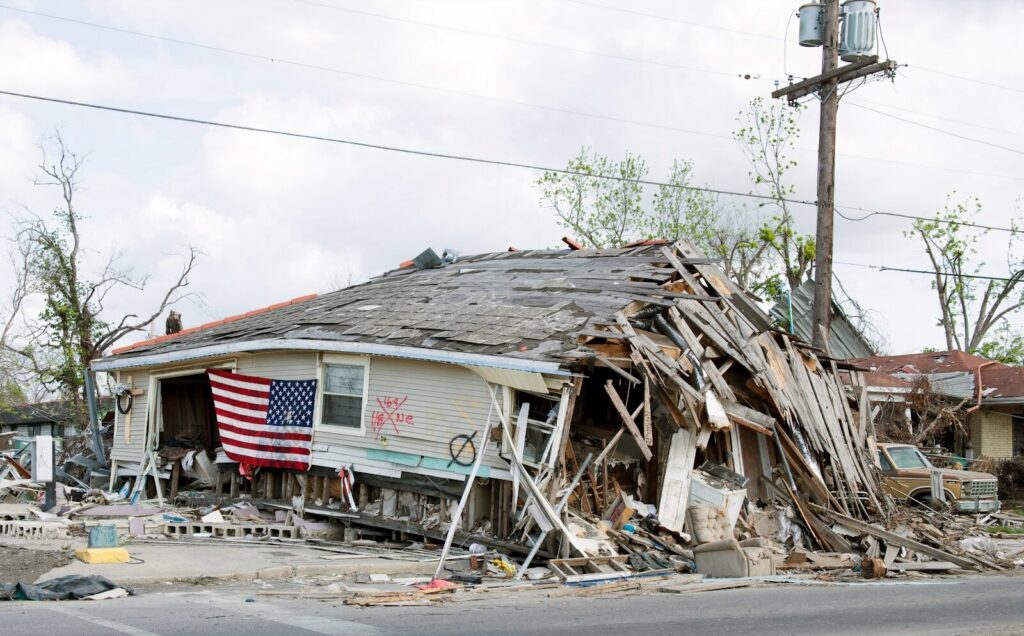
New Orleans, LA — Hurricane Katrina (August 2005): $201.3 billion
America’s most expensive climate disaster, with an estimated CPI-adjusted cost of $201.3 billion, is Hurricane Katrina. The Category 3 hurricane came ashore along the eastern Louisiana and western Mississippi coastlines. Wind and rain weren’t the only causes of damage: a storm surge topped 30 feet in parts of the coast, and a levee system failure compounded the destruction. According to History, levees and floodwalls in New Orleans and the surrounding areas failed in more than 50 locations during the hurricane, flooding 80% of the city and fully 95% of St. Bernard Parish.
Houston, TX — Hurricane Harvey (August 2017): $140 billion
In 2017, Category 4 Hurricane Harvey set rainfall records across much of the region, from the Gulf inland to Texas, before its remnants moved hundreds of miles north. Most of the worst urban flooding hit Houston. According to NOAA, Harvey is considered the wettest tropical cyclone on record in the U.S. Houston continues to face major storms from the Gulf, arriving from the directions of both Mexico and Florida. Tropical Storm Imelda, for example, dumped 24 to 36 inches of rain over three days between Houston and Beaumont, Texas.
Fort Myers, FL — Hurricane Ian (October 2022): $119.6 billion
Ian caused severe damage in Florida, North Carolina, South Carolina, and Cuba. Britannica reports that roughly 160 people lost their lives due to the storm, most in coastal areas—Florida was hardest hit, with 149 deaths, the majority from drowning in the storm surge.
Los Angeles, CA — 2025 Wildfires (January 2025): $61.2 billion
The Southern California wildfires were the most expensive natural disaster of 2025. By most counts, this wasn’t a single fire but as many as 14 burning close together; the Eaton and Palisades fires in Los Angeles County alone destroyed more than 16,000 structures. PreventionWeb reports that weather agencies had warned about the underlying risk factors: hurricane-force Santa Ana winds, extremely low humidity, and a dry start to the wet season following vegetation buildup in prior wet years.
Miami, FL — Hurricane Andrew (August 1992): $40 billion
Aside from Andrew, Miami has been hit directly or damaged by a number of hurricanes, including Katrina, which first made U.S. landfall north of Miami as a Category 1 storm before strengthening over the Gulf. Andrew was, at the time, only the fourth Category 5 storm to hit the U.S. It killed 65 people and caused extensive damage to the city, with winds reaching 177 mph at one point—close to a record.
Paradise, CA — Camp Fire (November 2018): $27 billion
This is one of several wildfires that have badly damaged Southern California over the years. The Camp Fire caused the most damage and was the most expensive at the time, killing 85 people. According to CalFire, it was one of three major fires that year, along with the Woolsey Fire and the Ranch Fire (part of the Mendocino Complex).
Dallas, TX — Tornado Cluster (October 2019): $10 billion
This was actually a cluster of nine tornadoes, including an EF-3—among the most powerful rankings based on wind speed. At its peak, the tornado’s winds reached 140 mph. According to NBC, the twister was on the ground for 32 minutes, carving a 15-mile path of destruction through North Dallas and damaging or destroying hundreds of structures, including schools, large retailers, homes, and infrastructure.
More from ClimateCrisis 247
- Cities That Hit or Topped 100 Degrees for the First Time Ever
- 15 Million People are Under Extreme Heat Warnings This Weekend
- AI Applications for Oil and Gas Companies Worsen Climate Pollution
- Communities Where Home Values Plummeted After Data Centers Arrived