A Look At The Largest Nuclear Explosions In History
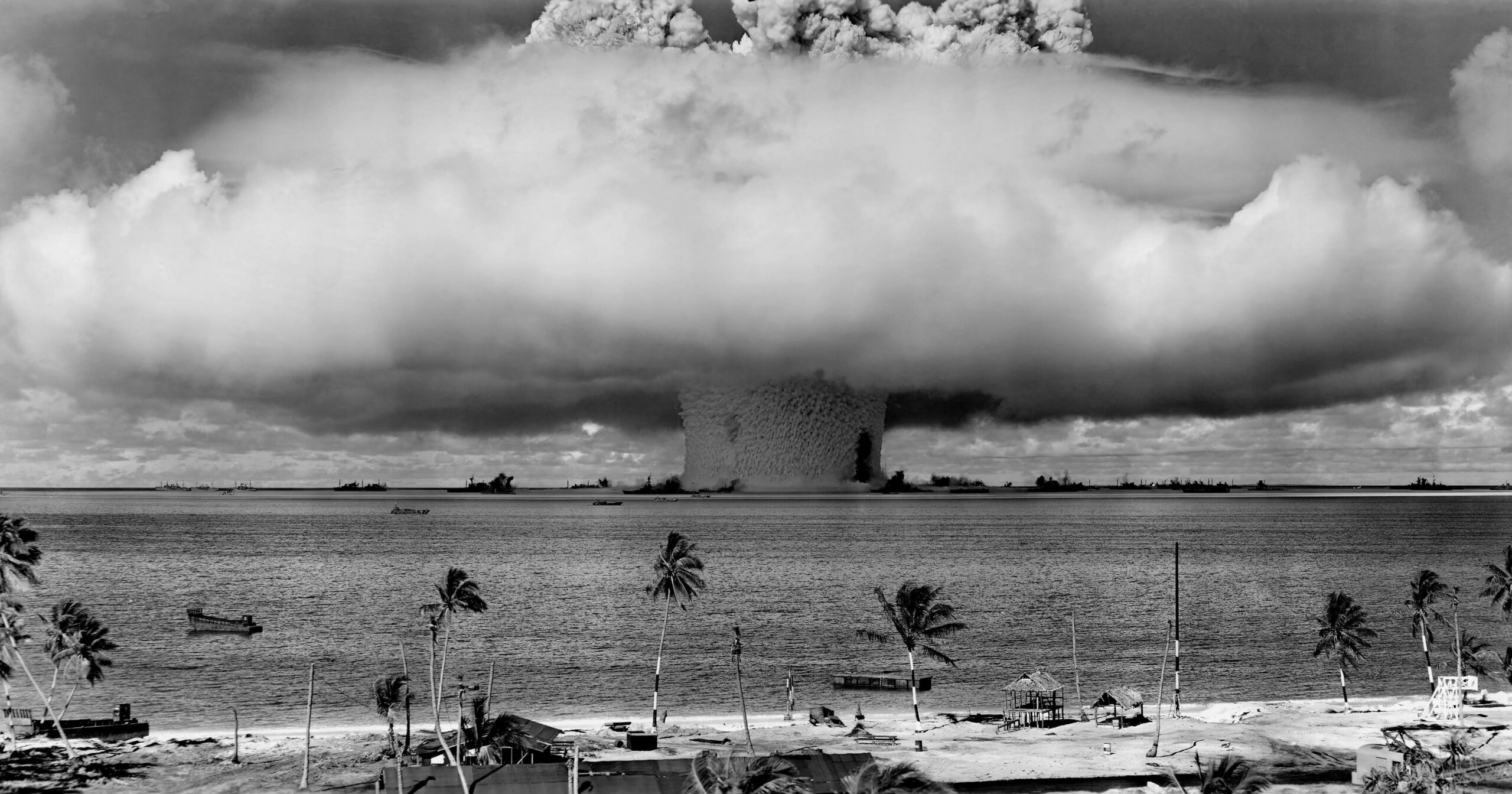
There has not been a major (or minor) nuclear explosion since the 1960s. This is almost entirely because the Treaty on the Non-Proliferation of Nuclear Weapons (NPT) was opened for signature on July 1, 1968. It went into effect on March 7, 1970. It was primarily to end the expansion of these weapons, which were controlled by the United States, Russia, China, France, and the United Kingdom.
Today, despite the ban, Russia has 5,459 warheads, and the US has 5,277. This is enough to destroy the world several times over. There has never been a realistic threat that they will be deployed, since the end of the Cold War, although China continues to add to its arsenal.
The environmental damage done by a nuclear explosion is unimaginable. According to research published in the National Library of Medicine, “two of the most important environmental consequences of this radionuclide’s transfer in the terrestrial environment are the soil deposition and soil-to-plant transfer, which were conditioned during nuclear testing from one region to another by climatic factors, soil physicochemical properties, and plant genetic peculiarities.” (“radionuclide” is a term for radioactive decay)
The damage to the environment, particularly foods which included plants, animal mail and dish, work their way up a poisoned food chain to humans. (Those humans not already killed or badly damaged by the blasts themselves.
A paper by the Warner School of Natural Resources is more direct. “High levels of radiation cause death and disease and could lead to extinction of local animals and plants that are already endangered. Some ecosystems might be pushed beyond their limits for mitigation or adaptation, the scientists warn.”
The incident killed 4,000 people. The environmental impact was tremendous. The WHO reports, “Following the accident, animals and vegetation in forest and mountain areas had high absorption of radiocaesium, with persistent high levels in mushrooms, berries and game.” Once again, there was the risk that this would move up the food chain to humans. (“radiocaesium” is a radioactive fission product)
Put simply, there is no way to estimate exactly how many species would be affected, and some of this would depend on the size of the blast. What is clear is that the effects would, perhaps more importantly, change the constitution of the human food chain, which by itself could cause millions of deaths.
One recent concern is the use of tactical nuclear weapons partly by Russia in Europe. These have less explosive power than intercontinental missiles, but would spread powerful levels of fractionation. According to Scientific American, “A tactical nuclear weapon would produce a fireball, shock waves, and deadly radiation that would cause long-term health damage in survivors. Radioactive fallout would contaminate air, soil, water and the food supply.”
These are the largest nuclear explosions in history, ranked by yield in megatons of TNT equivalent. Most of this ranking is based on information from MIT, the Arms Control Association, Business Insider, and Live Science.
- Tsar Bomba (Soviet Union, October 30, 1961) Yield: 50 megatons
- Test #219 (Soviet Union, December 24, 1962) Yield: 24.2 megatons
- Test #147 (Soviet Union, 1962) Yield: 21.1 megatons
- Test #174 (Soviet Union, 1962) Yield: 20 megatons
- Test #173 (Soviet Union, 1962) Yield: 19.1 megatons
- Castle Bravo (United States, March 1, 1954) Yield: 15 megatons
- Castle Yankee (United States, May 5, 1954) Yield: 13.5 megatons
- Test #123 (Soviet Union, October 23, 1961) Yield: 12.5 megatons
- Castle Romeo (United States, March 27, 1954) Yield: 11 megatons
- Ivy Mike (United States, November 1, 1952) Yield: 10.4 megatons
To give a sense of power, “One 100-kiloton nuclear weapon dropped on New York City could lead to roughly 583,160 fatalities,” according to the International Physicians for the Prevention of Nuclear War