Countries That May be Underwater in Your Kids/Grandkids’ Lifetime

Across the globe, the era of climate change has been largely defined by a rapid warming trend. In much of the world, this has resulted in shorter and milder winters, longer and hotter summers, and greater risk of major natural disasters, such as hurricanes, droughts, floods, and wildfires. But the latest projections, backed by extensive research and statistical modeling, suggest that many of climate change’s most dire consequences will be realized in the coming decades.
Since 1900, the average global sea level has risen by about 8 inches. Rising sea levels are inextricably linked to the unprecedented warming trend that began with the Industrial Revolution, when a surge in fossil fuel consumption drove an accumulation of carbon dioxide and other heat-trapping greenhouse gases in the Earth’s atmosphere. According to the National Oceanic and Atmospheric Administration, higher temperatures have melted glaciers and ice sheets around the world, adding significantly more water to the world’s oceans.
If this trend continues unchecked, the implications are potentially catastrophic. According to climate researchers at the Massachusetts Institute of Technology, current trends indicate that, in the best case scenario, sea-levels around the world will rise by another 8 to 20 inches by the year 2100. In the worst case scenario, oceans are projected to rise by as much as 2 meters by the end of the current century.
These models also suggest that, even if strict global emissions standards are implemented, sea-levels could rise as much as 10 meters by 2300,. The economic and humanitarian toll of such an outcome would be devastating, as hundreds of millions of people around the world live in low-lying coastal areas – including about 30% of the U.S. population. In some countries, rising sea levels could displace well over a third of the entire population in the coming decades and centuries.
Using data from the World Bank, Climate Crisis 247 identified the countries that could soon be underwater. Countries are ranked on the share of the population that lives less than 5 meters above sea level. Only those in which at least one-third of the population live below 5 meters rank on this list. Population levels by elevation are current as of 2015, the most recent year of available data. Supplemental data on land area elevation by country is also from the World Bank and are current as of 2015. Population totals and annual carbon emissions by country are 2024 World Bank estimates.
Among the 10 countries on this list, the share of the population residing at elevations under 5 meters ranges from 33.5% to 78.5%. These places, all of which border an ocean or sea, are home to nearly 11.3 million people in low-lying areas.
While these places may bear the brunt of the rising sea-levels in the coming decades, many have done little to contribute to the climate change phenomenon. Globally, average carbon emissions per capita are about 4.7 tons per year. But of the 10 countries on this list, seven have a per capita carbon output that falls below that threshold.
10. Kiribati
- Share of population living less than 5 meters above sea level: 33.5% (45,101 people)
- Land area less than 5 meters above sea level: 67.6% (211 square miles)
- Coastal border: Pacific Ocean
- Annual carbon emissions: 79,700 tons (0.0002% of global emissions)
- Per capita carbon emissions: 0.6 tons (87.4% below global average)
9. Belize
- Share of population living less than 5 meters above sea level: 33.9% (141,205 people)
- Land area less than 5 meters above sea level: 12.5% (1,096 square miles)
- Coastal border: Caribbean Sea
- Annual carbon emissions: 388,900 tons (0.001% of global emissions)
- Per capita carbon emissions: 0.9 tons (80.1% below global average)
8. Tuvalu
- Share of population living less than 5 meters above sea level: 39.3% (3,788 people)
- Land area less than 5 meters above sea level: 68.0% (8 square miles)
- Coastal border: Pacific Ocean
- Annual carbon emissions: 0 tons (0.0% of global emissions)
- Per capita carbon emissions: 0.0 tons
7. Maldives
- Share of population living less than 5 meters above sea level: 49.2% (259,523 people)
- Land area less than 5 meters above sea level: 80.5% (93 square miles)
- Coastal border: Indian Ocean
- Annual carbon emissions: 1,882,400 tons (0.005% of global emissions)
- Per capita carbon emissions: 3.6 tons (24.0% below global average)
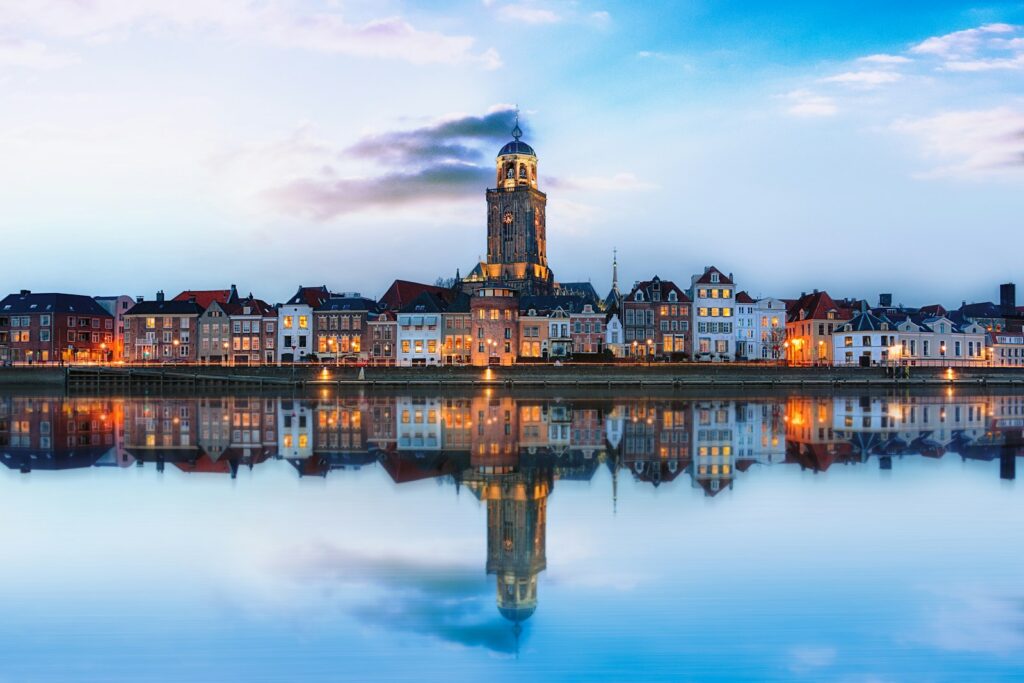
6. Netherlands
- Share of population living less than 5 meters above sea level: 53.7% (9,660,359 people)
- Land area less than 5 meters above sea level: 52.0% (6,761 square miles)
- Coastal border: North Sea
- Annual carbon emissions: 118,790,900 tons (0.3% of global emissions)
- Per capita carbon emissions: 6.6 tons (40.7% above global average)
5. Gibraltar
- Share of population living less than 5 meters above sea level: 56.4% (22,184 people)
- Land area less than 5 meters above sea level: 47.7% (2 square miles)
- Coastal border: Mediterranean Sea
- Annual carbon emissions: 635,100 tons (0.002% of global emissions)
- Per capita carbon emissions: 16.1 tons (244.1% above global average)
4. Greenland
- Share of population living less than 5 meters above sea level: 59.9% (34,024 people)
- Land area less than 5 meters above sea level: 5.1% (8,084 square miles)
- Coastal border: Atlantic Ocean
- Annual carbon emissions: 594,100 tons (0.001% of global emissions)
- Per capita carbon emissions: 10.5 tons (122.7% above global average)
3. Marshall Islands
- Share of population living less than 5 meters above sea level: 68.0% (25,523 people)
- Land area less than 5 meters above sea level: 81.7% (57 square miles)
- Coastal border: Pacific Ocean
- Annual carbon emissions: 100 tons (0.0000003% of global emissions)
- Per capita carbon emissions: >0.1 tons (99.9% below global average)
2. Suriname
- Share of population living less than 5 meters above sea level: 71.3% (452,242 people)
- Land area less than 5 meters above sea level: 6.4% (3,939 square miles)
- Coastal border: Atlantic Ocean
- Annual carbon emissions: 2,576,500 tons (0.007% of global emissions)
- Per capita carbon emissions: 4.1 tons (13.5% below global average)
1. Guyana
- Share of population living less than 5 meters above sea level: 78.5% (652,263 people)
- Land area less than 5 meters above sea level: 5.2% (4,254 square miles)
- Coastal border: Atlantic Ocean
- Annual carbon emissions: 3,788,600 tons (0.01% of global emissions)
- Per capita carbon emissions: 4.6 tons (2.9% below global average)
Sponsor
Find a Vetted Financial Advisor
- Finding a fiduciary financial advisor doesn't have to be hard. SmartAsset's free tool matches you with up to 3 financial advisors that serve your area in 5 minutes.
- Each advisor has been vetted by SmartAsset and is held to a fiduciary standard to act in your best interests. Get on the path toward achieving your financial goals!