Microplastics Permanently Cripple These Parts Of Your Body

Scientists were certain that nanoplastics (synthetic polymers ranging from 1 nm to 1 μm, according to the National Library of Medicine) and microplastics (plastic pieces less than five millimeters long, according to NOAA) were present throughout the human body and caused severe damage to several organ systems.
These assumptions were recently challenged, largely by an article in The Guardian titled “A bombshell: doubt cast on discovery of microplastics throughout human body.” The authors wrote that “high-profile studies reporting the presence of microplastics throughout the human body have been thrown into doubt by scientists who say the discoveries are probably the result of contamination and false positives. One chemist called the concerns ‘a bombshell.'” The article added that “researchers told the Guardian of their concern that the race to publish results, in some cases by groups with limited analytical expertise, has led to rushed results and routine scientific checks sometimes being overlooked.”
While a body of scientists now doubts some study results, anxiety and evidence about plastics in the human body continue to exist.
Microplastics and nanoplastics enter the human body primarily through ingestion of contaminated food and water, through inhalation, and less often through the skin. These particles have been found throughout most of the human body and are tied to various health concerns. However, much of the evidence comes from animal studies, in vitro experiments, and emerging human epidemiological data.
Nanoplastics pose a greater risk due to their ability to cross cellular barriers, enter cells, and even penetrate nuclei. This can cause severe effects like genotoxicity (damage to DNA, genes, and chromosomes that can potentially lead to cancer) and cytotoxicity (cell death). According to Harvard, “Nanoplastics are probably much more dangerous for living organisms than microplastics because they are more abundant and reactive. They can potentially reach more remote locations and penetrate living cells.”
Below is a summary of the body parts and systems most likely to be affected, based on current scientific literature from Harvard, the Penn State Institute of Energy and the Environment, NERC, Sanford Medicine, the NIH, the BBC, and ScienceDirect. Some summaries use methodology similar to that of Bloomberg AI-Powered News Summaries, Yahoo News, and The Wall Street Journal.
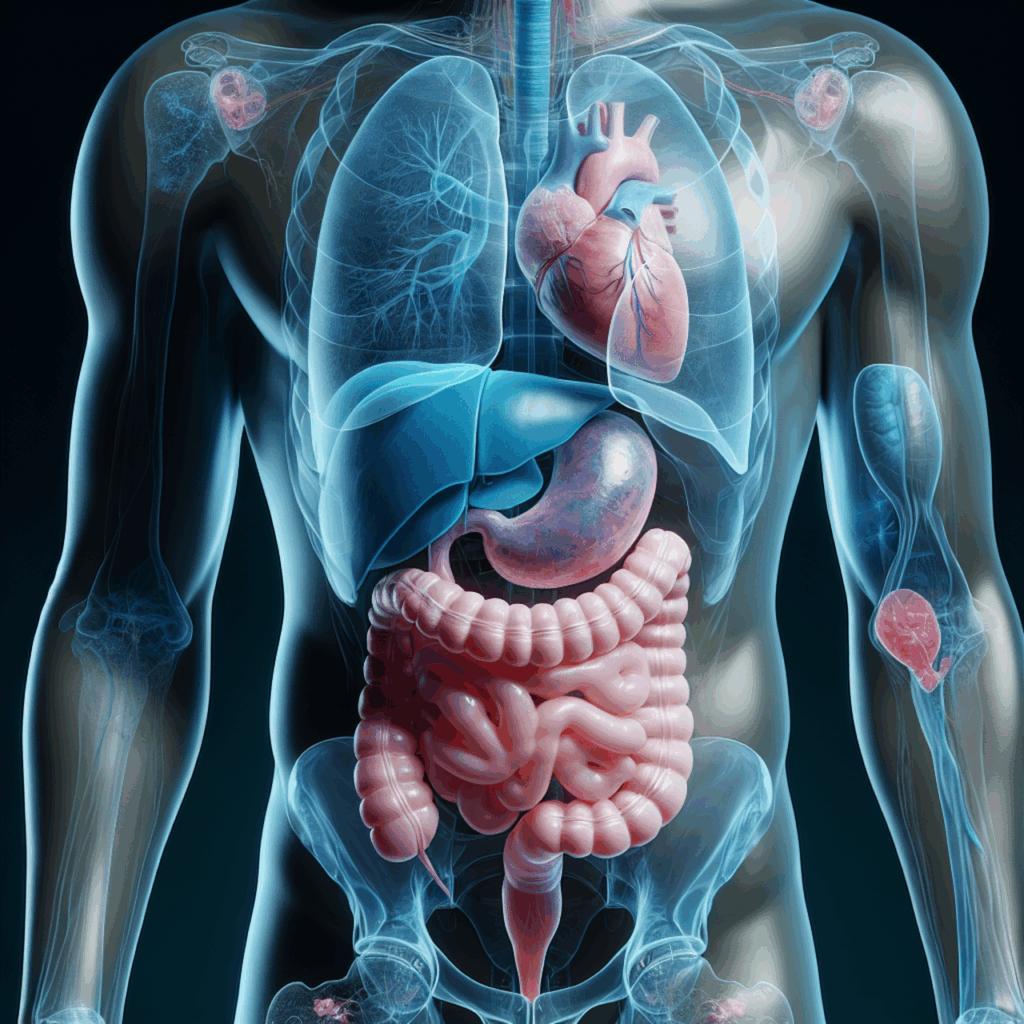
Gastrointestinal Tract: Particles mostly enter through ingestion, accumulate, and cross the gut barrier, causing inflammation, oxidative stress, microbiota dysbiosis, reduced mucin secretion, altered amino acid and bile acid metabolism, barrier dysfunction, apoptosis, and metabolic disorders. Higher fecal concentrations are related to inflammatory bowel disease severity in humans.
Lungs/Respiratory System: Inhaled particles permeate the alveolar barrier, triggering inflammation (upregulated cytokines like IL-8), oxidative stress, apoptosis, pulmonary inflammation, and potentially cancer, asthma, and hypersensitivity pneumonitis. Nanoplastics can enter the bloodstream through this system, worsening effects.
Liver: Accumulation leads to inflammation, oxidative stress, reduced ATP levels, disrupted lipid and energy metabolism, histopathological changes, and persistent metabolic disorders, including in newborns through maternal exposure.
Cardiovascular System: Particles detected in blood and atherosclerotic plaques are associated with increased inflammation, blood clotting, and higher risks of heart attacks, strokes, and overall cardiovascular disease.
Kidneys: Distribution and accumulation contribute to oxidative stress and impaired energy metabolism.
Reproductive System: Particles cross placental barriers and are linked to reduced sperm count and quality, ovarian scarring, metabolic disorders in offspring, and low fertility. Endocrine disruption from leached chemicals amplifies these risks.
Nervous System/Brain: Potential neurotoxicity includes fatigue, dizziness, DNA damage, changes in gene activity, and altered hormone metabolism. Nanoplastics may cross the blood-brain barrier.
Skin: Penetration through wounds or follicles disrupts barrier function, causing inflammation and oxidative stress, particularly under UV exposure.
Additional general effects include cancer risks from oxidative and DNA damage, immune system disruption through altered macrophage function and cytokine production, and amplification of other toxins.
Perhaps most importantly, regardless of which research proves more or less accurate, the overall picture remains concerning. As Stanford reported, “They’re in the water we drink, the food we eat, the clothes we wear, and the air we breathe. They’ve pervaded every ecosystem in the world, from coral reefs to Antarctic ice. And they’ve infiltrated the human body, lodging themselves in everything from brain tissue to reproductive organs.”
Sponsor
Find a Vetted Financial Advisor
- Finding a fiduciary financial advisor doesn't have to be hard. SmartAsset's free tool matches you with up to 3 financial advisors that serve your area in 5 minutes.
- Each advisor has been vetted by SmartAsset and is held to a fiduciary standard to act in your best interests. Get on the path toward achieving your financial goals!