Real Estate Values are Collapsing in These Polluted American Counties
Since the industrial revolution, marked changes in the global climate have been driven by the accelerating accumulation of carbon in the Earth’s atmosphere. The most direct impact of this phenomenon has been an unprecedented pace of warming. Since 1970, the Earth has been warming at a rate of 1.7°C per century – while over the last 7,000 years, the world had been cooling at a rate of 0.01°C per century, according to The Intergovernmental Panel on Climate Change. Higher temperatures have the knock-on effect of producing natural disasters with greater frequency and intensity – and in parts of the United States, these climactic shifts are impacting the real estate market.
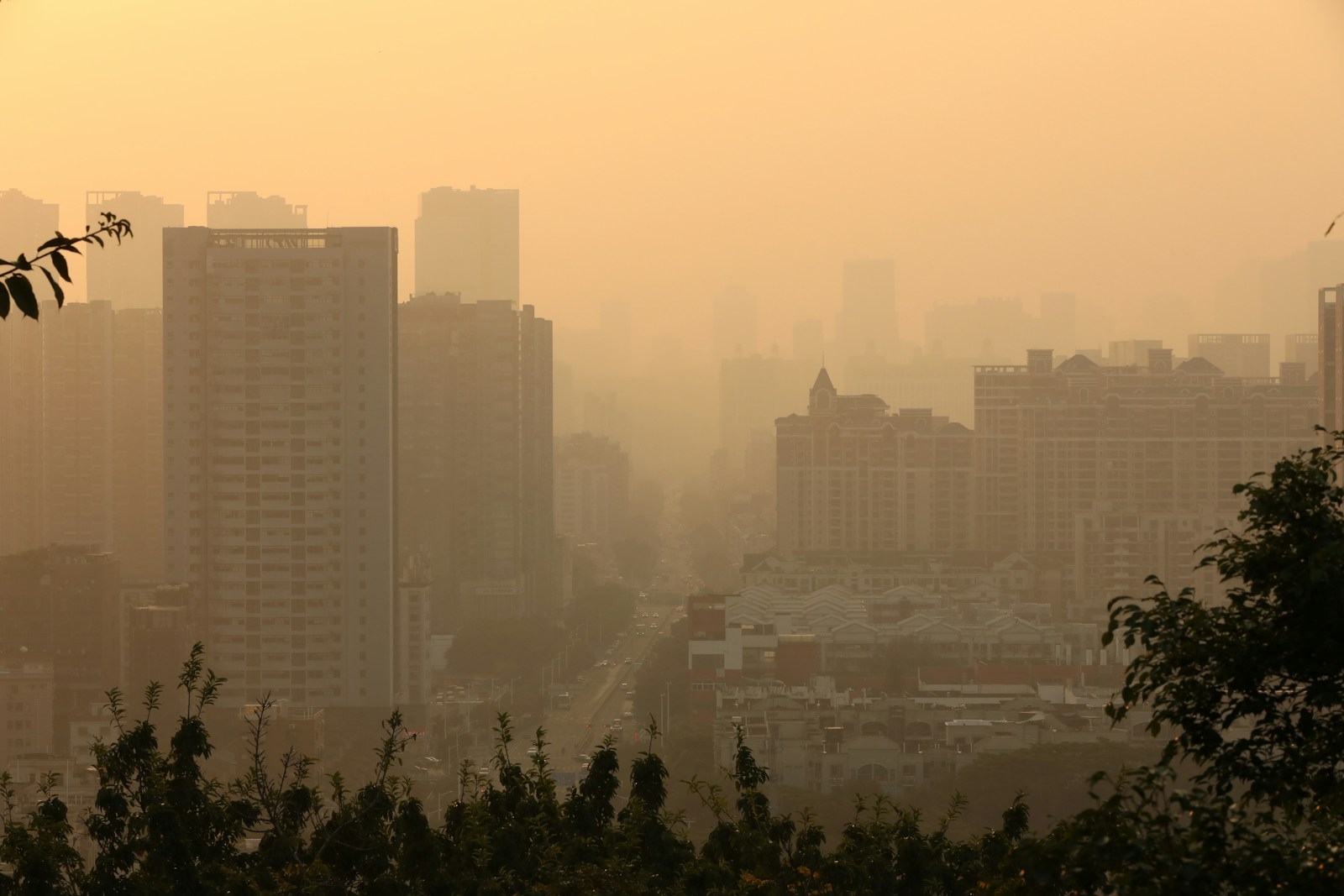
Flooding in river valleys and low-lying areas, destructive tornadoes in the Midwest, and wildfires exacerbated by drought conditions in parts of the West pose a perennial threat to millions of homeowners. In communities along the Atlantic and Gulf coasts, the risk of devastating hurricane winds and storm surges has sent insurance coasts soaring, and have even pushed some insurers out of the market entirely. Poor air quality is another phenomenon often associated with climate change, which, while not visibly destructive, poses a significant public health risk.
Air pollution is often created by wildfires and fumes emitted by factories, power plants, and vehicles. Long term exposure to high concentrations of microscopic air born pollutants – specifically those with a diameter of 2.5 micrometers or less, known as PM2.5 – has been linked to reduced lung function, chronic bronchitis, and even premature death. Even short-term exposure can trigger asthma attacks, raise the risk of respiratory infection, and even cause heart attacks in those with certain pre-existing conditions.
As the effects of climate change become increasingly evident, Americans are moving out of communities with low air quality in droves. According to a 2024 study conducted by Redfin, a brokerage services company, 1.2 million more people moved out of metro areas at high risk of poor air quality than moved in between 2021 and 2022. Over the same period, metro areas with low risk of poor air quality reported a net influx of approximately 1 million people. In parts of the country, this trend may have continued into 2025, as housing prices in many markets with the worst air quality are falling rapidly this year.
Using the latest available data from County Health Rankings and Roadmaps, a program of the University of Wisconsin Population Health Institute, Climate Crisis 247 identified the low air-quality communities where home prices are collapsing. We ranked over 3,000 U.S. counties and county equivalents on average daily concentration of PM2.5, and identified the places with the worst air quality where home list prices fell between January and November 2025. Changes in median list price were calculated using data from Realtor.com, a real estate listings website. Supplemental population data are five-year estimates from the U.S. Census Bureau’s 2023 American Community Survey.
Nationwide, there are 17 counties with a daily average of at least 17 micrograms of PM2.5 per cubic meter. In 10 of these counties, list prices are down in 2025, in most cases by $10,000 or more. These counties are all located in the West, including seven in California alone.
10. Glenn County, California
- Average daily density of PM2.5 (air pollution): 17.0 micrograms per cubic meter (132.9% greater than U.S. avg.)
- Change in median home list price in 2025: -17.5% (-$76,250)
- Median list price by month: $359,000 in November 2025; $435,250 in January 2025
- Total num. of homes put on the market in 2025: 192
- County population: 28,623
9. Madera County, California
- Average daily density of PM2.5 (air pollution): 17.1 micrograms per cubic meter (134.2% greater than U.S. avg.)
- Change in median home list price in 2025: -2.1% (-$10,350)
- Median list price by month: $489,000 in November 2025; $499,350 in January 2025
- Total num. of homes put on the market in 2025: 1,824
- County population: 158,790
8. Jefferson County, Oregon
- Average daily density of PM2.5 (air pollution): 18.4 micrograms per cubic meter (152.1% greater than U.S. avg.)
- Change in median home list price in 2025: -3.4% (-$16,463)
- Median list price by month: $474,900 in November 2025; $491,363 in January 2025
- Total num. of homes put on the market in 2025: 326
- County population: 24,973
7. Klamath County, Oregon
- Average daily density of PM2.5 (air pollution): 19.7 micrograms per cubic meter (169.9% greater than U.S. avg.)
- Change in median home list price in 2025: -2.5% (-$10,000)
- Median list price by month: $389,000 in November 2025; $399,000 in January 2025
- Total num. of homes put on the market in 2025: 1,016
- County population: 69,812

6. Fresno County, California
- Average daily density of PM2.5 (air pollution): 20.3 micrograms per cubic meter (178.1% greater than U.S. avg.)
- Change in median home list price in 2025: -1.5% (-$7,000)
- Median list price by month: $450,000 in November 2025; $457,000 in January 2025
- Total num. of homes put on the market in 2025: 7,718
- County population: 1,012,152
5. San Diego County, California
- Average daily density of PM2.5 (air pollution): 20.6 micrograms per cubic meter (182.2% greater than U.S. avg.)
- Change in median home list price in 2025: -3.7% (-$35,000)
- Median list price by month: $915,000 in November 2025; $950,000 in January 2025
- Total num. of homes put on the market in 2025: 29,002
- County population: 3,282,782
4. Tulare County, California
- Average daily density of PM2.5 (air pollution): 20.8 micrograms per cubic meter (184.9% greater than U.S. avg.)
- Change in median home list price in 2025: -1.3% (-$5,215)
- Median list price by month: $409,735 in November 2025; $414,950 in January 2025
- Total num. of homes put on the market in 2025: 3,452
- County population: 475,774
3. Linn County, Oregon
- Average daily density of PM2.5 (air pollution): 21.0 micrograms per cubic meter (187.7% greater than U.S. avg.)
- Change in median home list price in 2025: -1.3% (-$5,998)
- Median list price by month: $449,950 in November 2025; $455,948 in January 2025
- Total num. of homes put on the market in 2025: 1,424
- County population: 129,794
2. Mariposa County, California
- Average daily density of PM2.5 (air pollution): 21.3 micrograms per cubic meter (191.8% greater than U.S. avg.)
- Change in median home list price in 2025: -1.1% (-$5,750)
- Median list price by month: $499,000 in November 2025; $504,750 in January 2025
- Total num. of homes put on the market in 2025: 324
- County population: 17,060
1. Mono County, California
- Average daily density of PM2.5 (air pollution): 39.1 micrograms per cubic meter (435.6% greater than U.S. avg.)
- Change in median home list price in 2025: -8.0% (-$71,550)
- Median list price by month: $819,450 in November 2025; $891,000 in January 2025
- Total num. of homes put on the market in 2025: 508
- County population: 13,169