States That Rely The Most On Nuclear Power To Keep the Lights On
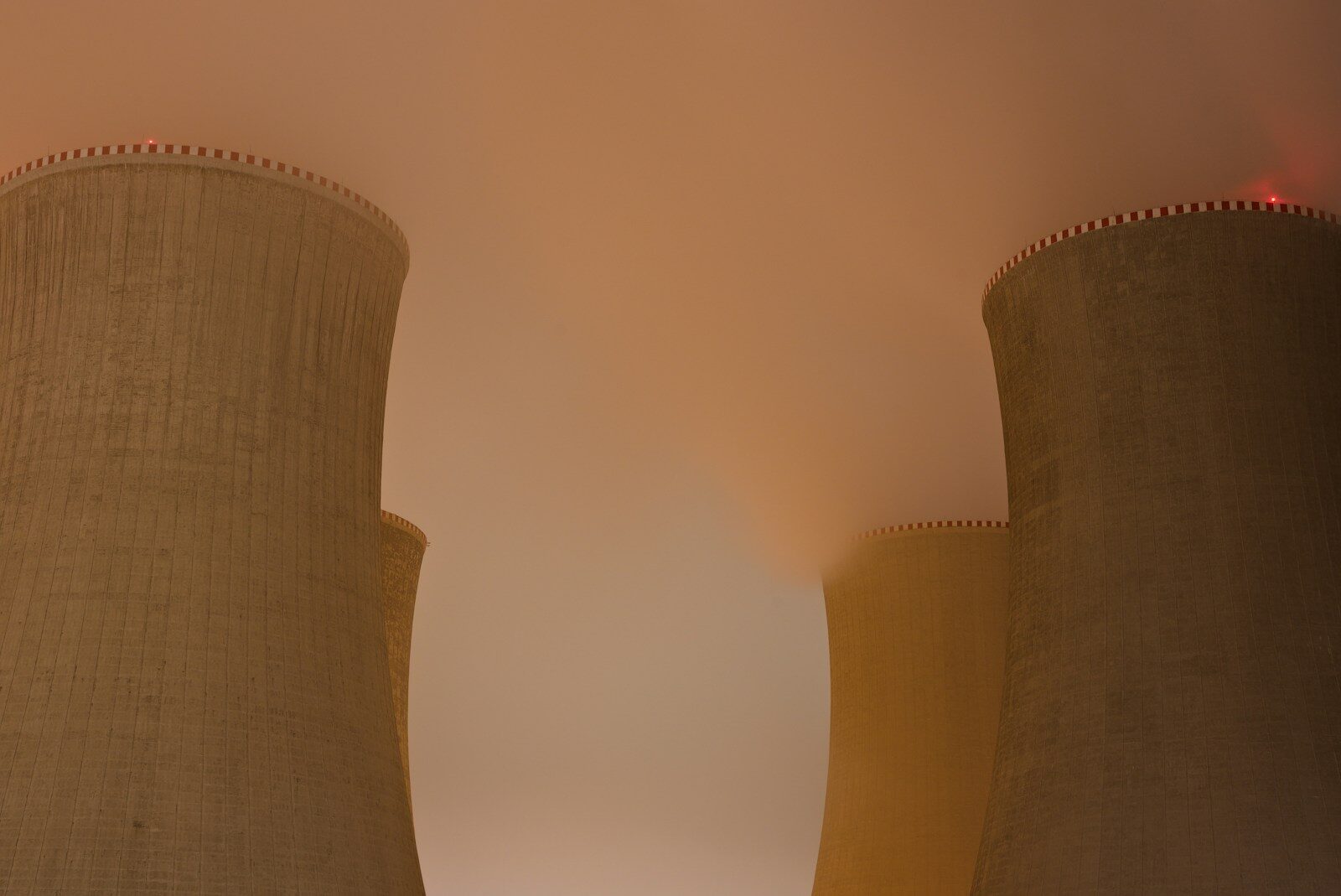
The United States is one of the leading consumers of energy. Home to less than 5% of the world’s population, the U.S. accounts for nearly 15% of global electricity demand. According to the Energy Information Administration, Americans used 4,194 billion kilowatt hours of electricity in 2024, more than nearly every other country with the exception of China. To ensure adequate supply, utility companies generate power through a diverse range of sources, including coal, natural gas, hydraulics, wind, solar, and – perhaps most controversially, nuclear fission.
In recent decades, investment in nuclear power has largely stalled. Only three of the 96 active nuclear reactors in the U.S. came online in the 21st century, while 87 became operational in the 1970s and 1980s. Meanwhile, electric utility companies have been rapidly expanding wind, solar, and natural gas-powered energy infrastructure. As a result, the share of domestic electricity generated in nuclear plants has declined from nearly 21% to about 18% over the last 10 years.
Unlike coal or natural gas-fired plants, nuclear power provides emissions-free energy – and unlike other clean energy sources, nuclear plants are designed to operate around the clock in virtually all weather conditions. There are also disadvantages, however. In addition to high up-front costs, nuclear power plants create radioactive waste that can be harmful to humans for thousands of years. And while nuclear facilities are tightly regulated, human error and unanticipated circumstances can lead to catastrophes, like the 2011 meltdown at the Fukushima Power Plant in Japan.
Despite these risks, nuclear power may be poised for a comeback in the United States. In the era of climate change, there is a growing appetite for clean energy – and as U.S. electricity demand is projected to surge in the coming years, the American public is reconsidering their options. According to a 2025 study from the Pew Research Center, 59% of adults in the U.S. support more nuclear power, up from only 43% in 2020.
Currently, the Kemmerer nuclear reactor, scheduled to come online in Lincoln County, Wyoming by 2030, is the only new nuclear facility officially planned to contribute to the U.S. power grid, according to the EIA. Still, in parts of the country, nuclear power is already critical to electricity production, supplying nearly one-third or more of the energy mix in certain states.
Using data from the EIA, Climate Crisis 247 identified the states running on nuclear power. We ranked all 28 states home to nuclear power plants on the share of electricity derived from nuclear facilities, listing only the top 10. All supplemental data is from the EIA. We also calculated the estimated number of households that in-state nuclear energy production can power over the course of a year using state-level average household electricity consumption.
Among the 10 states on this list, nuclear power plants account for anywhere from 31.1% to 56.7% of electricity production. Collectively, nuclear reactors in these states produce enough electricity in a given year to power nearly 37.3 million households.

10. Alabama
- Nuclear as a share of state electric grid: 31.1%
- Electricity generated by nuclear power in 2025: 42,673 GWh (enough to power approx. 3,111,184 homes)
- 10-year change in nuclear power generation: +6.9%
- Number of operational nuclear reactors in state: 5
- Largest nuclear power plant in state: Browns Ferry Nuclear Power Plant in Limestone County (3,854 MW nameplate capacity)
9. North Carolina
- Nuclear as a share of state electric grid: 32.2%
- Electricity generated by nuclear power in 2025: 43,047 GWh (enough to power approx. 3,534,236 homes)
- 10-year change in nuclear power generation: +0.6%
- Number of operational nuclear reactors in state: 5
- Largest nuclear power plant in state: McGuire Nuclear Power Plant in Mecklenburg County (2,441 MW nameplate capacity)
8. Georgia
- Nuclear as a share of state electric grid: 36.0%
- Electricity generated by nuclear power in 2025: 51,225 GWh (enough to power approx. 3,974,628 homes)
- 10-year change in nuclear power generation: +48.6%
- Number of operational nuclear reactors in state: 6
- Largest nuclear power plant in state: Vogtle Nuclear Power Plant in Burke County (4,658 MW nameplate capacity)
7. Connecticut
- Nuclear as a share of state electric grid: 39.1%
- Electricity generated by nuclear power in 2025: 16,709 GWh (enough to power approx. 2,003,477 homes)
- 10-year change in nuclear power generation: +0.8%
- Number of operational nuclear reactors in state: 2
- Largest nuclear power plant in state: Millstone Nuclear Power Plant in New London County (2,260 MW nameplate capacity)
6. Maryland
- Nuclear as a share of state electric grid: 39.7%
- Electricity generated by nuclear power in 2025: 14,795 GWh (enough to power approx. 1,327,144 homes)
- 10-year change in nuclear power generation: +0.2%
- Number of operational nuclear reactors in state: 2
- Largest nuclear power plant in state: Calvert Cliffs Nuclear Power Plant in Calvert County (1,850 MW nameplate capacity)
5. Tennessee
- Nuclear as a share of state electric grid: 40.5%
- Electricity generated by nuclear power in 2025: 29,333 GWh (enough to power approx. 2,118,212 homes)
- 10-year change in nuclear power generation: -0.8%
- Number of operational nuclear reactors in state: 4
- Largest nuclear power plant in state: Watts Bar Nuclear Plant in Rhea County (2,540 MW nameplate capacity)
4. New Jersey
- Nuclear as a share of state electric grid: 47.3%
- Electricity generated by nuclear power in 2025: 27,918 GWh (enough to power approx. 3,514,350 homes)
- 10-year change in nuclear power generation: -6.6%
- Number of operational nuclear reactors in state: 3
- Largest nuclear power plant in state: PSEG Hope Creek Generating Station in Salem County (3,631 MW nameplate capacity)
3. Illinois
- Nuclear as a share of state electric grid: 51.2%
- Electricity generated by nuclear power in 2025: 97,670 GWh (enough to power approx. 11,744,829 homes)
- 10-year change in nuclear power generation: -1.0%
- Number of operational nuclear reactors in state: 11
- Largest nuclear power plant in state: Braidwood and Bryan Generation Stations in Ogle and Will Counties (2,450 MW nameplate capacity each)
2. South Carolina
- Nuclear as a share of state electric grid: 54.9%
- Electricity generated by nuclear power in 2025: 56,671 GWh (enough to power approx. 4,497,698 homes)
- 10-year change in nuclear power generation: +1.5%
- Number of operational nuclear reactors in state: 7
- Largest nuclear power plant in state: Oconee Nuclear Power Plant in Oconee County (2,667 MW nameplate capacity)
1. New Hampshire
- Nuclear as a share of state electric grid: 56.7%
- Electricity generated by nuclear power in 2025: 10,910 GWh (enough to power approx. 1,468,767 homes)
- 10-year change in nuclear power generation: +1.4%
- Number of operational nuclear reactors in state: 1
- Largest nuclear power plant in state: Seabrook Nuclear Power Plant in Rockingham County (1,242 MW nameplate capacity)