America’s Best And Worst Cities To Own An EV
There are many ways to measure whether a place is “EV-friendly.” At the national level, Norway leads the world: 95% of new cars sold there are EVs, thanks to aggressive tax incentives and a charging network that is likely unmatched anywhere else.
Public charging stations are essential to EV adoption because people don’t want to rely on a home charger alone. On a road trip, an EV driver has to plan carefully for where to charge, sometimes after as little as 200 miles.
Drivers often compare charging a car to filling a gas tank, and gas-powered cars have the clear advantage. A driver can fill a tank in about 10 minutes, while a home EV charger takes hours. Public Level 3/DC fast chargers can bring a battery to 80% in about 20 minutes, but that is still considerably longer than a fill-up.
Convenience also depends on the number of locations. The US has about 180,000 gas stations, nearly all with several pumps, so waiting for a pump is almost unheard of. The country has close to 300,000 EV chargers, but most public locations have only a few. Adding chargers doesn’t fully solve the problem, because lines already form at some stations. Yahoo Autos noted, “Charging infrastructure has improved dramatically over the last several years, but the actual queuing experience has remained surprisingly primitive. Most public charging stations still operate on an informal first-come, first-served basis with no digital coordination system in place.”
The industry also faces a new challenge: growth in public charging stations is slowing considerably, according to iSeeCars. Year-over-year growth averaged about 30% from 2012 to 2024, fell to 25% last year, and is forecast to reach only 15.5% in 2026. Nothing suggests the trend will reverse. The slowdown adds to the troubles of an already struggling US EV industry. As iSeeCars Executive Analyst Karl Brauer put it, “Charging infrastructure remains a primary concern for mainstream consumers considering an electric vehicle.”
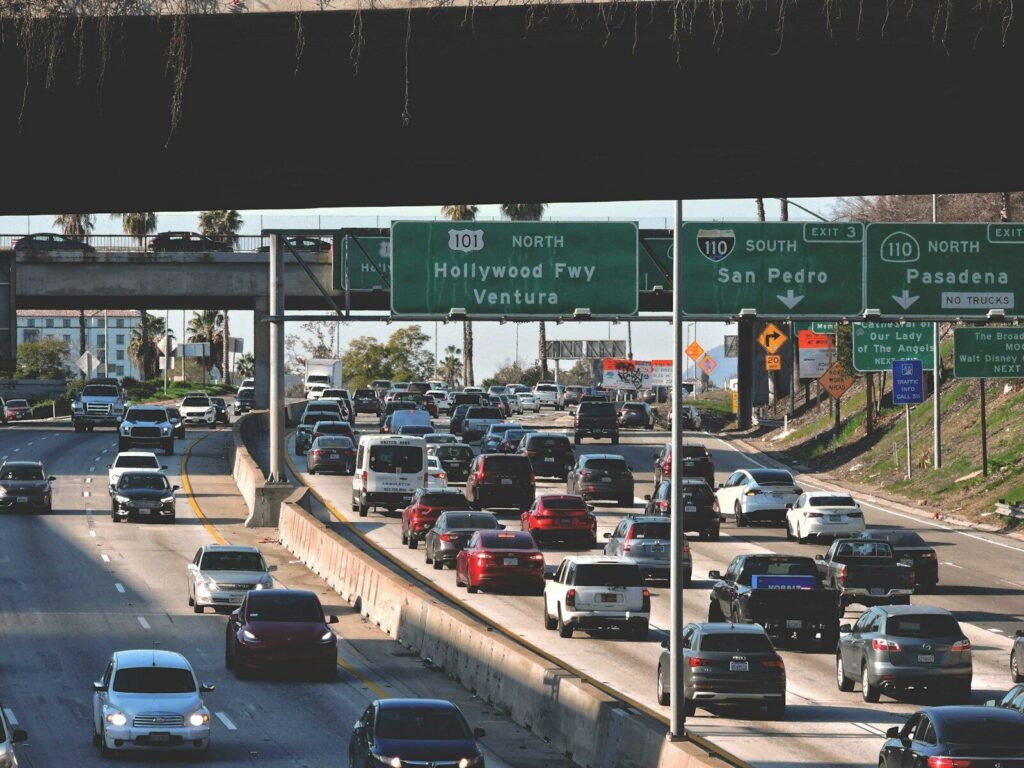
One way to gauge access to public charging is the ratio of residents to chargers. The lower the number, the better for EV owners. By this measure, the most EV-friendly metro areas are San Francisco, San Diego, and Los Angeles. San Francisco’s ratio is 334 residents per charger. That is unsurprising, since California leads all states in EV registrations by a wide margin, with 3,026 per 100,000 people, according to Visual Capitalist.
EV sales fell almost 20% in the first half of this year, and the expiration of the federal $7,500 tax credit took most of the blame. Even so, EV sales are unlikely to change much until public charging stations are widely available and the long lines are gone.
| Rank | Most EV-Friendly Metro Area | Residents per Charger | Total Chargers | Least EV-Friendly Metro Area | Residents per Charger | Total Chargers |
|---|---|---|---|---|---|---|
| 1 | San Francisco-Oakland-San Jose, CA | 334 | 22,430 | Louisville, KY | 2,904 | 621 |
| 2 | San Diego, CA | 432 | 7,582 | Indianapolis, IN | 2,758 | 1,142 |
| 3 | Los Angeles, CA | 500 | 36,318 | Milwaukee, WI | 2,716 | 852 |
| 4 | Denver, CO | 569 | 8,300 | Greensboro-Winston Salem, NC | 2,669 | 700 |
| 5 | Boston, MA-Manchester, NH | 571 | 12,017 | San Antonio, TX | 2,666 | 1,112 |
| 6 | Hartford & New Haven, CT | 611 | 4,351 | Houston, TX | 2,453 | 3,170 |
| 7 | Sacramento-Stockton-Modesto, CA | 659 | 6,836 | Cleveland-Akron (Canton), OH | 2,393 | 1,615 |
| 8 | Seattle-Tacoma, WA | 716 | 7,820 | Birmingham, AL | 2,355 | 857 |
| 9 | Portland, OR | 885 | 3,951 | Oklahoma City, OK | 2,337 | 867 |
| 10 | Austin, TX | [confirm] | [confirm] | Harrisburg-Lancaster-York, PA | 2,243 | 935 |
| National Average | 1,143 | 299,798 |
More from ClimateCrisis 247
- Climate Change Is Increasing Simultaneous Exposure to Heat Waves and Wildfire Smoke
- Wildlife Populations Have Plunged Globally, But Some Buck the Trend
- Major US Cities Doing the Most to Prepare for Climate Change
- The Nations Producing the Most Pollution