American Cities With the Cleanest Air

Two organizations set the gold standard for measuring air quality in American cities. The first is the American Lung Association’s “State of the Air 2026”; the second is the IQAir Air Quality in the World study. Both draw on similar datasets.
At a time when the dangers of air pollution are a frequent subject of research and public discussion, clean air rarely makes headlines. Yet the cities on this list have achieved notably good air quality — for reasons that, unfortunately, are difficult to replicate elsewhere. That means the solutions to air pollution are not likely to be found by studying them.
Each study measures some combination of three pollutants: ozone, short-term particle pollution (24-hour PM2.5), and year-round particle pollution (annual PM2.5).
The EPA offers the most widely used definitions for both. Ground-level ozone “is not emitted directly; it is a harmful secondary pollutant created when emissions from cars, power plants, and industrial facilities react chemically with sunlight.” PM2.5 refers to “fine inhalable particles, with diameters that are generally 2.5 micrometers and smaller.” Together, these two measures are the most common yardsticks for air pollution.
To compile this list, we drew on the results of both studies and weighted each city’s scores equally.
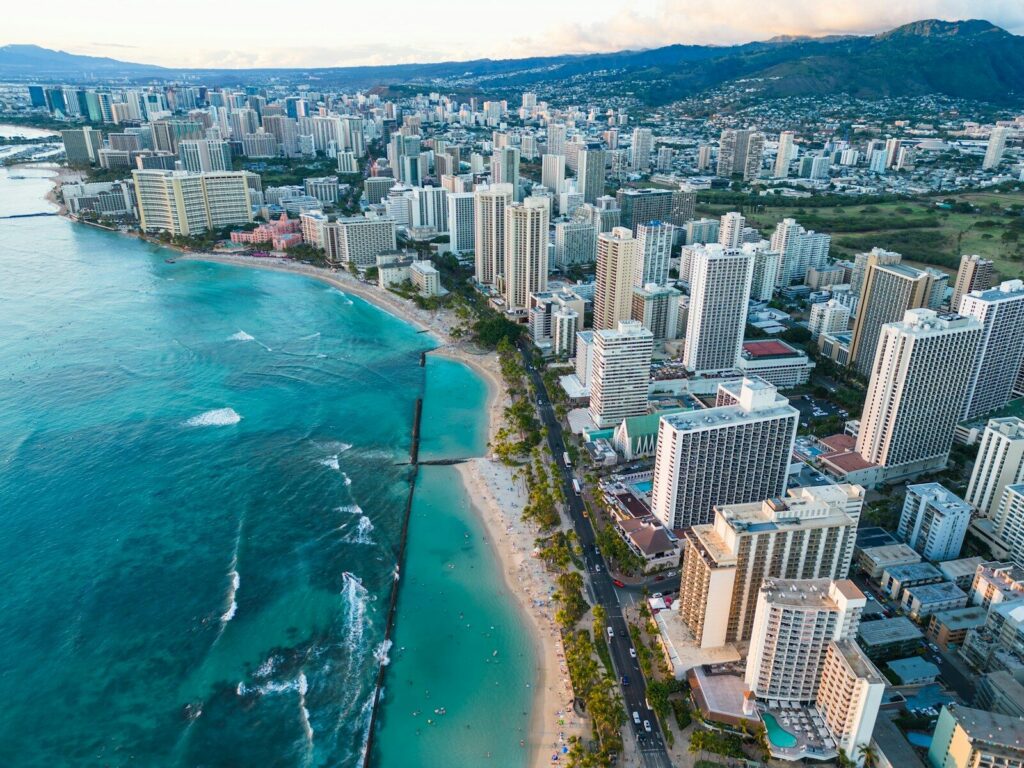
- Honolulu / Urban Honolulu, HI
- Seattle, WA
- Bozeman, MT
- Burlington–South Burlington–Barre, VT
- Anchorage, AK
- St. George, UT
- Bangor, ME
- Kahului–Wailuku, HI
- Portland, OR
The cleanest cities tend to share several characteristics. Most have little industrial concentration in the surrounding region, which often goes hand in hand with geographic remoteness — as is the case with Bozeman and Bangor. Many are situated along or near ocean coasts, a category that includes Honolulu and Seattle. In general, these cities have relatively small populations, though Seattle is a notable exception, with a metro area of 4.2 million residents.
Why do these measurements matter? According to the ALA, 44% of Americans — roughly 152 million people — live in areas with unhealthy air. Long-term exposure to air pollution carries serious health consequences, and for people with chronic lung disease, poor air quality is an immediate and daily concern.
The most sobering takeaway from this list is that truly clean air in an American city appears to require a rare combination of circumstances. Detroit or Los Angeles may well have had air as clean as any of these cities — but that would have been more than two centuries ago.
More from ClimateCrisis 247
- Cities Where It Now Freezes Much Less In The Fall Than the Past
- Six American Cities Facing Billion Dollar Flood Losses
- Tips on How Americans Can Save 25% On Gas
- Summer 2026 Ended with Freezing Temperatures in These 10 States