States That Didn’t Have Wildfires Last Year
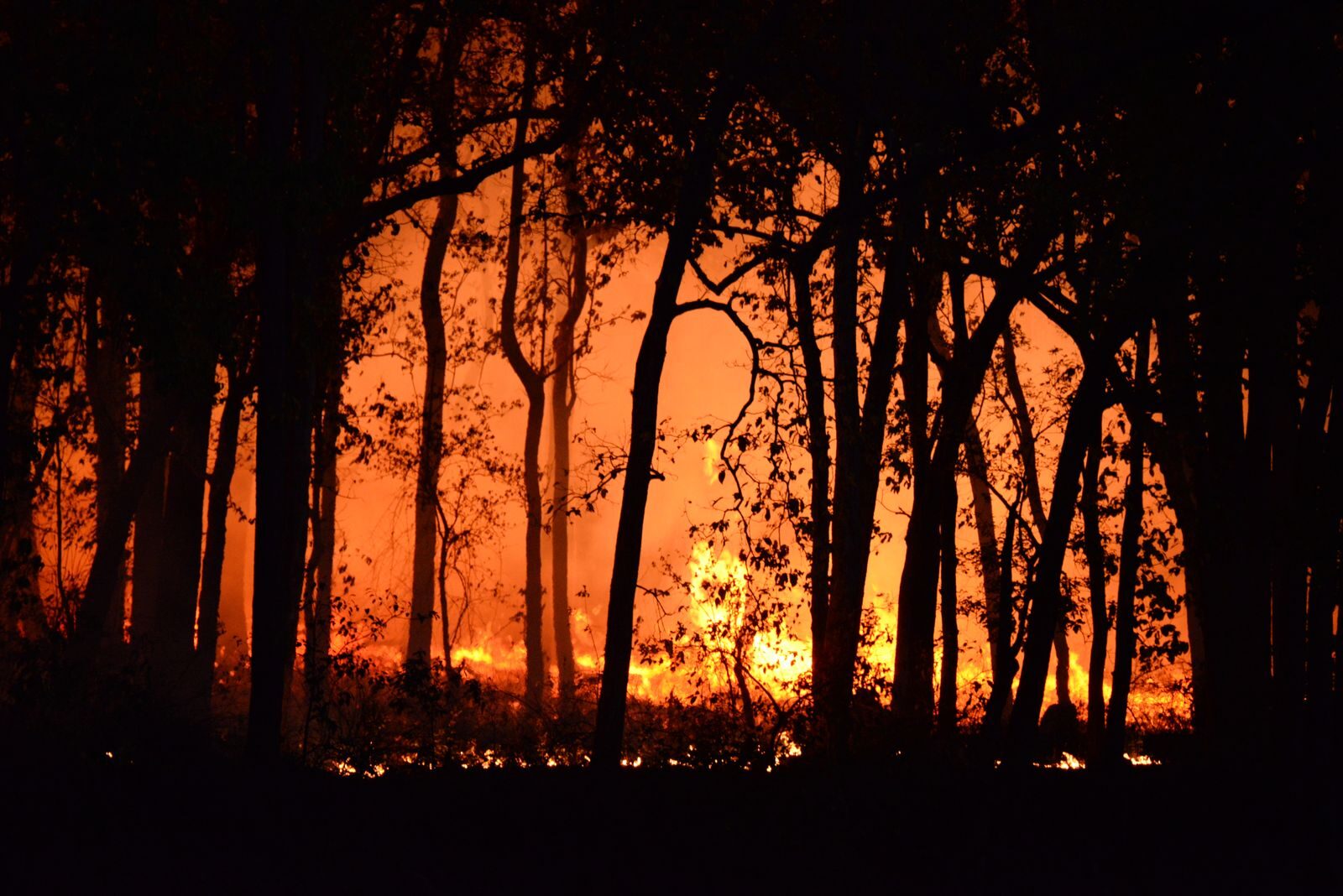
There are two common ways to measure wildfires: by number and by acres burned. Last year, 11 states had fewer than 1,000 acres burned — an area comparable to a fairly large farm.
These numbers are especially small compared to the states that ranked highest in acres burned. Alaska topped one million acres last year. California posted just over 500,000. Arizona’s fires burned more than 300,000 acres, as did those in Oregon and Oklahoma.
Obviously, a state’s geographic size is a major factor in how much land wildfires burn. But several other factors matter too, many tied to climate and others to human activity. Smaller states don’t just cover less land — they also tend to be more densely populated, which means firefighters can reach fires more quickly and improve the odds of containment.
Climatecrisis247 examined the states that had barely any acres burned last year and looked for the reasons why. Our primary source was the 2025 Wildland Fire Summary and Statistics Annual Report from the National Interagency Coordination Center (nifc.gov). Additional data came from scientific papers, local media, USAFacts, and NOAA. USAFacts noted that “US wildfires burned 5.1 million acres in 2025, down 43% from 2024. Since 1983, fires have burned more than 230 million acres—over 2x California’s size.”
Drought versus moisture is clearly a distinguishing factor. The Northwest tends to receive more rain than most of the rest of the country. The Great Lakes region has abundant water and lakes, and Hawaii is surrounded by ocean. This year has been unusually dry across most of the nation; however, the U.S. Drought Monitor shows very little drought in the Midwest or Northeast, while the central states — including Colorado — and much of the Southwest are experiencing near-record drought. States with low wildfire acreage tend not only to have high rainfall but also to see that moisture year-round.
Rhode Island, Delaware, Connecticut, and New Hampshire are among the smallest states by land area, and each appears on the 2025 list of states with the fewest acres burned by wildfire. Each is also heavily forested.
Dense population makes it harder for fires to spread undetected and typically means more urban firefighting resources are nearby. Massachusetts, which is on this list, is among the most densely populated states — as are Rhode Island and Connecticut.
Wind is another factor that influences how quickly fire spreads. Data from the Global Wind Atlas and World Population Review show that Connecticut, Delaware, Indiana, and Rhode Island are all low-wind states.
2026 is shaping up to be one of the worst years in U.S. history, measured both by number of wildfires and acres burned to date: 42,379 wildfires and 4,185,831 acres so far. The states on this list are highly unlikely to contribute much to those totals.
Data source: The 2025 Wildland Fire Summary and Statistics Annual Report, National Interagency Coordination Center (nifc.gov).
| Rank | State | Acres Burned (2025) |
|---|---|---|
| 1 | Indiana | 38 |
| 2 | Rhode Island | 66 |
| 3 | Vermont | 70 |
| 4 | Delaware | 82 |
| 5 | New Hampshire | 146 |
| 6 | West Virginia | 428 |
| 7 | Maine | 515 |
| 8 | Connecticut | 548 |
| 9 | South Carolina | 760 |
| 10 | New York | 841 |
| 11 | Massachusetts | 928 |
More from ClimateCrisis 247
- Is coal really making a comeback?
- States With the Deadliest Tornadoes Since 1950
- The Driest Places in America This Year
- Due to Low Sales, These Are The EVs That Disappeared This Year