States That May Soon Ban AI Data Centers
Artificial intelligence represents a major technological breakthrough, and one that may prove to be among the most transformative in human history. According to a survey published by the Pew Research Center, a majority of industry experts predict that AI will have a positive impact on the workplace, healthcare, education, and the economy at large in the coming years. Presently, however, the infrastructure behind AI technology is rapidly emerging as one of the most controversial issues in state and local politics.
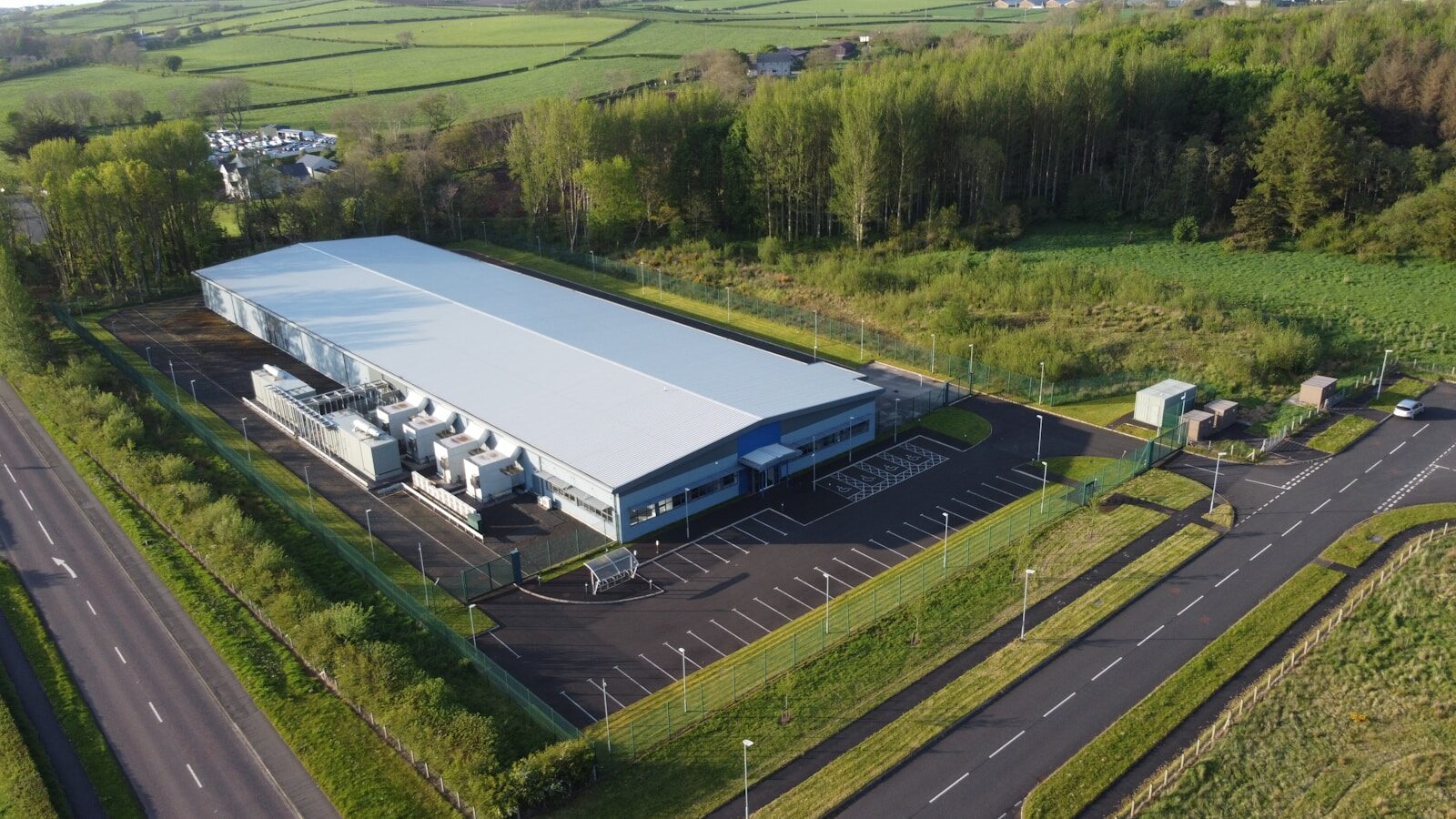
AI technology is powered by massive, resource intensive data centers. These facilities can span over 1 million square feet, require millions of gallons of water each day, and consume enough electricity to power tens of thousands of average American homes – and major tech companies are investing hundreds of billions of dollars to build them. According to a recent report from The Atlantic, industry experts predict AI data centers will collectively add the equivalent of as many as 60 Seattle-sized cities to the U.S. power grid in the next five to 10 years.
Due to both the size and resource requirements of AI data centers, fears that their presence will negatively impact both the cost and quality of life are growing, and Americans across the country are pushing back. Currently, lawmakers are considering or imposing temporary bans on new data center construction in multiple cities and states.
Using data compiled by the Wall Street Journal, Climate Crisis 247 identified the 10 states where the data center bans have been proposed in the legislature. State-level estimates on the number of existing data centers are from Visual Capitalist, and are current as of 2025. Additional supplemental figures on projected data center energy use is from the Electric Power Research Institute. Data center power-use equivalents were calculated using average U.S. household electricity consumption, as reported by the Energy Information Administration. States are listed in alphabetical order.
Among the 10 states on this list, data centers accounted for as much as 4.3% of electricity use in 2023. Under a high-growth scenario in which proposed bans fail to pass, data center electricity use is projected to more than double by 2030. Notably, several states on this list, including Georgia, New York, and Pennsylvania, are each already home to over 100 data centers.
1. Georgia
- Number of existing data centers in state: 163 (7th most of 50 states)
- Data center electricity use in 2023: 6,175,391 MWh – 4.3% of state electricity use (equal to approx. 572,272 avg. U.S. households)
- Projected data center electricity use by 2030; low-growth scenario: 7,969,093 MWh – 5.1% of state electricity use (equal to approx. 738,494 avg. U.S. households)
- Projected data center electricity use by 2030; high-growth scenario: 16,396,690 MWh – 9.9% of state electricity use (equal to approx. 1,519,478 avg. U.S. households)
2. Maine
- Number of existing data centers in state: 8 (7th fewest of 50 states)
- Data center electricity use in 2023: 26,280 MWh – 0.2% of state electricity use (equal to approx. 2,435 avg. U.S. households)
- Projected data center electricity use by 2030; low-growth scenario: 33,913 MWh – 0.3% of state electricity use (equal to approx. 3,143 avg. U.S. households)
- Projected data center electricity use by 2030; high-growth scenario: 69,778 MWh – 0.6% of state electricity use (equal to approx. 6,466 avg. U.S. households)
3. Maryland
- Number of existing data centers in state: 44 (25th fewest of 50 states)
- Data center electricity use in 2023: 96,360 MWh – 0.2% of state electricity use (equal to approx. 8,930 avg. U.S. households)
- Projected data center electricity use by 2030; low-growth scenario: 124,349 MWh – 0.2% of state electricity use (equal to approx. 11,523 avg. U.S. households)
- Projected data center electricity use by 2030; high-growth scenario: 255,852 MWh – 0.4% of state electricity use (equal to approx. 23,710 avg. U.S. households)
4. Michigan
- Number of existing data centers in state: 58 (22nd most of 50 states)
- Data center electricity use in 2023: 525,600 MWh – 0.5% of state electricity use (equal to approx. 48,707 avg. U.S. households)
- Projected data center electricity use by 2030; low-growth scenario: 678,266 MWh – 0.6% of state electricity use (equal to approx. 62,855 avg. U.S. households)
- Projected data center electricity use by 2030; high-growth scenario: 1,395,555 MWh – 1.3% of state electricity use (equal to approx. 129,326 avg. U.S. households)
5. Minnesota
- Number of existing data centers in state: 81 (16th most of 50 states)
- Data center electricity use in 2023: 824,316 MWh – 1.2% of state electricity use (equal to approx. 76,389 avg. U.S. households)
- Projected data center electricity use by 2030; low-growth scenario: 1,063,747 MWh – 1.5% of state electricity use (equal to approx. 98,577 avg. U.S. households)
- Projected data center electricity use by 2030; high-growth scenario: 2,188,696 MWh – 3.0% of state electricity use (equal to approx. 202,826 avg. U.S. households)
6. New York
- Number of existing data centers in state: 142 (8th most of 50 states)
- Data center electricity use in 2023: 4,067,385 MWh – 2.8% of state electricity use (equal to approx. 376,924 avg. U.S. households)
- Projected data center electricity use by 2030; low-growth scenario: 5,248,796 MWh – 3.4% of state electricity use (equal to approx. 486,405 avg. U.S. households)
- Projected data center electricity use by 2030; high-growth scenario: 10,799,583 MWh – 6.8% of state electricity use (equal to approx. 1,000,795 avg. U.S. households)
7. Oklahoma
- Number of existing data centers in state: 37 (22nd fewest of 50 states)
- Data center electricity use in 2023: 1,226,400 MWh – 1.8% of state electricity use (equal to approx. 113,650 avg. U.S. households)
- Projected data center electricity use by 2030; low-growth scenario: 1,582,620 MWh – 2.1% of state electricity use (equal to approx. 146,661 avg. U.S. households)
- Projected data center electricity use by 2030; high-growth scenario: 3,256,296 MWh – 4.3% of state electricity use (equal to approx. 301,760 avg. U.S. households)
8. Pennsylvania
- Number of existing data centers in state: 101 (14th most of 50 states)
- Data center electricity use in 2023: 4,590,240 MWh – 3.2% of state electricity use (equal to approx. 425,377 avg. U.S. households)
- Projected data center electricity use by 2030; low-growth scenario: 5,923,520 MWh – 3.8% of state electricity use (equal to approx. 548,932 avg. U.S. households)
- Projected data center electricity use by 2030; high-growth scenario: 12,187,850 MWh – 7.5% of state electricity use (equal to approx. 1,129,446 avg. U.S. households)
9. South Carolina
- Number of existing data centers in state: 30 (20th fewest of 50 states)
- Data center electricity use in 2023: 2,023,560 MWh – 2.5% of state electricity use (equal to approx. 187,523 avg. U.S. households)
- Projected data center electricity use by 2030; low-growth scenario: 2,611,323 MWh – 2.9% of state electricity use (equal to approx. 241,991 avg. U.S. households)
- Projected data center electricity use by 2030; high-growth scenario: 5,372,888 MWh – 5.8% of state electricity use (equal to approx. 497,905 avg. U.S. households)
10. Vermont
- Number of existing data centers in state: 3 (the fewest of 50 states)
- Data center electricity use in 2023: N/A
- Projected data center electricity use by 2030; low-growth scenario: N/A
- Projected data center electricity use by 2030; high-growth scenario: N/A