These Places Are Likely To Have Electric Grid problems
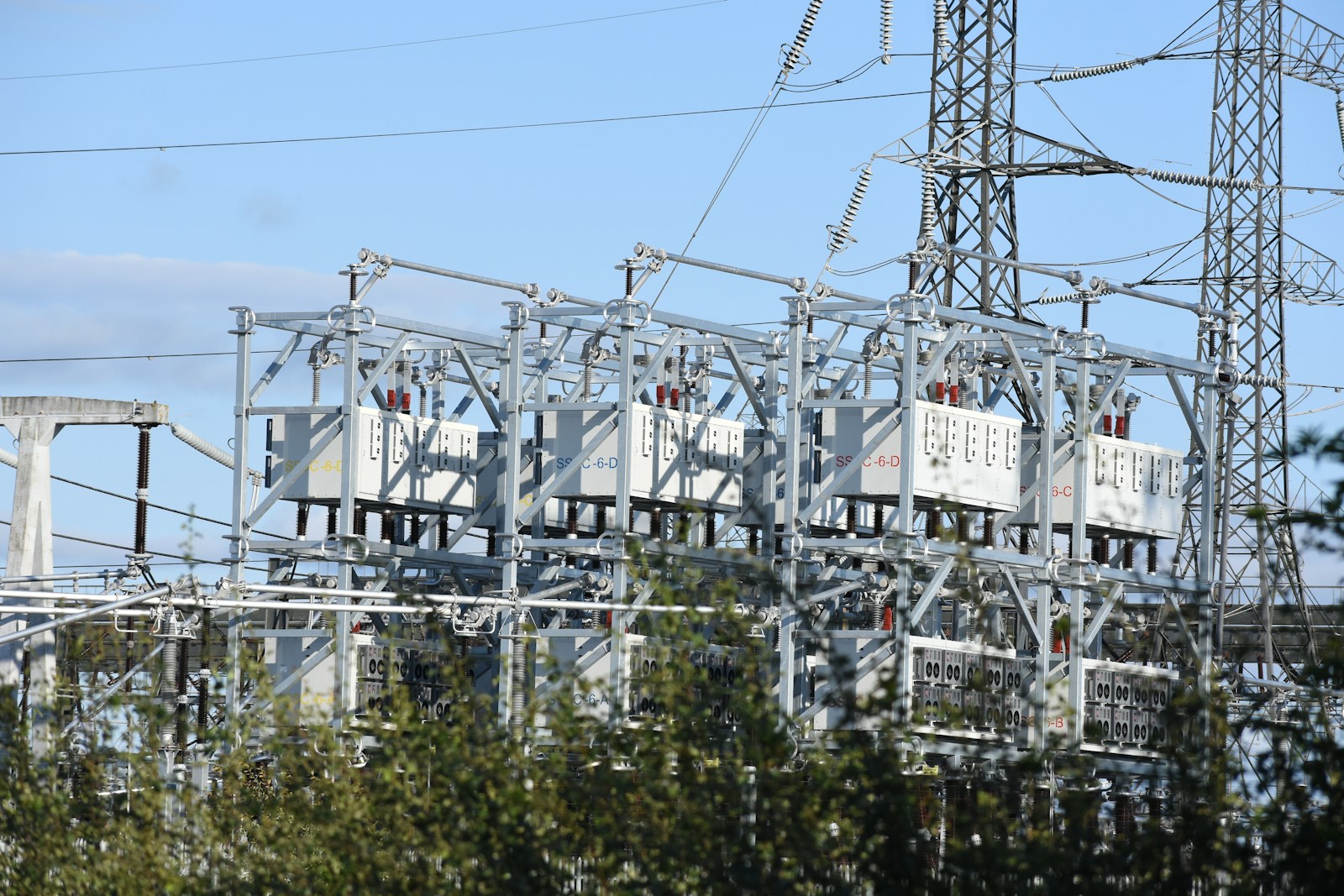
The U.S. power grid is facing a looming crisis. A recent report from the North American Electric Reliability Corporation found that nearly 160 million Americans are living in regions that are projected to be at high risk of blackouts in the coming years. If significant action is not taken to address systemic shortcomings in the electric utilities industry, widespread power outages will likely become increasingly common before the end of the decade.
According to NERC, demand for electricity is projected to surge nationwide in the coming years. Driven by AI data centers, heavy industry, population growth, and increasing adoption of home heat pumps and electric vehicles, peak electricity demand in the summer and winter months is forecast to grow by more than 20% in the U.S. over the next 10 years.
In much of the country, the strain of rising demand will be exacerbated by a projected drop off in generating capacity, as the U.S. power grid shifts away from dirty fossil fuels in favor of clean, renewable energy sources. While less harmful to the environment than fossil fuels, power derived wind or solar plants can be weather dependent, and may not be capable of meeting demand spikes – particularly in the winter months. Indeed, in periods of extreme weather, such as a cold snap or heat wave, electricity demand tends to rise – and should local power grids fail under the strain, the consequences can be deadly.
Using data from NERC’s Long-Term Reliability Assessment, Climate Crisis 247 identified the places that are projected to be at high risk of power failures in the next five years. For each region of the U.S. determined to be at high risk in the near future, we listed the impacted states, the estimated number of residents, and projected changes in electricity supply and demand. Regions are ranked in order of population and the year in which blackout risk is expected to peak. All data in this story is from the NERC report.
The states in the regions on this list are largely concentrated along the Gulf and in the mid-Atlantic, Midwest, and Pacific Northwest. Across these regions, power demand is projected to grow, and in most, generating capacity is projected to decline by the year 2030 – most often due to retirements of coal-burning power plants. If no action is taken, more frequent and widespread grid failures are projected to begin as early as 2028 in the places on this list.
5. WECC Basin: Utah, southern Idaho, and part of western Wyoming
- High risk of power outages by: 2029
- Approx. customer base: 5.4 million people
- Annual electricity demand growth rate: 2.5%
- Primary drivers of demand growth: Data centers, industry
- Projected change in generating capacity, 2026-2030: -3.4% (-589 Megawatts)
- Energy source with largest projected capacity decline, 2026-2030: Coal (-891 Megawatts)
- Energy source with largest projected capacity increase, 2026-2030: Solar (+216 Megawatts)
4. WECC Northwest: Montana, Oregon, and Washington; parts of northern California and northern Idaho
- High risk of power outages by: 2029
- Approx. customer base: 13.6 million people
- Annual electricity demand growth rate: 2.7%
- Primary drivers of demand growth: Data centers, transportation electrification, demographic changes, industry
- Projected change in generating capacity, 2026-2030: -1.5% (-577 Megawatts)
- Energy source with largest projected capacity decline, 2026-2030: Wind (-838 Megawatts)
- Energy source with largest projected capacity increase, 2026-2030: Conventional Hydro (+415 Megawatts)
3. Texas RE-ERCOT: Texas
- High risk of power outages by: 2029
- Approx. customer base: 27.0 million people
- Annual electricity demand growth rate: 5.6%
- Primary drivers of demand growth: Data centers, industry, demographic changes, crypto currency
- Projected change in generating capacity, 2026-2030: +4.6% (+4,598 Megawatts)
- Energy source with largest projected capacity decline, 2026-2030: Coal (-2,391 Megawatts)
- Energy source with largest projected capacity increase, 2026-2030: Battery (+2,640 Megawatts)
2. RF-PJM: all or parts of Delaware, Illinois, Indiana, Kentucky, Maryland, Michigan,
New Jersey, North Carolina, Ohio, Pennsylvania, Tennessee, Virginia, and West Virginia
- High risk of power outages by: 2029
- Approx. customer base: 67.0 million people
- Annual electricity demand growth rate: 1.6%
- Primary drivers of demand growth: Data centers, transportation electrification, heat pumps
- Projected change in generating capacity, 2026-2030: -2.6% (-4,886 Megawatts)
- Energy source with largest projected capacity decline, 2026-2030: Coal (-13,402 Megawatts)
- Energy source with largest projected capacity increase, 2026-2030: Solar (+5,046 Megawatts)
1. MRO-MISO: all or parts of Arkansas, Illinois, Indiana, Iowa, Kentucky, Louisiana, Michigan, Minnesota, Mississippi, Missouri, Montana, North Dakota, South Dakota, Texas, and Wisconsin
- High risk of power outages by: 2028
- Approx. customer base: 45.0 million people
- Annual electricity demand growth rate: N/A
- Primary drivers of demand growth: Data centers
- Projected change in generating capacity, 2026-2030: +4.3% (+5,573 Megawatts)
- Energy source with largest projected capacity decline, 2026-2030: Coal (-11,058 Megawatts)
- Energy source with largest projected capacity increase, 2026-2030: Solar (+15,043 Megawatts)