Places In The World Warming The Fastest
If the Earth is getting hotter, why is it so cold?
The windchill in NYC hit -15 degrees Fahrenheit this week—far below the typical early February low of around 30 degrees. The New York Times asked several experts how this happened. Judah Cohen, a research scientist at MIT, explained that “a warming Arctic can cause a high-altitude ribbon of air called the polar vortex to stretch and wobble,” driving cold air southward.
The warming isn’t happening evenly across the globe. A research report published in the journal Nature found that “the Arctic has warmed nearly four times faster than the globe since 1979.” This accelerated warming not only affects areas near the Arctic but also drives ice melt in the region, raising sea levels. According to Climate.gov, “global mean sea level has risen about 8–9 inches (21–24 centimeters) since 1880, mostly due to a combination of meltwater from glaciers and ice sheets and thermal expansion of seawater as it warms.”
The fastest-warming places on Earth are concentrated in high-latitude northern regions—a phenomenon known as Arctic amplification. Recent data from Copernicus, Berkeley Earth, NOAA Arctic Report Card, Copernicus ERA5, and scientific journals confirm this trend.
The debate about what’s causing global warming has largely been settled. In “Copernicus: 2024 is the first year to exceed 1.5°C above pre-industrial level,” the authors concluded that “human-induced climate change remains the primary driver of extreme air and sea surface temperatures.”
Anecdotal evidence supports the data. In January, Greenland broke most of its monthly high-temperature records. Jacob Hoyer, head of the National Centre for Climate Research at the Danish Meteorological Institute, told Reuters, “Climate change is already clearly visible on Greenland. From the records we can see that it is warming four times faster than the mean temperature hike in the world.”
Climate Crisis247 identified the parts of the world warming the fastest:
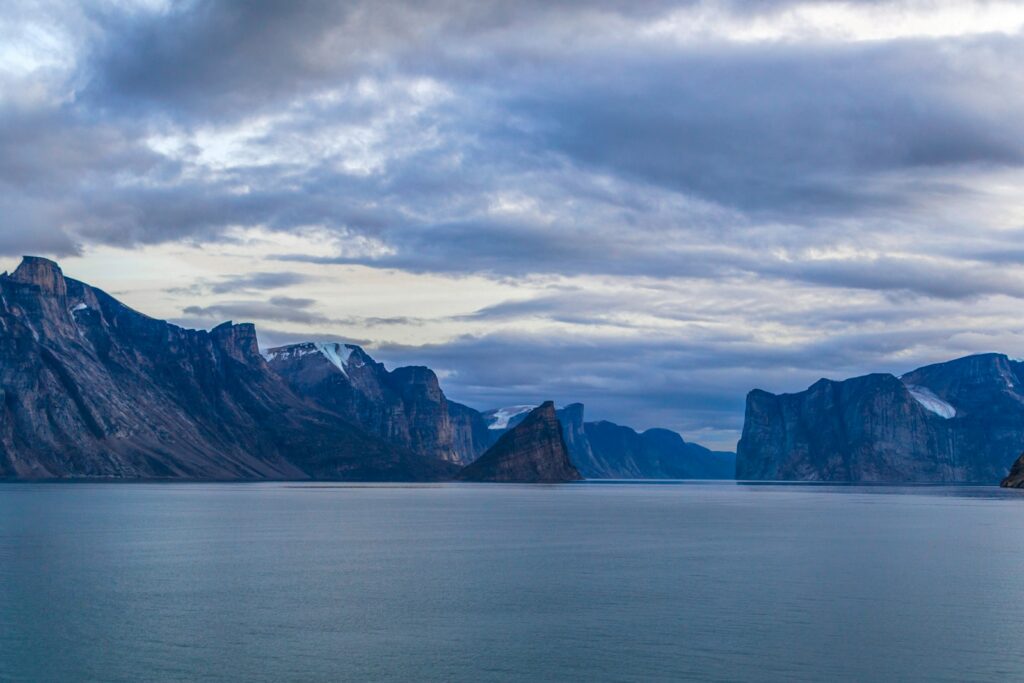
The Arctic Region (Fastest warming globally, 3–4x the global average; up to 3 degrees F per decade in some areas)
- Svalbard archipelago (Norway, especially around Longyearbyen): Often described as one of the fastest-warming spots on Earth, with a 4-degree F rise over the past three decades and record summer temperatures nearly every year in the last decade.
- Barents Sea/North Barents Sea (near Svalbard and Novaya Zemlya, Russia): Local data shows warming exceeding 2 degrees F per decade.
- Eurasian Arctic (including Kara Sea, Laptev Sea, and central/eastern Siberia tundra): Shows the highest amplification, with rapid ocean surface warming and temperature swings exceeding 30 degrees last summer.
- Northern Alaska (far northern coastal and interior tundra regions): According to Harvard’s Kennedy School, temperatures in Alaska have topped 90 degrees F.
- Canadian Arctic (including the Northwest Territories and parts of the Archipelago): In August 2024, The Weather Network reported, “Several communities in the Northwest Territories recorded their all-time highest readings this week.”
The trend is widespread. Last year, The Guardian reported, “From October 2023 to September 2024, temperatures across the entire Arctic region were the hottest in 125 years of modern record-keeping.”
Rapid temperature increases are also occurring well south of the Arctic. Last summer, heat records were set across Europe in cities including Angoulême, Bergerac, Bordeaux, Saint-Émilion, Saint-Girons, Šibenik, and Dubrovnik. “The main characteristic [of the heatwave] is the length and extent rather than the intensity,” said José Camacho, a climate scientist and spokesperson for Aemet, the Spanish weather agency, according to The Guardian.
Perhaps the most extreme Arctic heat event occurred last year. Live Science reported on February 5 that “the North Pole was above freezing on Sunday after an extreme winter warming event caused temperatures to climb more than 36 F (20 C) in the high Arctic.”
Hot—and almost certainly getting hotter.
More from ClimateCrisis 247
- The Driest Places in America This Year
- Due to Low Sales, These Are The EVs That Disappeared This Year
- Coldest Games in NFL History
- Climate Denial in America’s Fastest Warming Congressional Districts