Western Water Crisis Could Lead To a Bad Wildfire Season
The spring snowpack is a lifeline for much of the West. In high-elevation areas, including the Rocky Mountains and Sierra Nevadas, snowfall accumulates on the ground and compresses under its own weight throughout the winter. During the spring thaw, runoff from the snow-melt flows into rivers and streams, ultimately replenishing reservoirs and providing a critical water source to communities, farms, and ecosystems. This year, however, most of the snow-melt Western states can typically rely on will never come.
The meteorological winter runs from the beginning of December until the end of February, and this year’s winter was the warmest ever recorded in the Western United States. In the continental region stretching from the Rocky Mountains to the Pacific Ocean, the average temperature in the winter months was nearly 40°F – or over 7°F warmer than the region’s 20th century winter average, according to the National Oceanic and Atmospheric Administration. In several Western states, including Colorado, Utah, and Wyoming, record-high average temperatures this winter exceeded the 20th century norm by more than 8°F.
Not only was the winter of 2025-2026 the warmest ever recorded in the West, it was also a winter with historically little snowfall. Now, as a result, the Western snowpack is at its lowest level in decades.
According to a recent report from Climate Central, the western snowpack generally reaches near-peak levels on April 1st each year. In 2026, however, the snowpack is 65% below the 30-year median, and the lowest it has ever been since at least 1981. With only about a third of the normal water from snow-melt runoff expected, concerns are centered not only on the region’s water supply, but also the looming wildfire risk. In past years with unusually low snowpacks, massive wildfires have consumed hundreds of thousands of acres in the summer and fall months. Now, after this year’s record-low snowpack, experts are warning of a potentially devastating wildfire season.
Using data from Climate Central, Climate Crisis 247 identified the years with the worst snowpack drought in the Western United States. We reviewed data on how Western snowpack levels on April 1st of each year since 1981 compared to the 30-year median, based on data from 1991 to 2020. Supplemental data on average winter temperatures and precipitation in the region from the Rockies westward are from NOAA. Only the 10 years with the lowest snowpacks rank on this list. For each, we also listed a major wildfire reported that year.
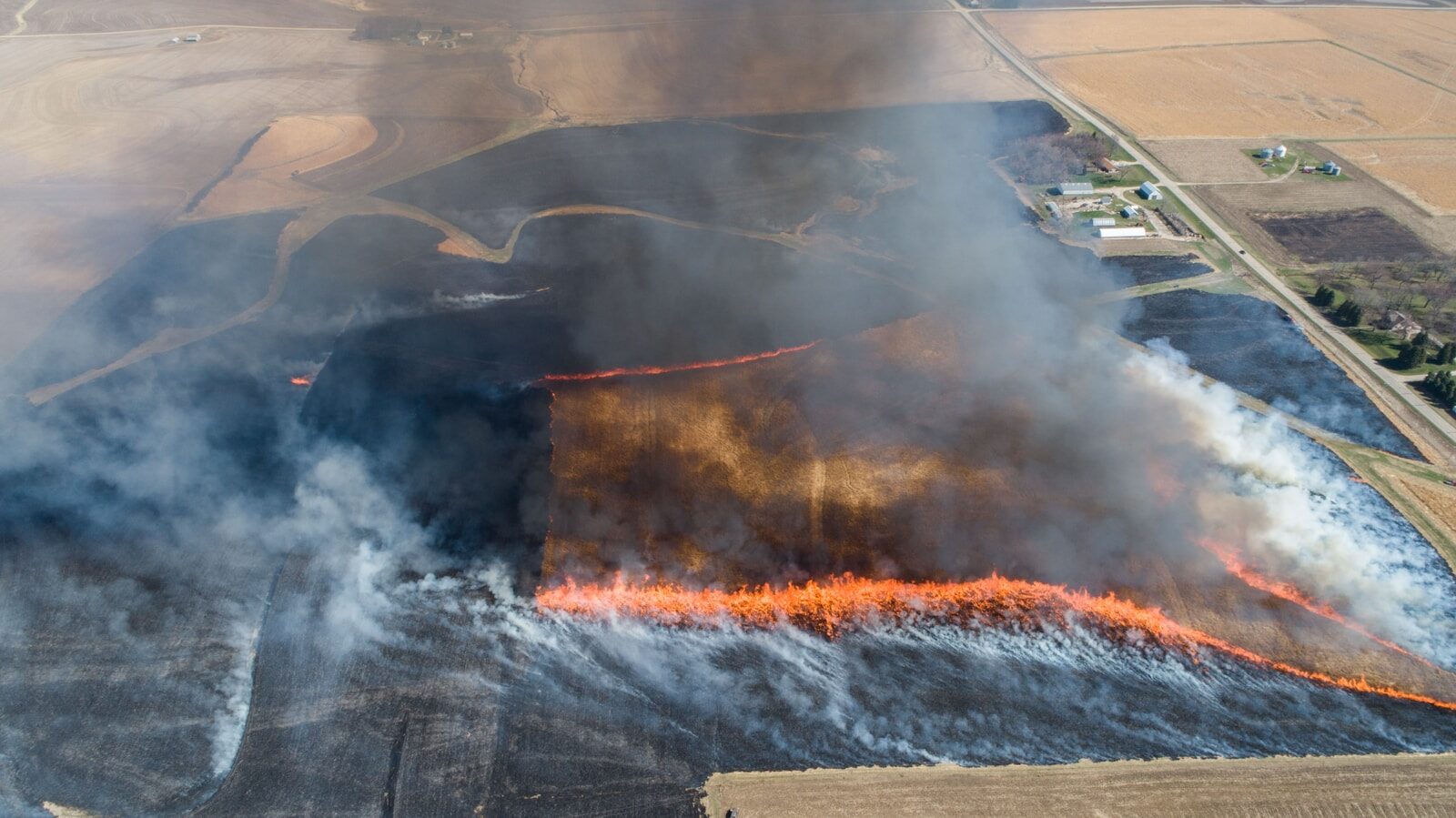
In addition to 2026, snowpack levels range on this list from about 20% to 53% below normal. Years with a low snowpack also often have active wildfire seasons, and early indicators suggest 2026 will be no different. So far this year, wildfires have consumed over 1.5 million acres in the United States, mostly in the West. For comparison, last year at this time, wildfires had burned about 700,000 acres nationwide.
10. 1988
- Current water content of western snowpack: 19.6% below normal
- Average winter temperature in 1988: 32.3°F, 0.1°F colder than 20th century avg. (82nd warmest since 1895)
- Average winter precipitation in 1988: 6.57 inches, 0.9 inches below 20th century avg. (42nd lowest since 1895)
- Major western wildfires in 1988 include: Yellowstone Fires of 1988 in Yellowstone National Park, Wyoming; June 1988 (793,880 acres burned)
9. 1990
- Current water content of western snowpack: 19.6% below normal
- Average winter temperature in 1990: 33.2°F, 0.8°F warmer than 20th century avg. (56th warmest since 1895)
- Average winter precipitation in 1990: 5.7 inches, 1.8 inches below 20th century avg. (23rd lowest since 1895)
- Major western wildfires in 1990 include: Dude Fire in Gila County, Arizona; June 1990 (24,174 acres burned)
8. 2004
- Current water content of western snowpack: 19.9% below normal
- Average winter temperature in 2004: 33.2°F, 0.8°F warmer than 20th century avg. (56th warmest since 1895)
- Average winter precipitation in 2004: 7.83 inches, 0.4 inches above 20th century avg. (83rd lowest since 1895)
- Major western wildfires in 2004 include: Nuttall Complex Fire in Graham County, Arizona; June 2004 (29,200 acres burned)
7. 2018
- Current water content of western snowpack: 21.7% below normal
- Average winter temperature in 2018: 36.1°F, 3.7°F warmer than 20th century avg. (6th warmest since 1895)
- Average winter precipitation in 2018: 4.98 inches, 2.5 inches below 20th century avg. (6th lowest since 1895)
- Major western wildfires in 2018 include: Mendocino Complex Fire in California’s Mendocino, Lake, Colusa, and Glenn Counties; July 2018 (459,123 acres burned)
6. 2001
- Current water content of western snowpack: 23.8% below normal
- Average winter temperature in 2001: 33.0°F, 0.6°F warmer than 20th century avg. (62nd warmest since 1895)
- Average winter precipitation in 2001: 4.75 inches, 2.7 inches below 20th century avg. (4th lowest since 1895)
- Major western wildfires in 2001 include: Poe Fire in Butte County, California; September 2001 (8,333 acres burned)
5. 2013
- Current water content of western snowpack: 24.1% below normal
- Average winter temperature in 2013: 31.9°F, 0.5°F colder than 20th century avg. (88th warmest since 1895)
- Average winter precipitation in 2013: 6.05 inches, 1.4 inches below 20th century avg. (31st lowest since 1895)
- Major western wildfires in 2013 include: Yarnell Hill Fire in Yavapai County, Arizona; June 2013 (8,400 acres burned)
4. 2007
- Current water content of western snowpack: 24.9% below normal
- Average winter temperature in 2007: 33.0°F, 0.6°F warmer than 20th century avg. (62nd warmest since 1895)
- Average winter precipitation in 2007: 5.99 inches, 1.5 inches below 20th century avg. (28th lowest since 1895)
- Major western wildfires in 2007 include: Witch Fire in San Diego County, California; October 2007 (197,990 acres burned)
3. 1981
- Current water content of western snowpack: 29.4% below normal
- Average winter temperature in 1981: 37.2°F, 4.8°F warmer than 20th century avg. (4th warmest since 1895)
- Average winter precipitation in 1981: 5.84 inches, 1.6 inches below 20th century avg. (25th lowest since 1895)
- Major western wildfires in 1981 include: Minidoka Fire in Southeastern Idaho; July 1981 (73,000 acres burned)
2. 2015
- Current water content of western snowpack: 53.3% below normal
- Average winter temperature in 2015: 38.4°F, 6.0°F warmer than 20th century avg. (2nd warmest since 1895)
- Average winter precipitation in 2015: 6.6 inches, 0.9 inches below 20th century avg. (44th lowest since 1895)
- Major western wildfires in 2015 include: Soda in Owyhee County, Idaho; August 2015 (285,361 acres burned)
1. 2026
- Current water content of western snowpack: 65.0% below normal
- Average winter temperature in 2026: 39.6°F, 7.2°F warmer than 20th century avg. (the warmest since 1895)
- Average winter precipitation in 2026: 7.01 inches, 0.5 inches below 20th century avg. (52nd lowest since 1895)
- Major western wildfires in 2026 include: 24 Fire in Colorado’s El Paso, Fremont, and Pueblo Counties; March 2026 (7,405 acres burned)
More from ClimateCrisis 247
- States Where Tax Payers Will Pay The Most for Rising Sea Levels
- The 10 Least Sustainable Countries In The World
- The Worst Back-to-Back Hurricanes in US History
- The Deadliest Hurricanes To Hit the US in the last half century