America’s Hottest Cities Get Hotter

The hottest cities in America have held that distinction for centuries — but what has changed is that they have grown even hotter, compounded by either rising humidity or intensifying dryness.
The Southwest, for example, is experiencing what scientists describe as a 1,200-year megadrought. According to NOAA, a 2022 UCLA-led study published in Nature Climate Change — a collaboration among researchers from UCLA, NASA, and the Columbia Climate School — found that the 22-year-long Southwest North American megadrought is the driest the region has seen in at least 1,200 years. Today, water levels in Lake Mead remain below normal. The Hoover Dam, which created the lake, supplies water and electricity to millions of people in the region, making the ongoing drought a critical concern for cities like nearby Las Vegas, one of the hottest in America.
In the Southeast, the problem is the opposite: heat paired with rising humidity. Florida is roughly 5% wetter annually than its previous 30-year average, according to David Zierden, a climatologist at Florida State University. The surrounding waters are warming as well. The National Centers for Environmental Information reports that Gulf of Mexico sea surface temperatures rose approximately 1.0°C (1.8°F) between 1970 and 2020 — a rate twice as fast as the global ocean average. The same trend holds for the South Atlantic.
These conditions carry serious consequences. Warmer ocean waters are intensifying Atlantic hurricanes, fueling faster and more powerful storms, according to Climate Central. On land, hot, dry, and windy conditions — the ideal recipe for wildfires — have nearly tripled in frequency over the past 45 years worldwide, with the trend even more pronounced in the Americas, per The Guardian.
Climate Crisis 247 analyzed temperature records across the top 200 U.S. cities to identify the 10 hottest by average annual temperature. Long-term data was compared across two periods — 1981 to 2010 and 1991 to 2020 — using sources including NOAA, the National Centers for Environmental Information, Climate Central, Climate Signals, Holidu, Redfin, Weather Underground, and Weather.gov.
Population figures are drawn from the U.S. Census Bureau’s most recent estimates (July 1, 2024 to July 1, 2025), covering 3,143 counties and the District of Columbia. Notably, the fastest-growing counties are concentrated in some of the nation’s hottest regions: five of the largest are in Texas, and two are in Arizona, including Maricopa County — home to Phoenix, the second-hottest city in America.
The data were used was from Holidu,Redfin, Climate Signals, Weather Underground, Weather-dot-dov, The National Centers For Environmental Information, Climate Central, and the Census.
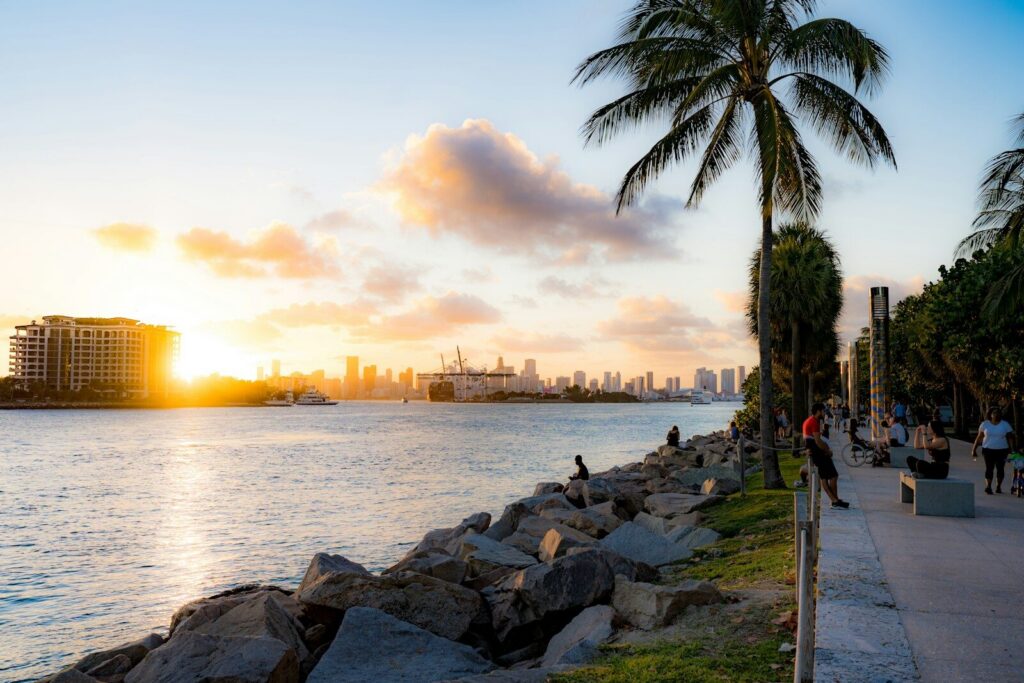
The following rankings reflect average temperatures across all 365 days of the year:
- Miami, Florida — ~78.7°F
- Phoenix, Arizona — ~75–77°F
- Mesa, Arizona — ~76.8°F
- Honolulu, Hawaii — ~76.5°F
- Orlando, Florida — ~75.9°F
- Tampa, Florida — ~75.8°F
- Corpus Christi, Texas — ~74.2°F
- Jacksonville, Florida — ~73°F
- New Orleans, Louisiana — ~72.6°F
- Houston, Texas — ~71.3°F
The broader trend is unmistakable: temperatures across American cities are climbing. A recent March heatwave offered a striking illustration. The National Weather Service warned that many locations were likely to set all-time March heat records, with highs forecast at up to 30 degrees above seasonal averages. In Phoenix, the situation was particularly remarkable — one meteorologist noted that a March day reaching 105°F, as occurred that Thursday, would statistically be expected only once every 4,433 years.
Sponsor
Find a Vetted Financial Advisor
- Finding a fiduciary financial advisor doesn't have to be hard. SmartAsset's free tool matches you with up to 3 financial advisors that serve your area in 5 minutes.
- Each advisor has been vetted by SmartAsset and is held to a fiduciary standard to act in your best interests. Get on the path toward achieving your financial goals!
More from ClimateCrisis 247
- Counties Where Deadly Tornados Are Becoming More Common
- 10 Nations That Are Global Leaders in Clean Energy
- the states with the best EV infrastructure
- Countries Leading the World in Nuclear Energy