US Cities Projected To Become Deserts in 50 years
Climate change isn’t just raising temperatures – it’s transforming the natural geography of the United States. In a study published in the journal PeerJ, researchers from the Open Earth Monitor Cyberinfrastructure project used high resolution data and machine learning to map how natural vegetation zones – or biomes – will shift by 2080 under different climate scenarios. Projections show that dozens of American cities are on track to shift into full desert biomes within the next half-century, reshaping the land, vegetation, and habitability of entire communities.
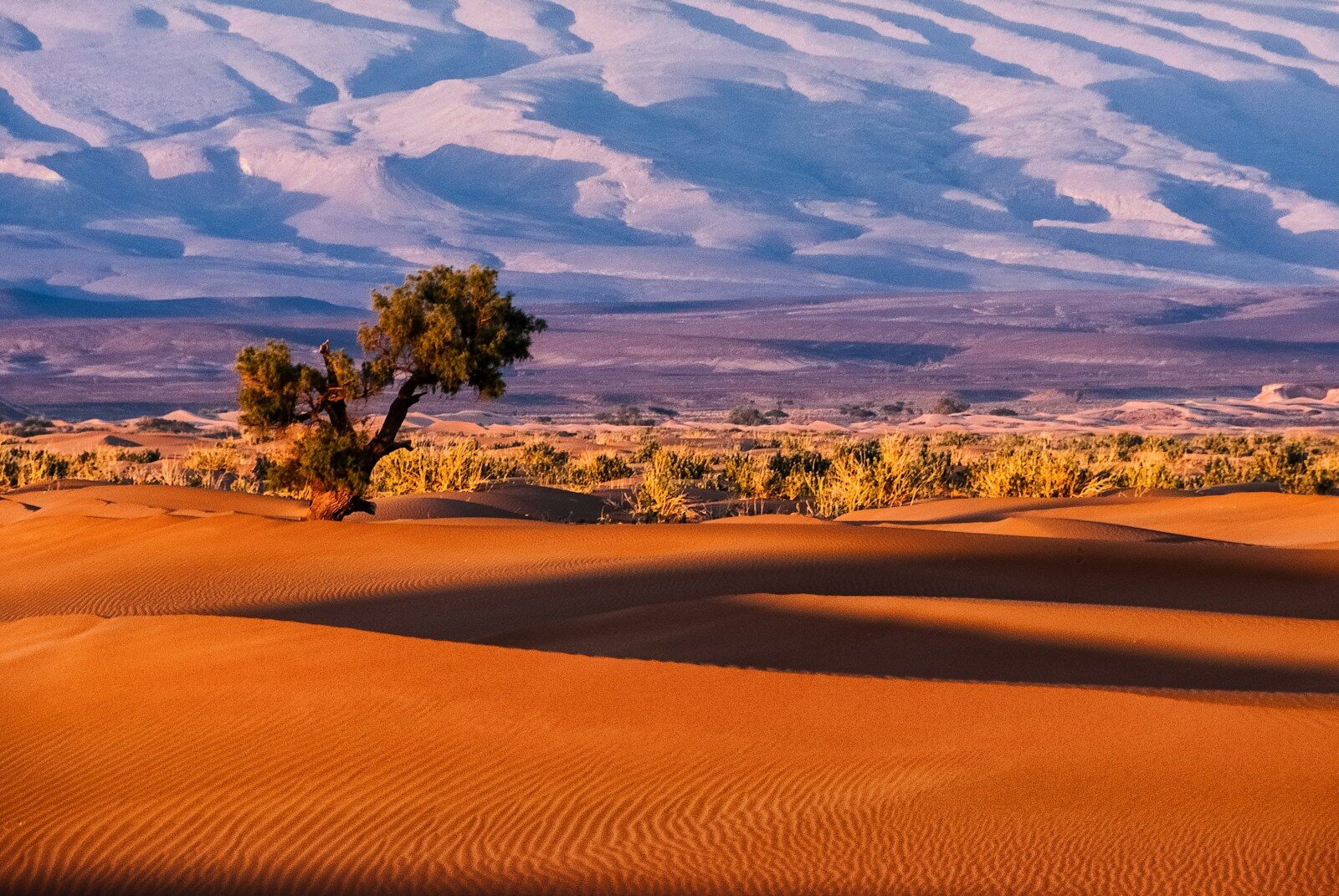
Researchers found that the central U.S. will become hotter and drier, with iconic grasslands replaced by more desert-like vegetation – fewer wildflowers, more tumbleweeds. Wet forests throughout the East Coast may give way to drier, more drought-tolerant flora, while the deserts of Arizona, New Mexico, and southern California will expand into Texas and Colorado.
Land area classified as cool mixed forest, cool evergreen needleleaf forest, temperate evergreen needleleaf open woodland are forecast to decline the most, while drier, arid ecosystems will expand. The desert biome is forecast to expand by 182,000 square miles – growing from 6.0% to 11.9% of U.S. land area – and will extend into some of America’s largest cities. A closer look at the data reveals the major cities that will become deserts in the next 50 years.
To determine the cities with changing biomes, Climate Crisis 247 reviewed spatial data from the April 2023 paper Current and future global distribution of potential biomes under climate change scenarios, published in PeerJ. Cities whose dominant biome type is forecast to change to desert by 2061-2080 from the current 1979-2013 baseline, based on the BIOME 6000 classification scheme, were ranked by current population. Forecast changes to biome landscape classification are based on RCP 8.5 scenario, or high emissions. Analysis was done in QGIS using raster data and zonal statistics.
10. Richland, WA
- Current biome classification: Steppe
- Projected biome classification, 2061-2080: Desert
- Current population: 60,867
9. Grand Junction, CO
- Current biome classification: Temperate evergreen needleleaf open woodland
- Projected biome classification, 2061-2080: Desert
- Current population: 65,918
8. Pasco, WA
- Current biome classification: Temperate evergreen needleleaf open woodland
- Projected biome classification, 2061-2080: Desert
- Current population: 77,274
7. Kennewick, WA
- Current biome classification: Temperate evergreen needleleaf open woodland
- Projected biome classification, 2061-2080: Desert
- Current population: 83,823
6. Rio Rancho, NM
- Current biome classification: Temperate evergreen needleleaf open woodland
- Projected biome classification, 2061-2080: Desert
- Current population: 104,351
5. Sparks, NV
- Current biome classification: Temperate evergreen needleleaf open woodland
- Projected biome classification, 2061-2080: Desert
- Current population: 108,025
4. Pueblo, CO
- Current biome classification: Temperate evergreen needleleaf open woodland
- Projected biome classification, 2061-2080: Desert
- Current population: 111,430
3. Lancaster, CA
- Current biome classification: Steppe
- Projected biome classification, 2061-2080: Desert
- Current population: 171,465
2. Reno, NV
- Current biome classification: Temperate evergreen needleleaf open woodland
- Projected biome classification, 2061-2080: Desert
- Current population: 265,196
1. Bakersfield, CA
- Current biome classification: Temperate evergreen needleleaf open woodland
- Projected biome classification, 2061-2080: Desert
- Current population: 404,321
More from ClimateCrisis 247
- Countries Where Climate Change Will Hit The Economy The Hardest
- Floods, Droughts and 24 Times More Heatwaves: The Climate Future Facing Today’s Kids
- These Nations Will Be Underwater, and 600,000 People Will Leave
- Cities That See 100 Degrees At Least One Day Every Year