Cities Sinking Under the Weight of Their Buildings
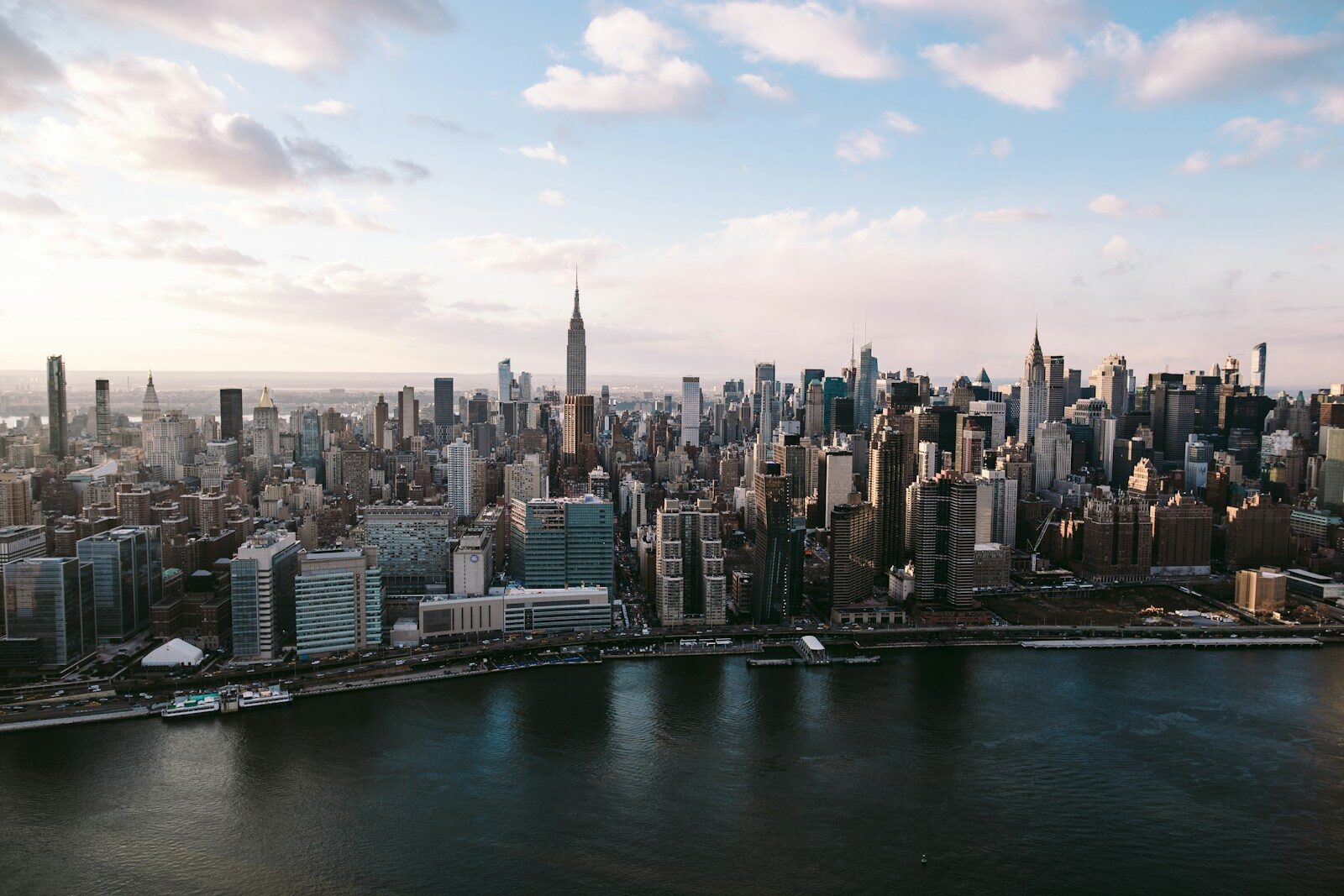
The Empire State Building, erected in 1931, weighs 365,000 tons — a relatively modest figure by today’s standards, since it isn’t even close to being the tallest building in New York City anymore. The skyline is now dominated by residential towers with apartments sold to billionaires. Still, the Empire State Building’s weight hints at just how much mass the island of Manhattan carries, and that weight is one reason the island is slowly sinking into the water around it. New York is only one of several major cities facing a problem that grows more serious every year.
There’s a scientific term for this sinking: subsidence. Scientists define it as the gradual sinking or settling of the ground surface, usually because material beneath it shifts, compacts, or is removed. Subsidence can have several causes: mining beneath a city (including subway construction), the extraction of groundwater (which creates a kind of underground drought), weak underlying rock such as limestone, the removal of soil and rock to build foundations for huge structures, and simply the sheer weight of buildings pressing down on the ground over time. Together, these factors explain why some of the world’s largest cities are slowly sinking lower and lower. In places like New Orleans, where part of the city already sits below sea level, subsidence makes an already precarious situation even worse.
The Scale of the Problem in the US
Among US cities, New York’s situation is extraordinary. A 2023 USGS study found that New York City’s roughly one million buildings weigh an estimated 1.68 trillion pounds. The combined mass of these buildings pushes the ground down, contributing to subsidence of 1 to 2 millimeters per year on average. In areas like Queens, where heavy storms already cause flooding, the problem is especially severe — and these floods will eventually render parts of the city uninhabitable.
New York’s problem is compounded by rising sea levels driven by global warming and melting polar ice. Columbia University geophysicist Jacky Austermann wrote, according to Scientific American, that most people think of sea-level rise purely in terms of melting ice, but that’s only part of the story at any given location — land subsidence, whatever its cause, is another major factor. As she put it, whether the land is sinking or the sea is rising, the flooding effect at the shoreline is the same.
Some cities outside the US face problems just as severe, or worse. Shanghai and Tokyo — two of the world’s largest cities, with metro populations of 25 million and 37 million respectively — are both under threat.
San Francisco
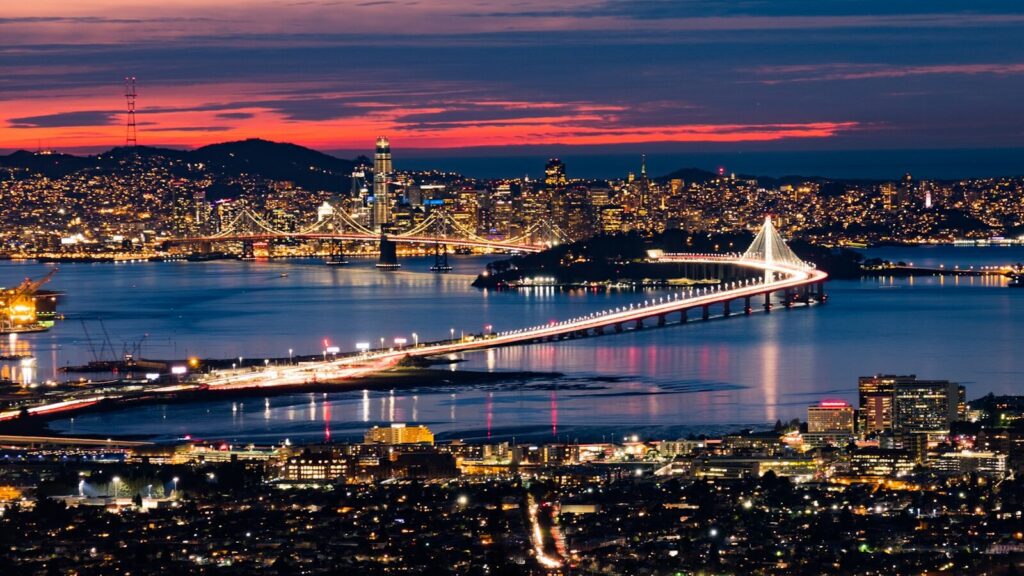
The Millennium Tower, a 58-story luxury high-rise, has sunk more than 18 inches and tilted so severely that it’s now considered uninhabitable — a stark illustration of the city’s subsidence problem. Local authorities have taken extraordinary measures to stop the sinking: workers have driven 18 concrete piles 275 feet into the bedrock beneath the tower, transferring 18 million pounds of weight off its original foundation, according to The San Francisco Examiner. The Millennium Tower is the most visible case, but not the only one. NASA‘s Jet Propulsion Laboratory found that parts of the Bay Area — including San Rafael, Corte Madera, Foster City, and Bay Farm Island — are subsiding at a steady rate of more than 0.4 inches (10 millimeters) per year.
Miami
One of America’s fastest-growing cities, Miami’s population rose from 249,276 in 1950 to 489,801 today, according to Census figures. A University of Miami estimate — one that many have disputed, but which nonetheless underscores the scale of the risk — projects an additional 11 to 22 inches of sea-level rise by 2060, and 28 to 57 inches (roughly the height of a car) by 2100. If accurate, about two-thirds of the city could be below sea level by 2060. Much of Miami sits on porous limestone, hemmed in by the Atlantic Ocean on one side and the Everglades on the other. The city has weathered several hurricanes over the past half-century, each pushing storm surges ashore, and the rapid rise in large-scale construction has made Miami one of the US cities considered most at risk for subsidence-driven flooding.
Shanghai
Reliable population figures aren’t collected as regularly here as in some other nations, but Shanghai had about 8.3 million residents in 1990 — a number that has since nearly tripled. Massive skyscrapers have been built on alluvial soil near the Yangtze River delta, and heavy groundwater extraction has compounded the problem.
Tokyo
Tokyo’s population has more than tripled over the past century. Groundwater pumping fueled the city’s early expansion, though most of that pumping stopped 50 years ago. Since then, hundreds of high-rise projects have gone up near Tokyo Bay, leaving the city’s eastern districts particularly vulnerable. As with most cities facing this threat, the process is effectively irreversible.
New Orleans
Much of New Orleans is built on soft delta soil, and the city has long relied on levees to hold back the water as it has expanded — along with an ever-growing number of heavy buildings. Hurricane Katrina demonstrated in 2005 how easily levees can be overwhelmed by a major storm surge. The city’s population has since dropped by an estimated 40%, falling to about 190,000, according to NBC. Another major hurricane could inflict even more damage.
Houston
Unlike most cities on this list, Houston isn’t located near a major body of water. Even so, heavy urban development combined with groundwater and oil and gas extraction has caused parts of the metro area to sink more than 10 feet, according to the USGS. Limited and poorly maintained infrastructure — in a wet city with no zoning — makes Houston especially vulnerable to devastating floods, NBC reported.
A 2022 study in the journal Nature Sustainability measured land subsidence in 48 of the world’s largest cities between 2014 and 2020. It found that nearly all of them were experiencing some degree of subsidence, and in 44 of them, parts of the city were sinking faster than the sea is rising. In short, the problem is worsening — and there’s no easy fix in sight.
More from ClimateCrisis 247
- Fastest Warming Congressional Districts Where Politician is Funded by Fossil Fuel Industry
- America’s Best And Worst Cities To Own An EV
- Climate Change Is Increasing Simultaneous Exposure to Heat Waves and Wildfire Smoke
- Wildlife Populations Have Plunged Globally, But Some Buck the Trend