Climate Change Hurts Winter Sports & The Olympics

The opening ceremony for the 2026 Winter Olympics is scheduled to take place in Milan, Italy, on Friday, February 6. In the following weeks, winter games will be held across multiple locations in Northeastern Italy, including Cortina d’Ampezzo – a town that also played host to the 1956 Winter Olympics. The Italian Alps have not been immune to global warming trends, however, and in the 70 years since athletes and journalists from around the world last descended on Cortina d’Ampezzo, the local winter climate has changed measurably.
According to a recent report from the non-profit advocacy group Climate Central, average February temperatures in Cortina have increased by 6.4°F since 1954. Over the same period, the number of days per year with freezing temperatures has fallen by 19% in the town. Due in part to a warming climate, Cortina’s average February snow depth declined by about half a foot between 1971 and 2019. This year, to ensure adequate snow coverage, the Olympics are expected to require at least 3 million cubic yards of artificial snow.
Notably, the warming trend in the Italian Alps is not representative of the pace of change for much of the rest of the world. According to the European Union’s Earth Observation Programme, Europe is the world’s fastest warming continent. Since the mid-1990s, average temperatures in Europe climbed more than twice as fast as the global average. But even while warming trends have been less pronounced in North America, many of the top winter sports destinations in the U.S. will likely have to contend with significantly higher temperatures in the coming decades.
Using data from Climate Central and the National Oceanic and Atmospheric Administration, Climate Crisis 247 determined the impact warming winters will have on major ski resorts across the United States. We ranked every ski mountain in each state by total trail miles, and selected the 10 largest. For each of the 10 mountains on this list, we reviewed daily winter temperature averages and highs from the nearest weather station, reported as 30-year norms by NOAA. Using county-level data from Climate Crisis on average changes in winter temperatures since 1970, we calculated the average annual rate of change to project average local winter temperatures by the end of the century. Ski resorts are ranked by projected average winter temperatures in the year 2100.
Today, average winter temperatures for each of the ski resorts on this list are below freezing. At the current rate of warming, however, average winter temperatures will exceed 32°F in three of these destinations by the end of the century. Additionally, in nine of the 10 resorts on this list, daily highs are projected top 32°F by 2100.
10. Wyoming: Jackson Hole Resort in Teton County
- Change in average winter temperature since 1970 in Teton County: +2.2°F
- Current daily winter temperature norm: 17.5°F avg., high of 27.6°F (Jackson weather station)
- Projected daily winter temperature norm by 2100: 20.7°F avg., high of 30.8°F
- Jackson Hole ski resort details: 72 miles of trail, 13 lifts
9. Maine: Sugarloaf Resort in Franklin County
- Change in average winter temperature since 1970 in Franklin County: +5.5°F
- Current daily winter temperature norm: 15.2°F avg., high of 24.8°F (Rangeley 2 NW weather station)
- Projected daily winter temperature norm by 2100: 23.2°F avg., high of 32.8°F
- Sugarloaf ski resort details: 54 miles of trail, 15 lifts
8. Montana: Big Sky Resort Resort in Madison County
- Change in average winter temperature since 1970 in Madison County: +2.0°F
- Current daily winter temperature norm: 19.6°F avg., high of 30.5°F (Big Sky 2WNW weather station)
- Projected daily winter temperature norm by 2100: 22.5°F avg., high of 33.4°F
- Big Sky Resort ski resort details: 155 miles of trail, 40 lifts
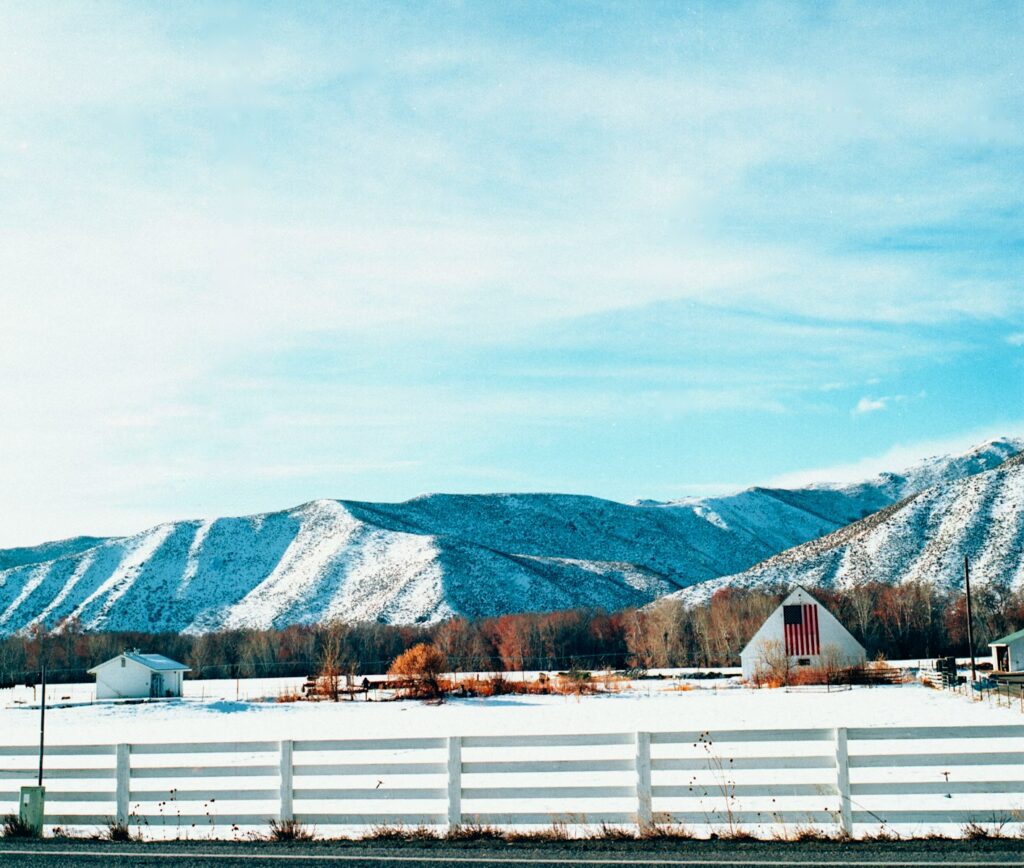
7. Idaho: Bald Mountain – Sun Valley Resort in Blaine County
- Change in average winter temperature since 1970 in Blaine County: +1.9°F
- Current daily winter temperature norm: 20.8°F avg., high of 32.2°F (Ketchum RS weather station)
- Projected daily winter temperature norm by 2100: 23.6°F avg., high of 35.0°F
- Bald Mountain – Sun Valley ski resort details: 56 miles of trail, 12 lifts
6. Colorado: Snowmass Resort in Pitkin County
- Change in average winter temperature since 1970 in Pitkin County: +1.5°F
- Current daily winter temperature norm: 22.0°F avg., high of 33.1°F (Aspen 1SW weather station)
- Projected daily winter temperature norm by 2100: 24.2°F avg., high of 35.3°F
- Snowmass ski resort details: 147 miles of trail, 20 lifts
5. Utah: Park City Resort in Summit County
- Change in average winter temperature since 1970 in Summit County: +1.9°F
- Current daily winter temperature norm: 24.9°F avg., high of 33.5°F (Park City weather station)
- Projected daily winter temperature norm by 2100: 27.7°F avg., high of 36.3°F
- Park City ski resort details: 155 miles of trail, 42 lifts
4. Vermont: Killington Resort in Rutland County
- Change in average winter temperature since 1970 in Rutland County: +6.2°F
- Current daily winter temperature norm: 21.6°F avg., high of 32.2°F (Rutland weather station)
- Projected daily winter temperature norm by 2100: 30.6°F avg., high of 41.2°F
- Killington ski resort details: 74 miles of trail, 22 lifts
3. Oregon: Mt. Bachelor Resort in Deschutes County
- Change in average winter temperature since 1970 in Deschutes County: +1.5°F
- Current daily winter temperature norm: 30.0°F avg., high of 40.1°F (Sunriver weather station)
- Projected daily winter temperature norm by 2100: 32.2°F avg., high of 42.3°F
- Mt. Bachelor ski resort details: 61 miles of trail, 15 lifts
2. California: Palisades Tahoe Resort in Placer County
- Change in average winter temperature since 1970 in Placer County: +1.8°F
- Current daily winter temperature norm: 30.4°F avg., high of 39.9°F (Tahoe City weather station)
- Projected daily winter temperature norm by 2100: 33.0°F avg., high of 42.5°F
- Palisades Tahoe ski resort details: 124 miles of trail, 43 lifts
1. New Mexico: Taos Resort in Taos County
- Change in average winter temperature since 1970 in Taos County: +3.1°F
- Current daily winter temperature norm: 29.3°F avg., high of 43.6°F (Taos weather station)
- Projected daily winter temperature norm by 2100: 33.8°F avg., high of 48.1°F
- Taos ski resort details: 70 miles of trail, 14 lifts