These Current or Planned AI Data Centers Are Bigger Than an Aircraft Carrier
Complaints about the size and resource use of AI data centers have risen steadily over the course of the year. According to a list kept by The Information, the number of individual bans on new data centers now exceeds 500. The Washington Post reports that 150 of these bans were enacted in just the last four weeks. Two of America’s largest states, New York and Texas, now have statewide bans in place.
These bans are driven primarily by two issues: electricity and water.
Electricity
A large data center can use as much electricity as a mid-sized city. Worldwide, the figures are even more staggering. According to the International Energy Agency, global data center electricity demand will reach approximately 945 terawatt-hours by 2030 — slightly more than Japan’s entire current electricity consumption. By 2028, data centers are projected to account for 12% of all electricity use in the US. In data center-heavy Virginia, that figure has already reached 40%.
A growing body of research shows that data center electricity use raises local electricity rates. Bloomberg reports that areas with high concentrations of data centers have seen electricity prices jump 267% over the past five years. A single large data center can consume as much electricity as 100,000 homes, according to an IEA analysis.
Water
Water is the second critical issue. The largest data centers can use millions of gallons a day for cooling. According to Brookings, a typical data center uses about 300,000 gallons of water daily — equivalent to the demands of roughly 1,000 households — while the largest facilities can use up to 5 million gallons a day, enough to supply a town of 50,000 residents.
The water is used for cooling: at full capacity, data centers can reach internal temperatures of over 150°F, and much of the water used turns to steam in the process. This water is often chemically treated. The University of Georgia College of Agriculture and Environmental Sciences notes that common additives include anti-corrosion and anti-scaling chemicals, biocides, and chlorine compounds, while some non-water coolants contain refrigerants and PFAS (“forever chemicals”) that require specialized treatment.
Just How Big Are These Facilities?
It’s hard for most people to grasp the true scale of modern data centers, so we’ve put together some comparisons.
The largest vessel in the U.S. Navy, the USS Abraham Lincoln — a Nimitz-class carrier with a flight deck of about 4.5 acres and a crew of roughly 4,000 — is set to return to its home port after more than 250 days at sea in the Iran conflict. We’re using its deck size as a benchmark.
Climatecrisis247 examined data centers both completed and under construction, in the U.S. and abroad. Many are, in terms of acreage, several times the size of a carrier. For each, we looked at total size, number of buildings, name, and location.
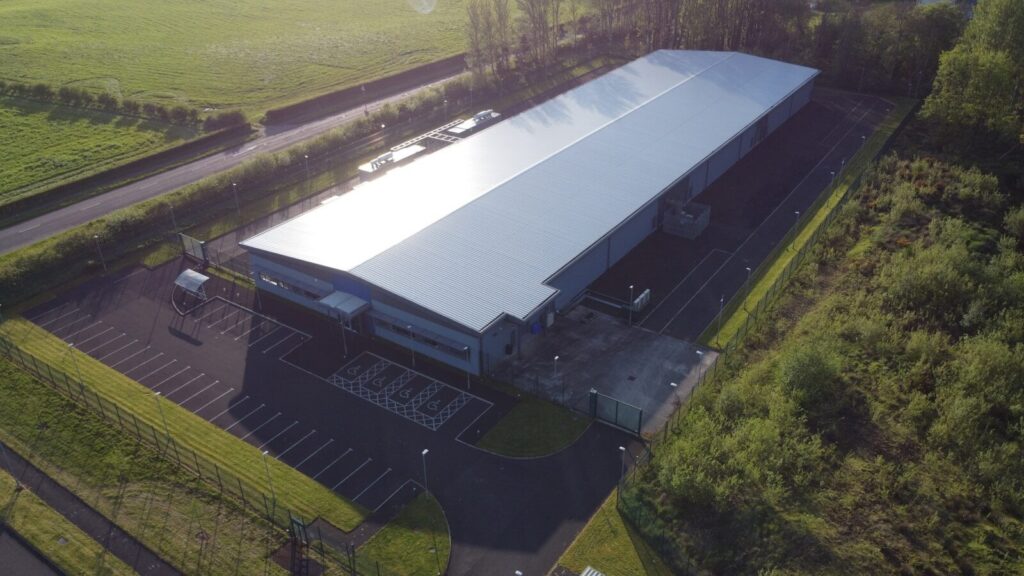
Built or Under Construction
Envision AI Facility — Ulanqab, Inner Mongolia
- ~29.7 acres (a single building, 1,291,668 sq ft)
- Claimed to be the world’s largest single AI data center building
- ~7x the size of a carrier flight deck
Microsoft Fairwater — Mount Pleasant, Wisconsin
- 315 acres; 1.2 million square feet across three buildings
- Houses hundreds of thousands of Nvidia GPUs
- ~70x the size of a carrier flight deck
OpenAI Stargate — Abilene, Texas
- 875 acres
- Expected to reach the size of Central Park by mid-2026
- ~195x the size of a carrier flight deck
Planned or in Development
Sharon AI / TCDC Campus
- 438 acres (based on land purchased)
- Part of a 1 GW data center campus joint venture
- ~97x the size of a carrier flight deck
Meta Richland Parish — Louisiana
- 2,250 acres; 4 million square feet
- Over $10 billion invested, targeting up to 5 GW of capacity
- ~500x the size of a carrier flight deck
SB Energy / DOE Portsmouth Site — Piketon, Ohio
- ~2,700 acres, engineered for up to 10 GW
- ~$67.2 billion total program cost
- ~600x the size of a carrier flight deck
- Projected to reach nearly four times the size of Central Park by 2030
- Expected to surpass Richland Parish as Meta’s largest campus
It’s still possible that some of the planned projects will be blocked by local ordinances or new laws. But one thing seems certain: these data centers will keep coming. McKinsey estimates that global spending on data centers could reach $7 trillion by 2030.
More from ClimateCrisis 247
- Wildfire Smoke SpreadsTo Detroit And New York
- 9,000 Americans Have Died From The Heat This Year
- 110 Days When It’s 100 Degrees in Phoenix
- This Country Will Be Underwater, 600,000 people Will Leave