US Cities Investing to Protect Residents From Climate Change
Choosing a climate-safe city is far more complicated than looking for places without drought, severe thunderstorms, tornadoes, hail, hurricanes, or major flooding. Two other factors matter: time frame and preparation.
Time frame. A part of the US that is safe today may not be safe tomorrow. Colorado has had several severe wildfires this year, and Denver has suffered heavy smoke and water supply problems as a result. Part of the cause is drought: according to the U.S. Drought Monitor, Colorado is among the states with the worst figures this year. Yet FacilitiesNet named Denver the most “Climate Resilient City.” Providence, RI, appears on many “climate-safe” lists, most recently one from PolicyGenius, but it was just battered by a powerful nor’easter. Climatologists believe that warming oceans will raise sea levels along the Rhode Island coast and strengthen storms as they move north along the Atlantic coast.
Preparation. This factor is also tied to time. A city that has adapted to drought may have solved the problem for years or even decades, but if the drought lasts long enough and grows more severe, that mitigation may fail. Miami has invested billions of dollars to hold back hurricane flooding, and large companies that recently moved there have contributed additional funds to speed up the work. Even so, Miami is forecast to be partially underwater by 2060.
Population trends. Many of America’s climate-safe cities have lost a great deal of their populations, while cities listed as unsafe are often growing quickly. Buffalo, Pittsburgh, and Cleveland are frequently listed as climate-safe, yet they have lost population for decades. Phoenix and Las Vegas, the two hottest large cities in the US, have grown rapidly over the same period, as has hurricane-prone Miami.
Adaptation. Some cities are safer than they first appear because of the work they have done to address the very problems that make them look unsafe. Population figures below are from the 2025 Census and cover metropolitan statistical areas (MSAs), which include the city proper and its surrounding region.
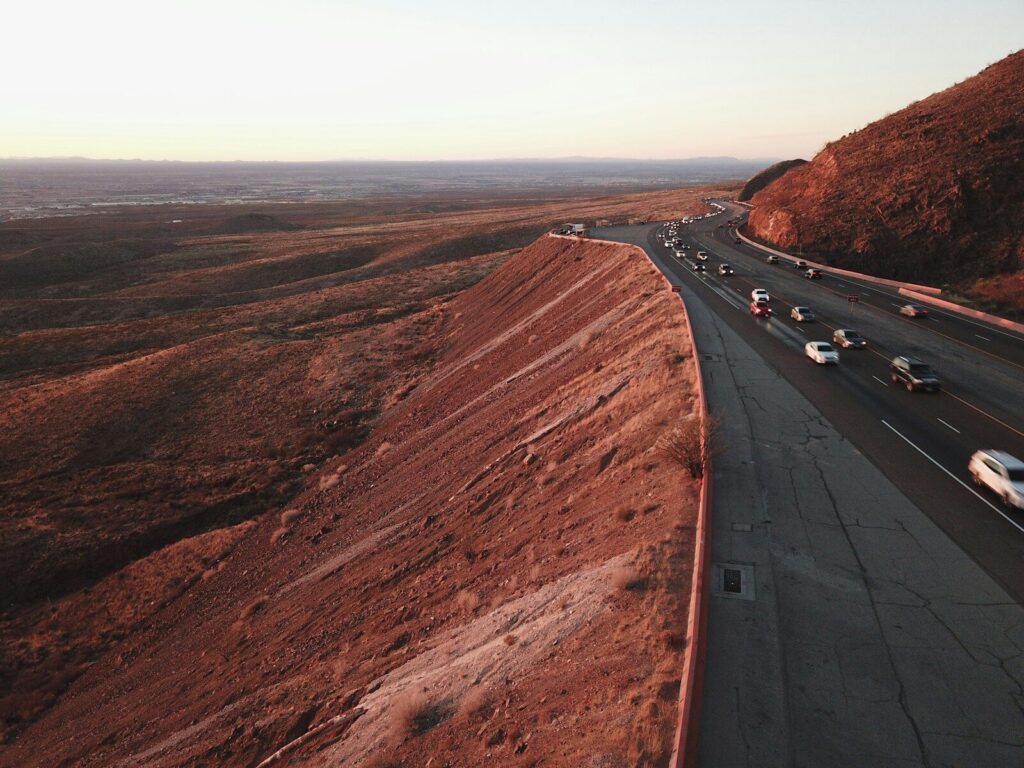
El Paso (883,344)
This desert city has prepared for drought for decades. It runs the world’s largest inland desalination plant and is building a plant that will turn wastewater directly into drinking water, one of the first of its kind at scale in the US.
Tucson (1,074,685)
Tucson began serious water conservation earlier than almost anywhere in the West, and it stores surplus Colorado River water underground for dry years. Per-person water use has dropped substantially even as the city has grown.
Albuquerque (925,279)
The city’s aquifer was once dropping fast, but groundwater levels began recovering after it switched much of its drinking water to river supplies around 2008.
San Diego (3,382,248)
In 1991, the city had two major water supplies, according to the San Diego County Water Authority. Today it has eight, and it is forecast to have nine by 2045. The county also has a major water supply program, including the country’s largest seawater desalination plant. In addition, cool air moves inland from the ocean.
New Orleans (970,849)
After the destruction of Hurricane Katrina, the federal government spent $15 billion to protect the city from hurricanes and rising tides. According to NBC, “The state is expected to spend $50 billion over the next 50 years in an effort to keep the hurricane and storm damage risk reduction system in a good state of repair.” There is also a chance that El Niño will reduce the number of Atlantic hurricanes.
New York City (20,112,448)
According to the Institute for Public Knowledge at New York University, protecting New York City from the major effects of climate change would cost $387 billion, a sum the city will never have. However, it is investing tens of millions of dollars to protect low-lying areas that flood during heavy rains and major storms. Among America’s large cities, it has the most temperate weather. Despite an extremely hot summer, winter temperatures average about 40°F and summer temperatures about 75°F.
San Antonio (2,813,140)
The San Antonio Water System (SAWS) says, “In 1995, 100 percent of San Antonio’s water came from the Edwards Aquifer. Today, SAWS manages 13 supply projects originating from seven different sources, assuring a secure water future for our growing community.” The city’s Climate Action and Adaptation Plan also aims to “reduce its emissions of the greenhouse gases driving global warming to net zero by 2050.”
More from ClimateCrisis 247
- Is coal really making a comeback?
- States With the Deadliest Tornadoes Since 1950
- The Driest Places in America This Year
- Due to Low Sales, These Are The EVs That Disappeared This Year