War in Iran May Trigger Environmental Emergency Across Middle East
More than a week has passed since Israel and the United States began their joint air campaign against Iran. So far, the conflict has claimed over 1,700 lives, including seven Americans and the Islamic Republic’s former Supreme Leader, Ali Khamenei. In addition to the death toll, the ongoing war has injured a reported 140 U.S. service members, cost American taxpayers over $6 billion, roiled global energy markets, and, according to a recent report from the Conflict and Environment Observatory, set off a potential environmental crisis in Iran and across the Middle East.
Since Feb. 28, 2026, the United States and Israel have bombarded Iran at a historic pace, striking over 4,000 targets in the first week alone. While instrumental in limiting Iran’s ability to retaliate militarily, the bombing campaign has also released microscopic particulate matter into the air that can be harmful to civilian populations – with children, pregnant women, older adults, and those with heart or lung conditions at especially high risk. In recent days, Israel’s targeting of Iranian oil infrastructure has dramatically increased the war’s threat to public health.
On March 7th and 8th, Israeli forces reportedly attacked over 30 oil facilities, including several in and around the Iranian capital of Tehran, a city home to nearly 9 million people. Smoke from the resulting fires caused oil droplets to fall from the sky, and as local residents saw their homes and streets covered in black liquid, many reported immediately feeling sick, with symptoms including migraines, dizziness, and coughing, according to The New York Times.
The public health consequences of the oil fires, most of which were still burning after three days, may last decades, as smoke from the targeted oil depots contain carcinogenic or otherwise harmful metals and complex hydrocarbons. Many Iranian cities that have been attacked by the United States and Israel, as well as others across the Middle East that have been hit in retaliatory strikes by Iran, have reported measurably deteriorating air quality in recent days.
Using data from AQI, an open-source air quality monitoring platform, Climate Crisis 247 identified the cities in Iran and across the Middle East that have reported the sharpest declines in air quality in recent days. We reviewed air quality data for over a dozen Middle Eastern cities that have been attacked since Feb. 28, and ranked them on the difference between their lowest reported air quality in the last seven days and their average local air quality in 2025. Air quality is measured through the Air Quality Index, a composite score ranging from 0-500 that accounts for quantities of major pollutants, including particulate matter, carbon monoxide, and sulfur dioxide.
Among the nine cities on this list, the AQI has climbed by anywhere from 3% to 70% higher than the local 2025 average within the last week. These cities are spread across four countries – Iran, Iraq, Israel, and the United Arab Emirates – and are collectively home to an estimated 30 million people. In these places, the AQI has gone as high as 136 in recent days, a level deemed unhealthy for sensitive groups by the Environmental Protection Agency. With many oil facilities ablaze and the conflict still raging, the public health risk may continue to intensify across the Middle East in the coming days and weeks.
9. Tabriz, Iran (AQI 1.03 times higher than annual avg.)
- Worst Air Quality Index score reported in last 7 days: 69 out of 500 on March 11, 2026 (moderate level of concern)
- Average local air quality in 2025: 67 out of 500 (moderate level of concern)
- Targeted with strikes by: United States and Israel
- Estimated local population: 1,558,693
8. Qom, Iran (AQI 1.2 times higher than annual avg.)
- Worst Air Quality Index score reported in last 7 days: 97 out of 500 on March 8, 2026 (moderate level of concern)
- Average local air quality in 2025: 80 out of 500 (moderate level of concern)
- Targeted with strikes by: United States and Israel
- Estimated local population: 1,201,158
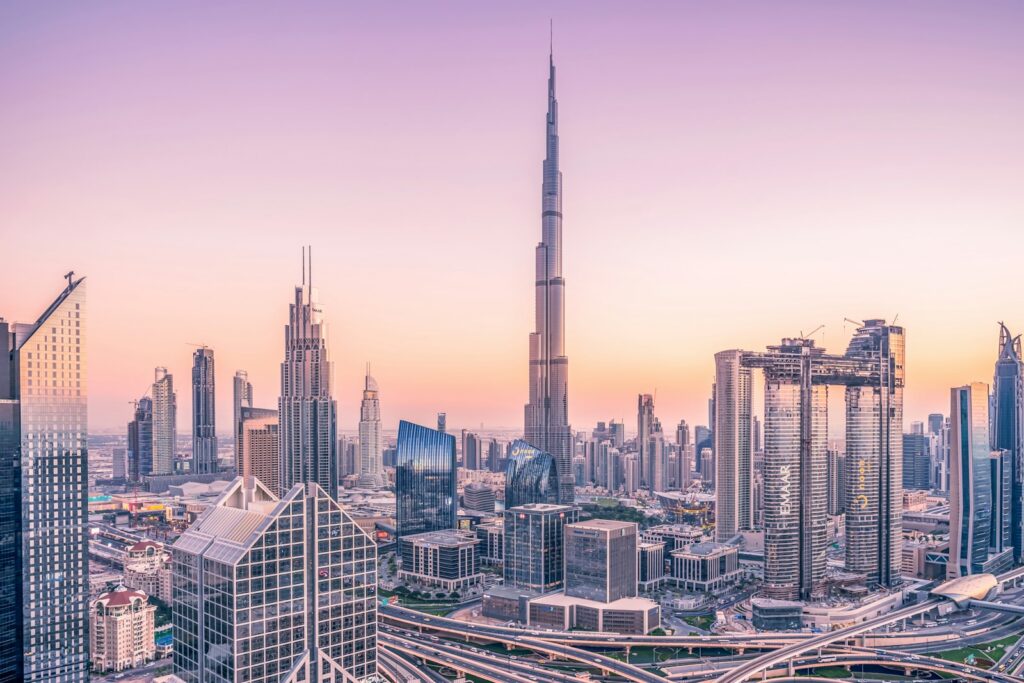
7. Dubai, United Arab Emirates (AQI 1.2 times higher than annual avg.)
- Worst Air Quality Index score reported in last 7 days: 130 out of 500 on March 8, 2026 (unhealthy for sensitive groups)
- Average local air quality in 2025: 106 out of 500 (unhealthy for sensitive groups)
- Targeted with strikes by: Iran
- Estimated local population: 3,944,751
6. Kermanshah, Iran (AQI 1.3 times higher than annual avg.)
- Worst Air Quality Index score reported in last 7 days: 90 out of 500 on March 5, 2026 (moderate level of concern)
- Average local air quality in 2025: 68 out of 500 (moderate level of concern)
- Targeted with strikes by: United States and Israel
- Estimated local population: 946,651
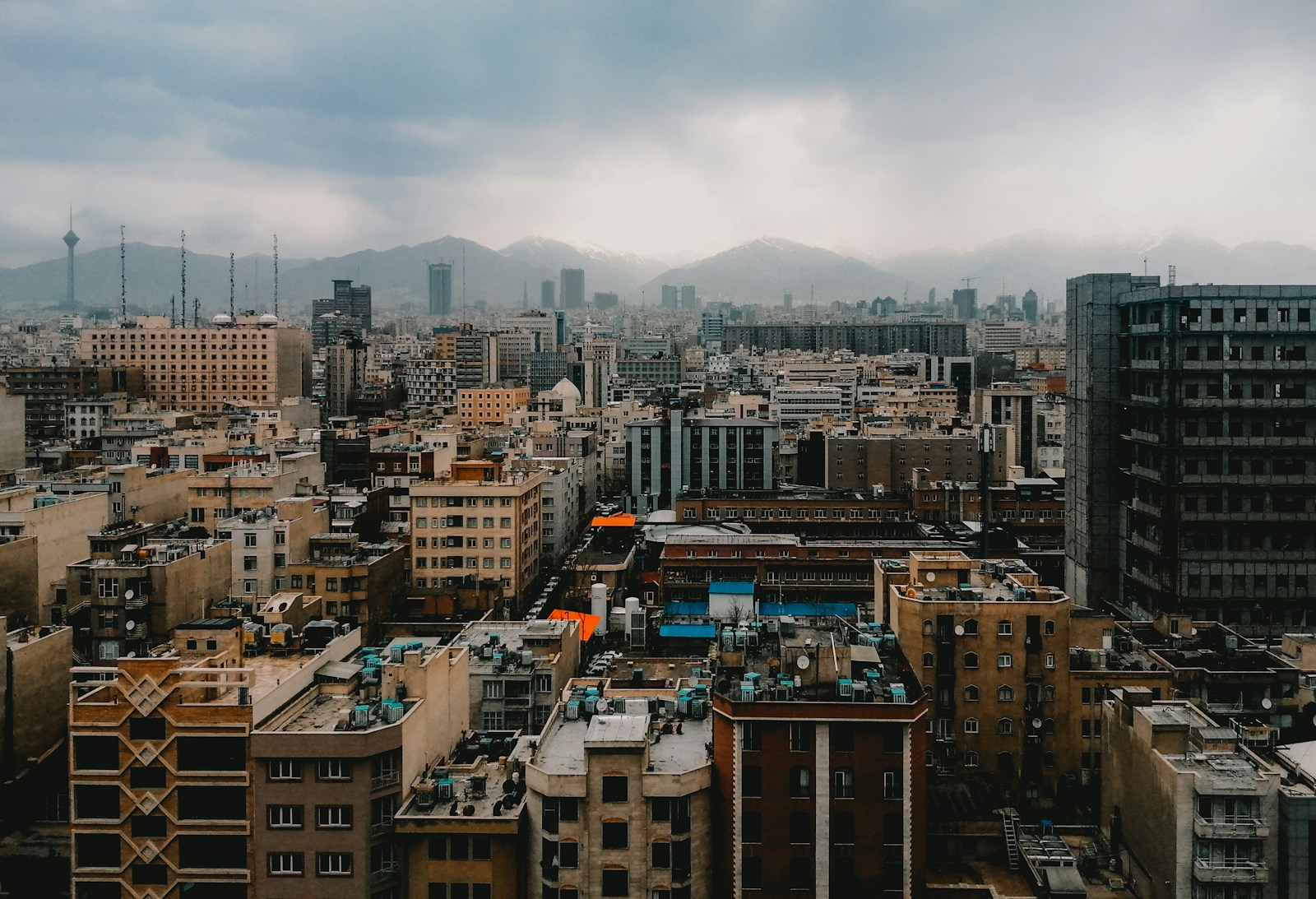
5. Tehran, Iran (AQI 1.5 times higher than annual avg.)
- Worst Air Quality Index score reported in last 7 days: 123 out of 500 on March 8, 2026 (unhealthy for sensitive groups)
- Average local air quality in 2025: 81 out of 500 (moderate level of concern)
- Targeted with strikes by: United States and Israel
- Estimated local population: 8,693,706
4. Tel-Aviv, Israel (AQI 1.5 times higher than annual avg.)
- Worst Air Quality Index score reported in last 7 days: 102 out of 500 on March 11, 2026 (unhealthy for sensitive groups)
- Average local air quality in 2025: 66 out of 500 (moderate level of concern)
- Targeted with strikes by: Iran
- Estimated local population: 495,230
3. Mashhad, Iran (AQI 1.6 times higher than annual avg.)
- Worst Air Quality Index score reported in last 7 days: 128 out of 500 on March 7, 2026 (unhealthy for sensitive groups)
- Average local air quality in 2025: 80 out of 500 (moderate level of concern)
- Targeted with strikes by: United States and Israel
- Estimated local population: 3,001,184
2. Karaj, Iran (AQI 1.6 times higher than annual avg.)
- Worst Air Quality Index score reported in last 7 days: 125 out of 500 on March 8, 2026 (unhealthy for sensitive groups)
- Average local air quality in 2025: 76 out of 500 (moderate level of concern)
- Targeted with strikes by: United States and Israel
- Estimated local population: 1,592,492
1. Baghdad, Iraq (AQI 1.7 times higher than annual avg.)
- Worst Air Quality Index score reported in last 7 days: 136 out of 500 on March 7, 2026 (unhealthy for sensitive groups)
- Average local air quality in 2025: 80 out of 500 (moderate level of concern)
- Targeted with strikes by: Iran
- Estimated local population: 8,080,012