10 States Where EV Sales are Projected to Surge
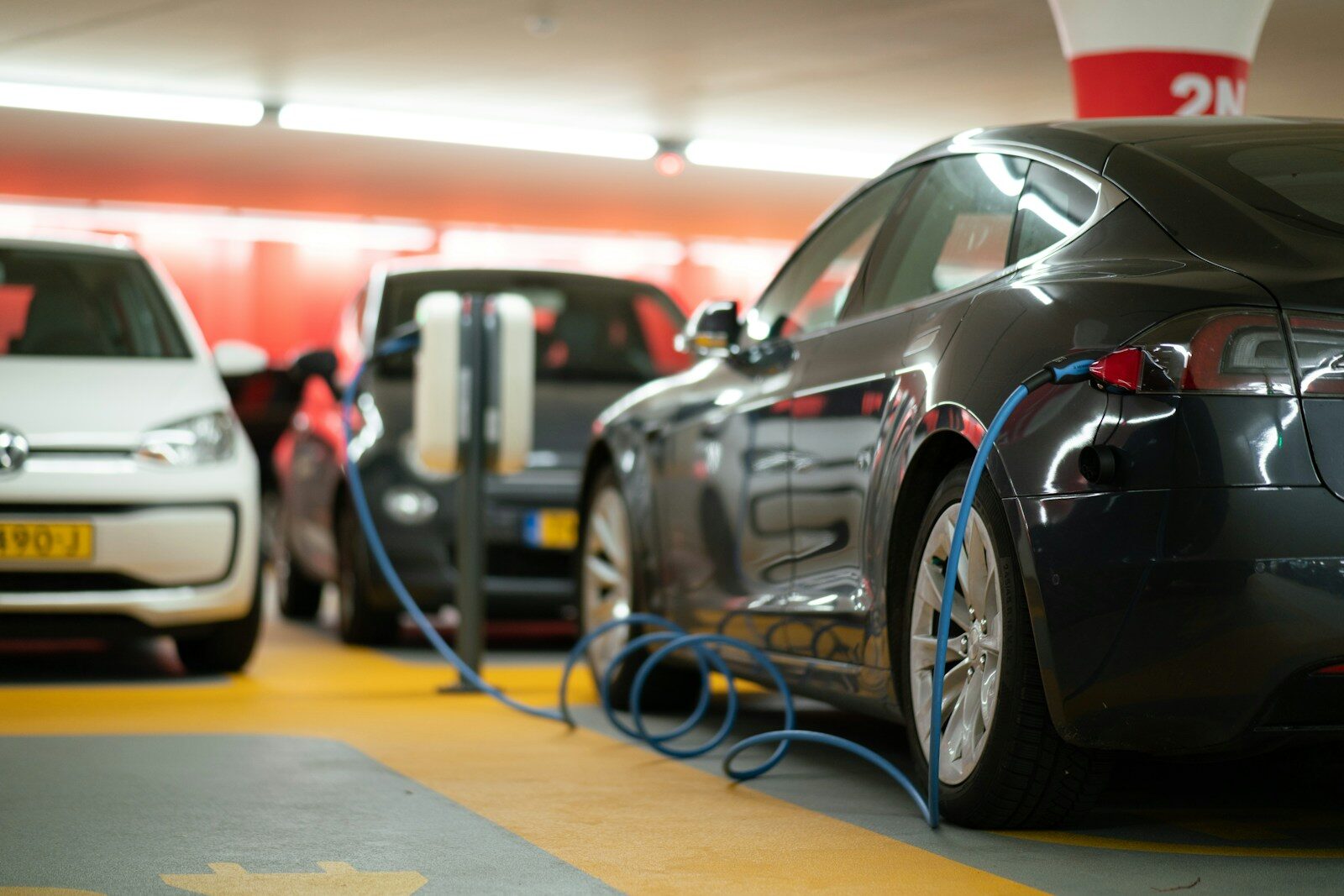
Electric vehicle popularity has surged across the world in recent years, with global unit sales more than quadrupling between 2020 and 2025. The transition to EVs has had meaningful implications for the global economy and environment. Currently, EVs represent about 5% of vehicles on the road worldwide, displacing an estimated 1.2 million barrels of oil every day.
While demand for EVs has also climbed steadily in the U.S. over the last half decade, the American EV market is lagging behind that of many comparable countries. According to the International Energy Agency, EVs accounted for only about 10% of all vehicle sales in the United States in 2025. For comparison, EV’s market share stands at 15% in Australia, 21% in Israel, 27% in the European Union, 35% in the United Kingdom, 53% in China, and 97% in Norway.
In the last year, the EV market in the U.S. has hit meaningful headwinds, including the Trump administration’s 2025 repeal of a $7,500 tax credit for qualified buyers. Immediately following the policy shift, the domestic auto industry reported multiple consecutive quarterly slumps in EV unit sales. Whether recent developments prove to be a blip or the beginning of a long term trend remains to be seen – but prior to Trump’s second term, government projections on the future of EVs in the United States were decidedly optimistic.
According to a June 2023 report from the U.S. Department of Energy and the National Renewable Energy Laboratory, the number of EVs on American roads is forecasted to hit 33 million by the year 2030. While actual market trends have not kept pace with government projections, the report indicates that certain states stand out as fertile markets for EV sales growth.
Using data from the NREL report The 2030 National Charging Network: Estimating U.S. Light-Duty Demand for Electric Vehicle Charging Infrastructure, Climate Crisis 247 identified the states where EV adoption is projected to surge. We ranked all 50 states on the relative difference between the number of registered EVs in 2024 and projected EV ownership in 2030. Only the 10 states with the largest anticipated increase are listed. Supplemental data on current EV ownership and ownership rates are from the U.S. Department of Energy.
Government estimates from 2023, when compared to EV registrations in 2024, suggest that EV ownership may increase by nearly 2,000% or more in the states on this list. Notably, the pace of EV adoption has, so far, been relatively slow in these places. As of 2024, there were about 15.5 EVs for every 1,000 vehicles nationwide. Among the 10 states on this list, 2024 EV registration rates range from just 1.6 to 5.4 per 1,000 vehicles.

10. Idaho
- Projected change in registered EVs, 2024-2030: +1,809.1% (+199,000 vehicles)
- Number of registered EVs in state, 2024: 11,000
- Projected number of EVs in state, 2030: 210,000
- EV prevalence in state, 2024: 5.4 EVs per 1,000 vehicles (15th fewest of the 50 states)
9. Louisiana
- Projected change in registered EVs, 2024-2030: +1,882.8% (+218,400 vehicles)
- Number of registered EVs in state, 2024: 11,600
- Projected number of EVs in state, 2030: 230,000
- EV prevalence in state, 2024: 3.1 EVs per 1,000 vehicles (6th fewest of the 50 states)
8. Kentucky
- Projected change in registered EVs, 2024-2030: +1,900.0% (+285,000 vehicles)
- Number of registered EVs in state, 2024: 15,000
- Projected number of EVs in state, 2030: 300,000
- EV prevalence in state, 2024: 3.8 EVs per 1,000 vehicles (10th fewest of the 50 states)
7. Arkansas
- Projected change in registered EVs, 2024-2030: +1,900.0% (+180,500 vehicles)
- Number of registered EVs in state, 2024: 9,500
- Projected number of EVs in state, 2030: 190,000
- EV prevalence in state, 2024: 3.5 EVs per 1,000 vehicles (7th fewest of the 50 states)
6. Iowa
- Projected change in registered EVs, 2024-2030: +2,207.7% (+258,300 vehicles)
- Number of registered EVs in state, 2024: 11,700
- Projected number of EVs in state, 2030: 270,000
- EV prevalence in state, 2024: 3.7 EVs per 1,000 vehicles (9th fewest of the 50 states)
5. South Dakota
- Projected change in registered EVs, 2024-2030: +2,943.5% (+67,700 vehicles)
- Number of registered EVs in state, 2024: 2,300
- Projected number of EVs in state, 2030: 70,000
- EV prevalence in state, 2024: 2.3 EVs per 1,000 vehicles (4th fewest of the 50 states)
4. Mississippi
- Projected change in registered EVs, 2024-2030: +2,961.2% (+145,100 vehicles)
- Number of registered EVs in state, 2024: 4,900
- Projected number of EVs in state, 2030: 150,000
- EV prevalence in state, 2024: 1.8 EVs per 1,000 vehicles (2nd fewest of the 50 states)
3. West Virginia
- Projected change in registered EVs, 2024-2030: +3,057.9% (+116,200 vehicles)
- Number of registered EVs in state, 2024: 3,800
- Projected number of EVs in state, 2030: 120,000
- EV prevalence in state, 2024: 2.5 EVs per 1,000 vehicles (5th fewest of the 50 states)
2. Wyoming
- Projected change in registered EVs, 2024-2030: +3,233.3% (+48,500 vehicles)
- Number of registered EVs in state, 2024: 1,500
- Projected number of EVs in state, 2030: 50,000
- EV prevalence in state, 2024: 2.2 EVs per 1,000 vehicles (3rd fewest of the 50 states)
1. North Dakota
- Projected change in registered EVs, 2024-2030: +3,746.2% (+48,700 vehicles)
- Number of registered EVs in state, 2024: 1,300
- Projected number of EVs in state, 2030: 50,000
- EV prevalence in state, 2024: 1.6 EVs per 1,000 vehicles (the fewest of the 50 states)
More from ClimateCrisis 247
- The 10 Least Sustainable Countries In The World
- The Worst Back-to-Back Hurricanes in US History
- The Deadliest Hurricanes To Hit the US in the last half century
- States Producing The Most Greenhouse Gas Emissions