History of Weather at The Upcoming Super Bowl open-air Stadium
Football is an economic and cultural phenomenon unlike any other in the United States. The NFL brought in record-breaking annual revenue of $23 billion in 2024, compared to a reported $14.3 billion for the NBA and $12.1 billion for MLB. While ticket sales account for some share of the NFL’s top line, the bulk of the league’s earnings come from multi-billion dollar media licensing deals. Each year, broadcasts of regular season games consistently draw in millions of viewers across the country, and post-season games bring in tens of millions. According to Variety magazine, 48 of the 100 most watched telecasts of 2025 were NFL games.
But when it comes to TV ratings, the Super Bowl is in a league of its own. Consistently ranking as the most watched television broadcast in a given year, annual Super Bowl viewership has exceeded 100 million since 2009. According to Fox Sports, a record-breaking 127.7 million people tuned in to watch last year’s Super Bowl, more than any other broadcast in history, excluding the Apollo 11 moon landing. Given its reach, advertisers are now shelling out an average of $8 million for a 30-second spot during the game.
Given the stakes of the NFL championship game, choosing an appropriate Super Bowl venue is no minor decision. For a city to be considered, it typically has to meet several specific requirements. These include having a local NFL stadium with at least 70,000 seats, as well sufficient parking, lodging, and entertainment infrastructure in close proximity to the stadium. Climate presents another key consideration.
As is the case during the regular NFL season, atmospheric conditions during a Super Bowl can have a meaningful impact on the experience for players and ticketholders alike. In the last five years alone, natural disasters or climate conditions have caused four NFL games to either be rescheduled or relocated. To avoid such a circumstance, Super Bowls are typically played in fully enclosed stadiums. Of the last 15 Super Bowls matchups, 11 were played in a stadium with either a fixed or retractable roof. This year’s game, however, will represent a break from the longer term trend.
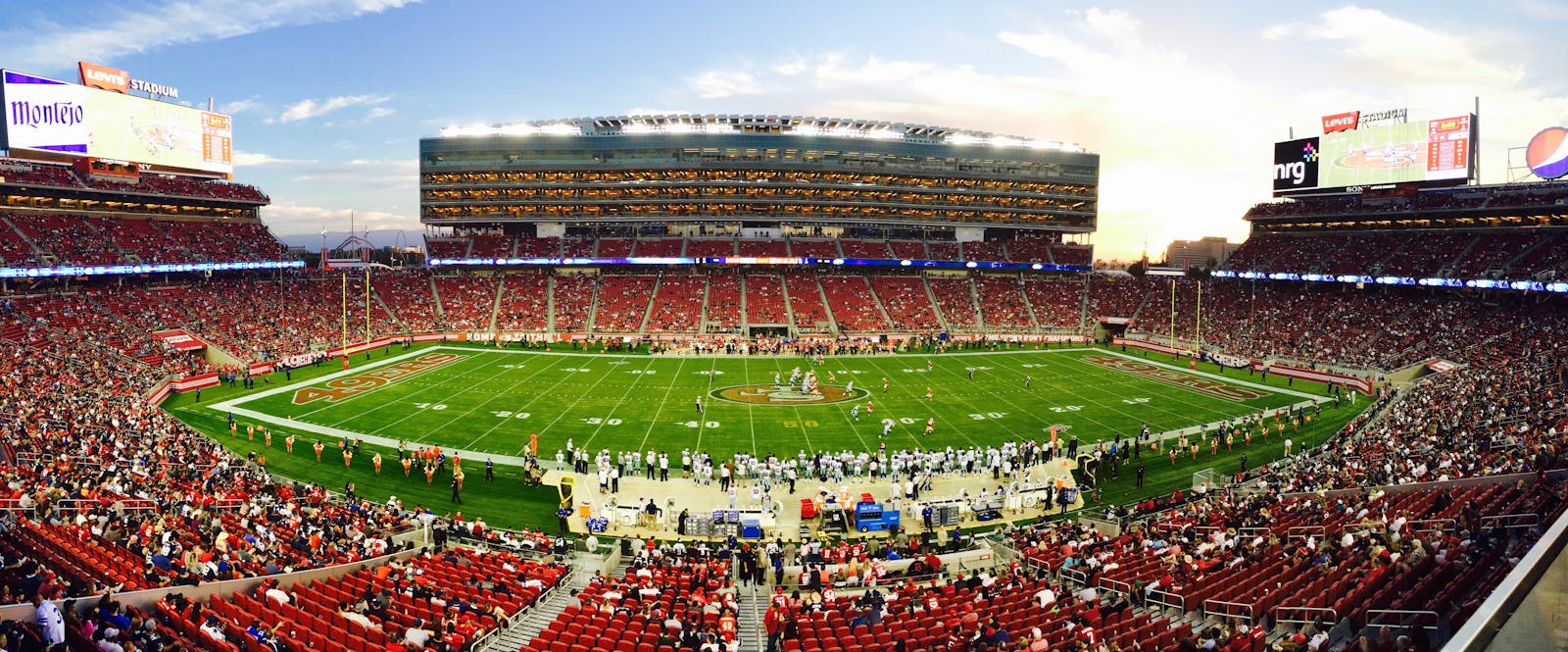
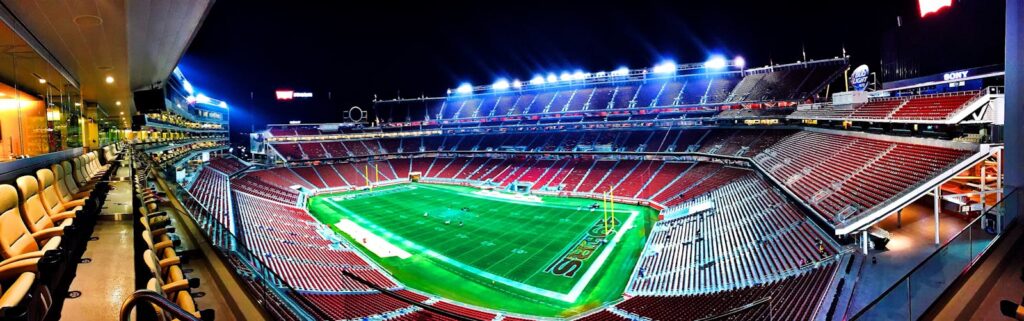
On Sunday, Feb. 8, 2026, Super Bowl LX will be held at Levi’s Stadium, an open air facility in Santa Clara, California. Even as freezing temperatures will likely grip much of the country on Super Bowl Sunday, Santa Clara tends to have mild winters. According to data from the National Oceanic and Atmospheric Administration, the average local temperature around Levi’s Stadium is just above 50°F in the month of February. On Feb. 7, 2016, the last time the Super Bowl was held at Levi’s Stadium, local temperatures climbed as high as 76°F.
But climate trends are not always an accurate predictor of weather for a given day – and extreme weather events are not unheard of in the Santa Clara area.
Using historical NOAA data from the San Jose Mineta International Airport weather station, located less than six miles from Levi’s Stadium, Climate Crisis 247 identified the most extreme February weather ever reported around this year’s Super Bowl venue. We identified the lowest and highest temperatures ever recorded in the month of February around Santa Clara, as well as historic rain and snowfall totals. For reference, we also listed local 30-year climate norms and atmospheric conditions during the last Super Bowl held at Levi’s Stadium.
While local climate norms suggest mild weather for Super Bowl Sunday, historical data show that February temperatures in Santa Clara can also dip well below freezing, or even exceed 80°F. Should heavy precipitation or extreme temperatures return on game day, players and attendees will be largely subject to the elements in Levi’s Stadium.
Climate norms at Levi’s Stadium
- Date: 1991-2020
- 30-year daily average temperature in February: 53.2°F
- 30-year avg. daily high in February: 62.4°F
- 30-year avg. daily low in February: 43.9°F
- Average precipitation in the month of February: 2.7 inches
Last Super Bowl at Levi’s Stadium
- Date: Feb. 7, 2016
- Average temperature: 60°F
- Daily high temperature: 76°F
- Daily low temperature: 44°F
- Daily precipitation: 0 inches
Coldest February day on record around Levi’s Stadium
- Date: Feb. 1, 1917
- Average temperature: 41°F
- Daily high temperature: 56°F
- Daily low temperature: 25°F
- Daily precipitation: 0 inches
Hottest February day on record around Levi’s Stadium
- Date: Feb. 12, 2022
- Average temperature: 64°F
- Daily high temperature: 81°F
- Daily low temperature: 47°F
- Daily precipitation: 0 inches
Snowiest February day on record around Levi’s Stadium
- Date: Feb. 8, 1923
- Average temperature: 43°F
- Daily high temperature: 49°F
- Daily low temperature: 37°F
- Daily precipitation: 0.1 inches (incl. trace snowfall)
Wettest February day on record around Levi’s Stadium
- Date: Feb. 24, 1917
- Average temperature: 56°F
- Daily high temperature: 59°F
- Daily low temperature: 53°F
- Daily precipitation: 2.6 inches