Pollution Capitals Of America
Air quality in America — and in most places around the world — is measured by three yardsticks, each used by the American Lung Association’s “State of the Air” report and, in some cases, by the WHO: 1) ozone, 2) annual PM2.5, and 3) 24-hour PM2.5 spikes. The latest ALA report, published in 2025, draws on EPA data from 2021 to 2023. According to the report, “46% of Americans — 156.1 million people — are living in places that get failing grades for unhealthy levels of ozone or particle pollution. This is nearly 25 million more people breathing unhealthy air compared to last year’s report, and more than in any other ‘State of the Air’ report in the last ten years.”
Climatecrisis24 uses a metadata calculator that accounts for all three measures, which we call “overall air pollution severity.” It weights unhealthy days for ozone and short-term PM2.5, along with average concentrations for year-round PM2.5, equally across all three categories.
This data matters because air pollution affects far more than the lungs. According to the WHO’s latest report on air quality, “Almost every organ in the body can be impacted by air pollution. Due to their small size, some air pollutants are able to penetrate into the bloodstream via the lungs and circulate throughout the entire body, leading to systemic inflammation and carcinogenicity.” Among the most serious health consequences are heart attacks, strokes, and lung disease.
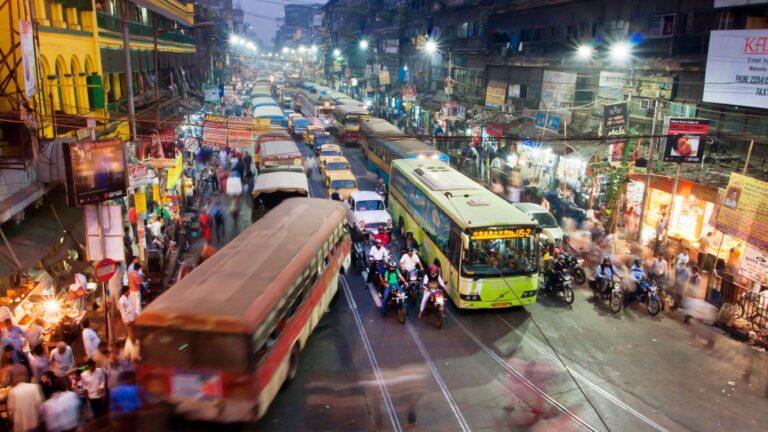
There are widely accepted levels used to measure air quality on a scale from safe to dangerous. IQAir, a leader in this space, tracks air quality in hundreds of cities worldwide and rates them using the following categories: “meets WHO guidelines,” exceeds guidelines by 1–2 times, 3–5 times, 5–7 times, 7–10 times, and more than 10 times — the last of which is classified as “hazardous.” In most years, India, Bangladesh, and Pakistan rank near or at the top nationally. Six of the world’s most polluted cities are in India. The New York Times reported of New Delhi: “Experts at the nation’s top research hospital call the air ‘severe and life-threatening.’ The level of toxic pollutants — from cars, factories, and crop-waste burning by farmers — has been as many as 20 times above recommended levels for safe breathing.”
The cities on our list were drawn from the American Lung Association’s State of the Air 2025 report. As the authors note, “The air quality data used in the report are collected at official monitoring sites across the United States by federal, state, local, and Tribal governments.”
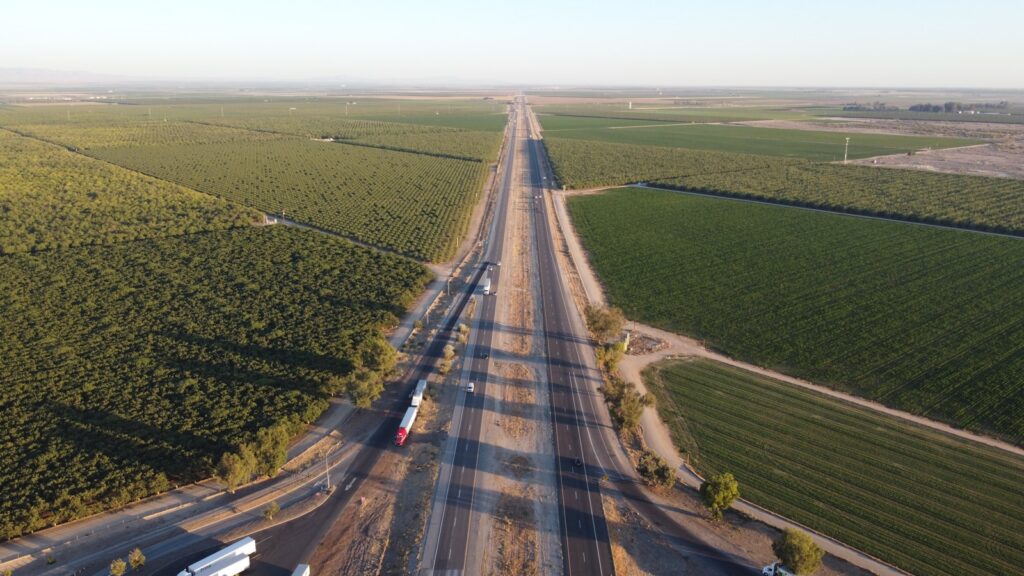
Bakersfield-Delano, CA: Consistently ranks highest for particle pollution, often placing No. 1 in both year-round and short-term PM2.5.
Visalia, CA: Frequently in the top 3 for high ozone, very high year-round PM2.5, and short-term spikes.
Fresno-Hanford-Corcoran, CA: Often ranks in the top 5 for ozone, year-round PM2.5, and short-term PM2.5.
Los Angeles-Long Beach, CA: Ranks No. 1 in ozone and frequently in the top 10 for both PM2.5 categories.
Eugene-Springfield, OR: Usually in the top 10 for both year-round and short-term PM2.5.
Phoenix-Mesa, AZ: High ozone levels, often ranking in the top 20 for PM2.5.
Fairbanks-College, AK: Experiences extreme short-term PM2.5 spikes, primarily due to wood burning in winter.
Denver-Aurora-Greeley, CO: Top 10 ozone ranking, with notable PM2.5 levels driven by wildfire smoke.
Detroit-Warren-Ann Arbor, MI: Consistently near the top for year-round PM2.5, largely due to factory and industrial emissions.
California’s Central Valley (Bakersfield, Visalia, and Fresno) and the Los Angeles area appear regularly on this list due to a combination of geography that traps pollutants, agricultural and industrial smog, heavy vehicle traffic, and large wildfires.
It is worth noting that air quality in the U.S. has improved significantly, even if much work remains. As Scientific American reports, “When the Clean Air Act was passed in 1970, Los Angeles was known as the ‘smog capital of the world,’ and Steubenville, Ohio was about as polluted as Beijing, according to University of Chicago’s Michael Greenstone.”
More from ClimateCrisis 247
- Cities Where Americans Have the Highest Water Bills
- New Documents Add to Evidence in Climate Deception Case Against ExxonMobil
- The 10 Most Sustainable Countries In The World
- States Where Tax Payers Will Pay The Most for Rising Sea Levels