The 5 states where the most people Rely on nuclear power
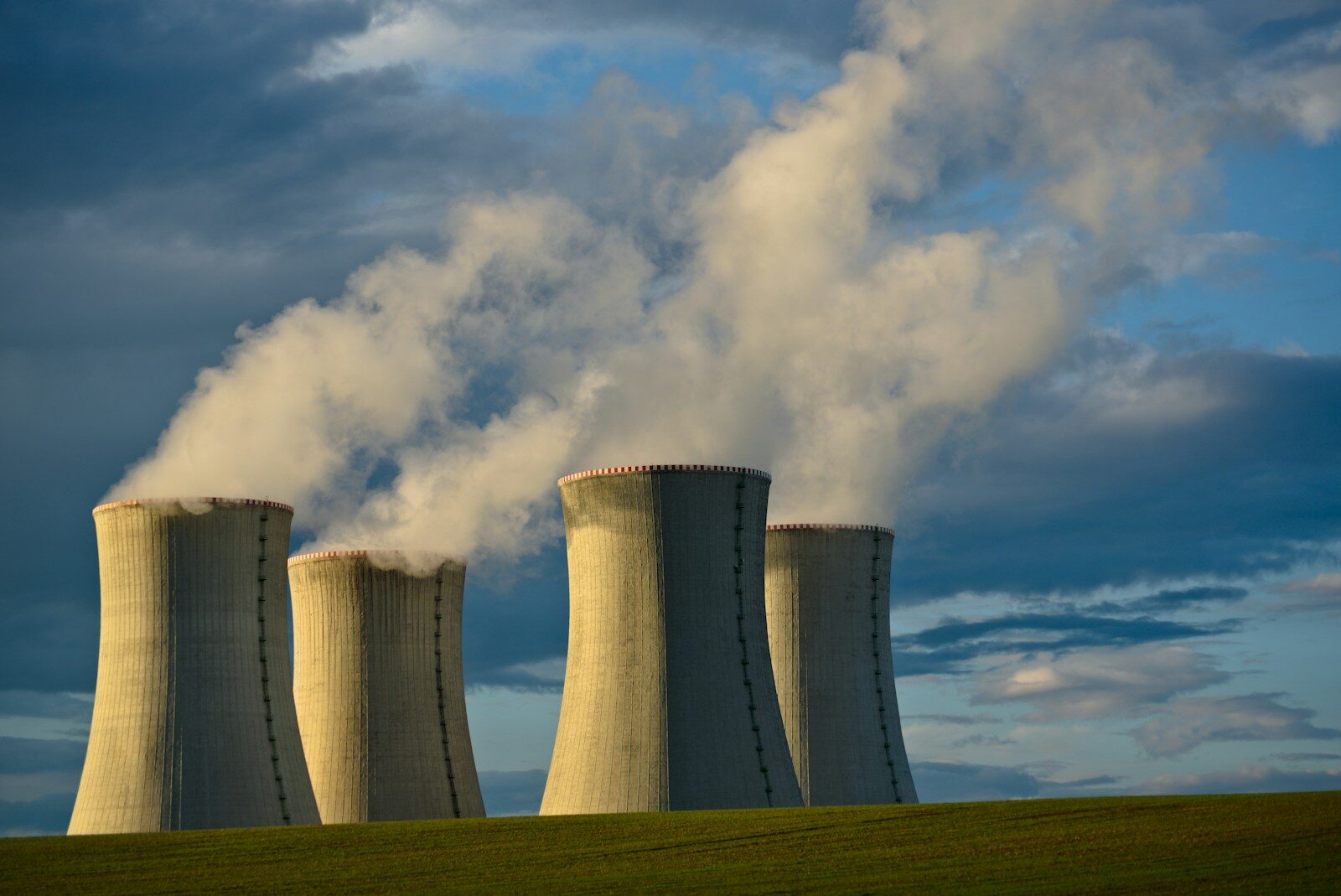
Nuclear power grew in popularity during the 1960s and 1970s — until 4 AM on March 28, 1979, when one of the reactors at Three Mile Island suffered a partial meltdown. It was the most significant reactor incident in U.S. history. The situation was serious enough that Governor Richard Thornburgh issued a public advisory: “Based on the advice of the Chairman of the NRC and in the interest of taking every precaution, I am advising those who may be particularly susceptible to the effects of any radiation — that is, pregnant women and pre-school aged children — to leave the area within a five-mile radius of the Three Mile Island facility until further notice.”
Public concern about nuclear energy deepened when a major meltdown occurred at the Chernobyl Nuclear Power Plant in Ukraine on April 26, 1986. A complete cleanup is not expected to be finished until 2065. The World Nuclear Association reported that some 350,000 people were evacuated as a result of the accident, and the resettlement of displaced communities remains ongoing.
On March 11, 2011, Japan was struck by a magnitude 9.0 earthquake followed by a tsunami. The disaster severely damaged the Fukushima Daiichi reactors. According to the World Nuclear Association, as cooling systems failed on the first day, evacuation orders were progressively expanded due to uncertainty about conditions inside the reactors and their potential effects. By the evening of Saturday, March 12, the evacuation zone had been extended to 20 kilometers from the plant.
Interest in nuclear power has accelerated in recent years. Nuclear energy is broadly considered “green” in that it is carbon-free, much like solar and wind power. As it has become increasingly clear that fossil fuels are among the primary drivers of climate change, nuclear power has emerged as an attractive option for electricity generation. That need has grown more urgent given the energy demands of AI data centers and, somewhat ironically, air conditioning.
Advances in technology have also renewed enthusiasm for nuclear power. Small Modular Reactors (SMRs) are significantly smaller than traditional reactors and can be partially constructed off-site. The International Nuclear Information System has noted that many of the benefits of SMRs stem directly from their design — small and modular. Their reduced footprint allows them to be sited in locations unsuitable for larger nuclear power plants.
Several states continue to generate most of their electricity from nuclear power. The following rankings, drawn from sources including Choose Energy, Nuclear Newswire, the U.S. Energy Information Administration, NUCNET, the NEI, and the U.S. Department of Energy, show the five states where nuclear power accounts for the highest share of total electricity generation. It’s worth noting that these percentages can shift month to month due to maintenance outages, demand fluctuations, and seasonal usage patterns. Notably, these states are spread across different regions of the country.
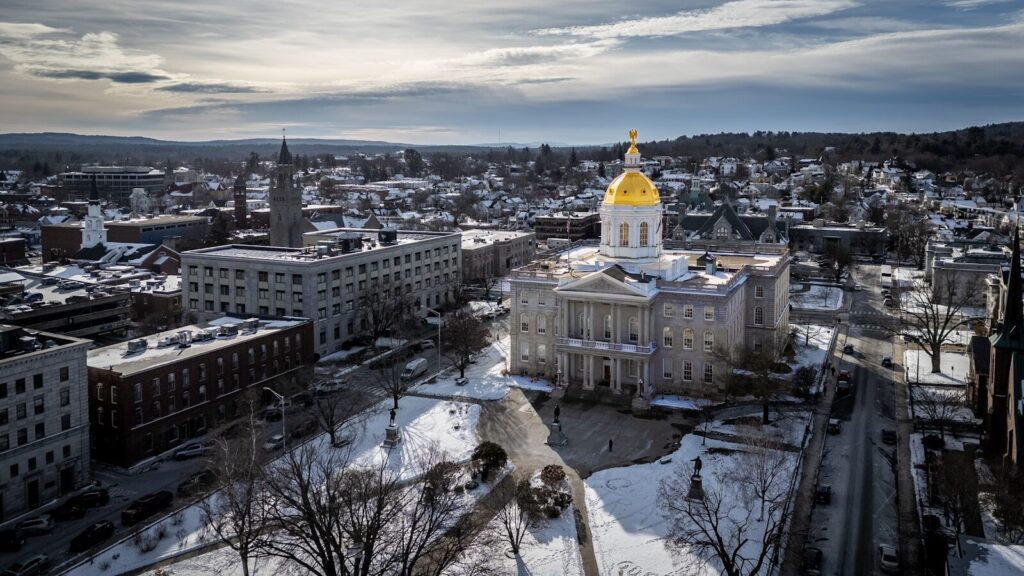
1. New Hampshire — 61.3%
Driven largely by the Seabrook Nuclear Plant. According to NextEra, Seabrook contributes substantial carbon-free energy to New England, with annual operations avoiding emissions equivalent to removing approximately 800,000 cars from the road.
2. South Carolina — 57.1%
Home to multiple large plants, including Oconee and VC Summer.
3. Illinois — 51.1%
Accordingto Ready Illinois, the state operates nuclear power reactors at six licensed nuclear power stations.
4. Maryland — 50.1%
Generation is primarily from the Calvert Cliffs plant.
5. New Jersey — 49.4%
Generation comes primarily from the Salem Nuclear Generating Station and Hope Creek.
More from ClimateCrisis 247
- Climate Denial in America’s Fastest Warming Congressional Districts
- Congressional Candidates With the Strongest Environmental Records
- Fastest Warming Congressional Districts Where Politician is Funded by Fossil Fuel Industry
- America’s Best And Worst Cities To Own An EV