10 Wealthy Towns That Could Become Wildfire Hotspots
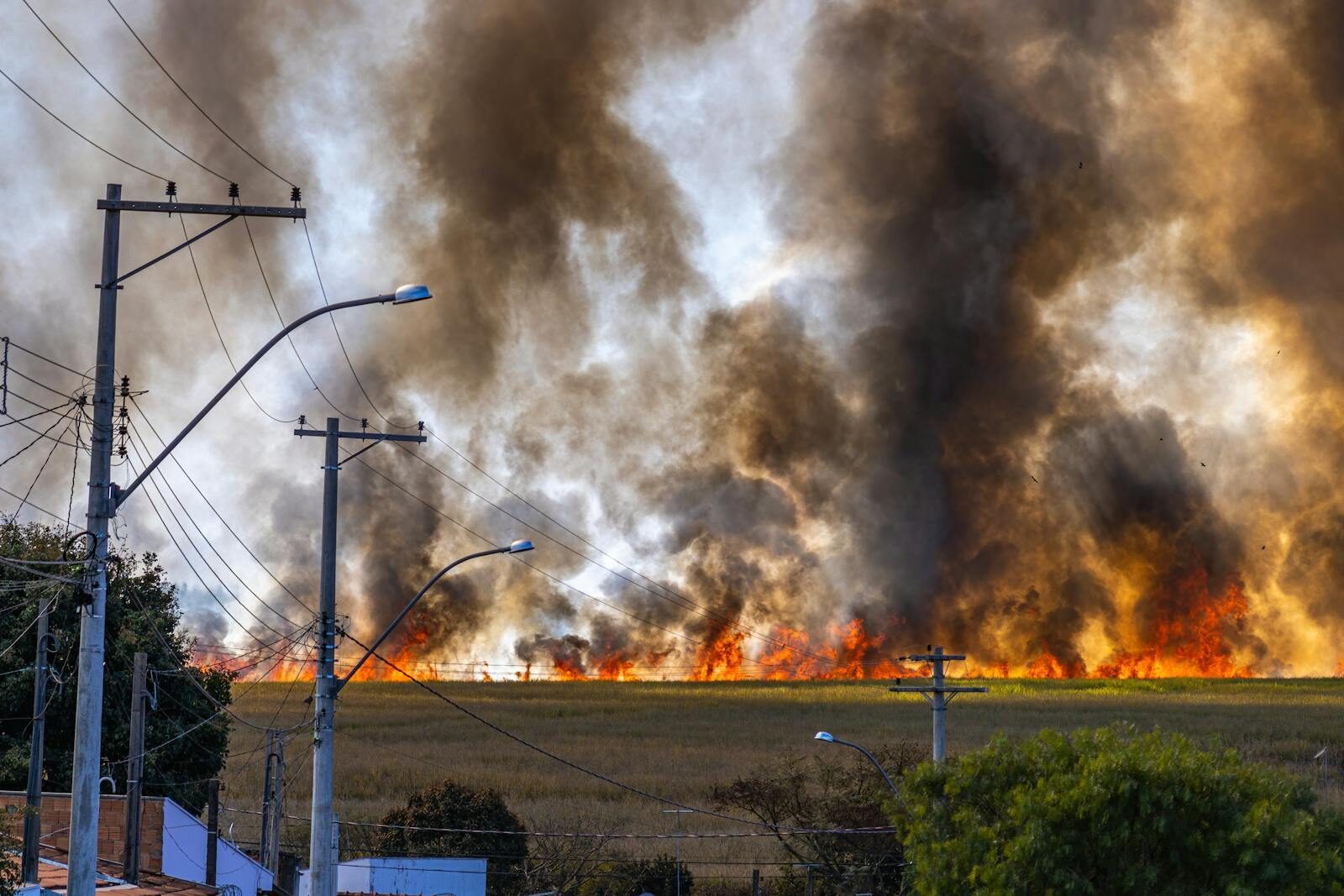
While climate change disproportionately impacts the poorest and most vulnerable, the Malibu fire in early 2025 was a reminder that as wildfires continue to become larger and more intense, no segment of society will be insulated from the effects of global warming. In fact, many of the wealthiest neighborhoods in the U.S. are in some of the most fire-prone parts of the country. A closer look at home values and risk data reveals the affluent cities, towns, and villages most at risk of burning down.
To determine where the nicest homes are at the greatest risk of wildfire, Climate Crisis 247 reviewed data on home value from the U.S. Census Bureau and natural hazard risk from FEMA. Cities, towns, and census-designated places with relatively high to very high risk of wildfire were ranked based on average home value. Data on average home value is based on Aggregate home value figures and total household counts from the Census Bureau’s 2022 American Community Survey, while wildfire risk is based on census-tract-level data from the FEMA National Risk Index program. Wildfire risk data – a composite of burn probability, building exposure, and historic wildfire activity – was aggregated from census tracts to places using boundary definitions from the U.S. Census Bureau. Only cities with at least 5,000 residents were considered.
10. Kula, HI (Maui County)
- Average home value: $844,520
- Aggregate home value: $2.28 billion (2,700 households)
- FEMA wildfire risk score: 95.73/100 (Relatively high)
- Total population: 6,578
9. Alpine, UT (Utah County)
- Average home value: $859,659
- Aggregate home value: $2.53 billion (2,942 households)
- FEMA wildfire risk score: 96.82/100 (Relatively high)
- Total population: 10,260
8. Jamul, CA (San Diego County)
- Average home value: $875,591
- Aggregate home value: $1.83 billion (2,091 households)
- FEMA wildfire risk score: 99.92/100 (Very high)
- Total population: 6,018
7. Summit Park, UT (Summit County)
- Average home value: $876,067
- Aggregate home value: $2.77 billion (3,163 households)
- FEMA wildfire risk score: 98.89/100 (Relatively high)
- Total population: 8,708

6. St. Helena, CA (Napa County)
- Average home value: $1,174,628
- Aggregate home value: $3.48 billion (2,963 households)
- FEMA wildfire risk score: 98.64/100 (Relatively high)
- Total population: 5,426
5. Lucas Valley-Marinwood, CA (Marin County)
- Average home value: $1,290,109
- Aggregate home value: $3.28 billion (2,546 households)
- FEMA wildfire risk score: 97.94/100 (Relatively high)
- Total population: 6,334
4. Coto de Caza, CA (Orange County)
- Average home value: $1,332,979
- Aggregate home value: $6.79 billion (5,096 households)
- FEMA wildfire risk score: 96.56/100 (Relatively high)
- Total population: 15,632
3. Orinda, CA (Contra Costa County)
- Average home value: $1,708,202
- Aggregate home value: $13.26 billion (7,761 households)
- FEMA wildfire risk score: 95.92/100 (Relatively high)
- Total population: 19,477
2. Malibu, CA (Los Angeles County)
- Average home value: $1,845,570
- Aggregate home value: $12.43 billion (6,734 households)
- FEMA wildfire risk score: 98.62/100 (Relatively high)
- Total population: 10,698
1. Montecito, CA (Santa Barbara County)
- Average home value: $2,149,144
- Aggregate home value: $8.90 billion (4,140 households)
- FEMA wildfire risk score: 98.14/100 (Relatively high)
- Total population: 8,529
More from ClimateCrisis 247
- The 10 Least Sustainable Countries In The World
- The Worst Back-to-Back Hurricanes in US History
- The Deadliest Hurricanes To Hit the US in the last half century
- States Producing The Most Greenhouse Gas Emissions