2026 On Pace To be Hottest Year In History For These 8 States

The world has been in an accelerated warming trend in recent decades. According to the World Meteorological Organization, each of the last 11 years rank among the 11 warmest since record keeping began. Rapidly rising temperatures have been most pronounced in the Arctic, where warming has occurred four times faster than the global average since 1979, and Europe, which is about 2.4°C warmer than in the preindustrial era, compared to the 1.4°C global average.
More recently, warming trends in North America have accelerated to nearly the same rate as Europe. According to data from the National Oceanic and Atmospheric Administration’s Global Time Series program, the differences in the departure of average land temperatures from 20th century norms in Europe and North America were within one-one hundredth of a degree of each other in both 2024 and 2025. In the United States, the trend appears to have continued into 2026.
Between January and May of this year, the average temperature in the continental U.S. was 48.2°F, the second highest average ever recorded for the first five months of any year since at least 1895. Notably, 2024 ranks as the hottest full year on record for the Lower 48, with an average temperature of 55.5°F. But at this point in 2024, the average temperature was about 1.5°F lower than it has been so far in 2026.
Historically high temperatures across the U.S. this year have been driven by unprecedented heat in certain parts of the country. Currently, there are eight states across the continental U.S. where the average temperature for the first five months of the year hit at an all-time high in 2026.
Using data from NOAA, Climate Crisis 247 identified the states where 2026 is on pace to become the hottest year in history. We reviewed average temperatures at the state level between January and May 2026 and compared them to historical averages for the same five-month period for each year going back to 1895. Only states where average temperatures between the beginning of January and the end of May hit an all time high in 2026 are listed. Supplemental data on state- and city-level warming trends since 1970 are from the non-profit research organization Climate Central. Population figures are 1-year estimates from the U.S. Census Bureau’s 2024 American Community Survey. States are listed in alphabetical order.
The states on this list are concentrated in Western and Southern United States, and are home to more than 94.5 million Americans. In many of these places, high average temperatures are attributable in part to a historic spring heatwave that sent temperatures surging well past 100°F, breaking previous daily heat records by double digits in some cases.
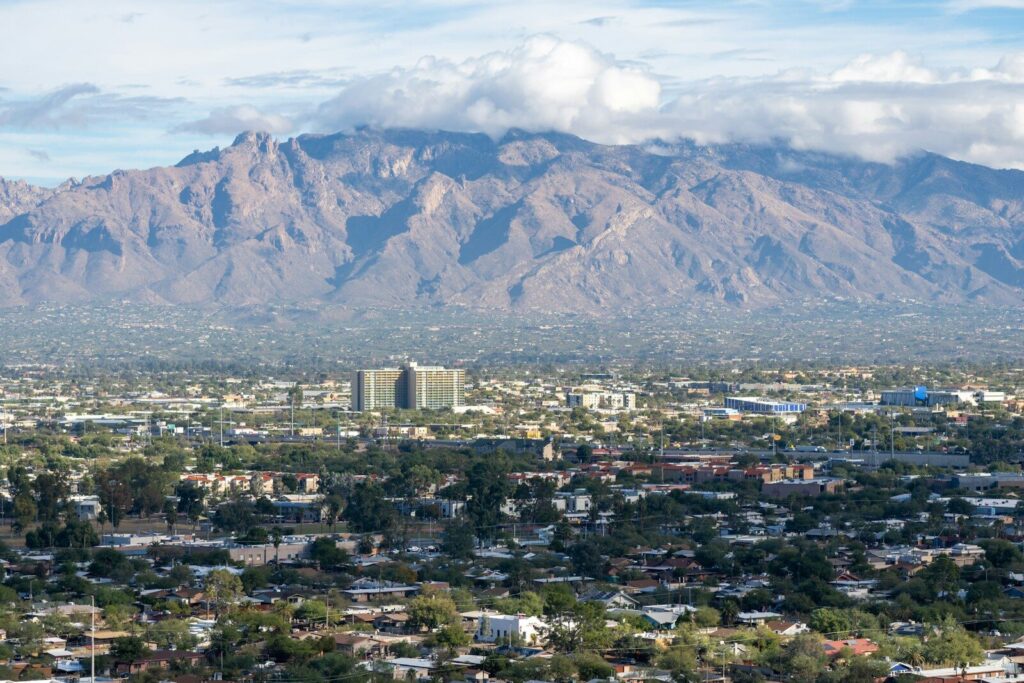
1. Arizona
- Average temperature, January-May 2026: 58.1°F (warmest since at least 1895)
- Average temperature in 21st century, January-May: 51.3°F
- Average statewide temperature change, 1970-2025: +3.4°F
- Fastest warming city: Tucson, Arizona; 5.0°F avg. temp. increase 1970-2025
- State population: 7,582,384
2. California
- Average temperature, January-May 2026: 56.0°F (warmest since at least 1895)
- Average temperature in 21st century, January-May: 50.2°F
- Average statewide temperature change, 1970-2025: +3.0°F
- Fastest warming city: Fresno, California; 4.3°F avg. temp. increase 1970-2025
- State population: 39,431,263
3. Colorado
- Average temperature, January-May 2026: 42.4°F (warmest since at least 1895)
- Average temperature in 21st century, January-May: 35.8°F
- Average statewide temperature change, 1970-2025: +3.0°F
- Fastest warming city: Colorado Springs, Colorado; 3.6°F avg. temp. increase 1970-2025
- State population: 5,957,494
4. New Mexico
- Average temperature, January-May 2026: 51.3°F (warmest since at least 1895)
- Average temperature in 21st century, January-May: 45.3°F
- Average statewide temperature change, 1970-2025: +3.7°F
- Fastest warming city: Las Cruces, New Mexico; 4.5°F avg. temp. increase 1970-2025
- State population: 2,130,256
5. Oklahoma
- Average temperature, January-May 2026: 56.7°F (warmest since at least 1895)
- Average temperature in 21st century, January-May: 50.9°F
- Average statewide temperature change, 1970-2025: +2.6°F
- Fastest warming city: Oklahoma City, Oklahoma; 2.4°F avg. temp. increase 1970-2025
- State population: 4,095,393
6. Texas
- Average temperature, January-May 2026: 63.1°F (warmest since at least 1895)
- Average temperature in 21st century, January-May: 57.7°F
- Average statewide temperature change, 1970-2025: +3.5°F
- Fastest warming city: El Paso, Texas; 5.9°F avg. temp. increase 1970-2025
- State population: 31,290,831
7. Utah
- Average temperature, January-May 2026: 45.8°F (warmest since at least 1895)
- Average temperature in 21st century, January-May: 38.6°F
- Average statewide temperature change, 1970-2025: +3.3°F
- Fastest warming city: Salt Lake City, Utah; 4.4°F avg. temp. increase 1970-2025
- State population: 3,503,613
8. Wyoming
- Average temperature, January-May 2026: 38.3°F (warmest since at least 1895)
- Average temperature in 21st century, January-May: 31.4°F
- Average statewide temperature change, 1970-2025: +2.8°F
- Fastest warming city: Cheyenne, Wyoming; 2.9°F avg. temp. increase 1970-2025
- State population: 587,618
More from ClimateCrisis 247
- Places Where Humans May Not Be Able to Live by the End of This Century
- US Cities With Most Homes At Hurricane Risk, According to new Report
- Mapping the US Counties Where Climate Doubt is Spreading
- Proposed Data Centers Could Use More Electricity Than All Alabama Homes Combined, Analysis Shows. Who Will Pay?